



French Gouache Painting
When you handle a french gouache painting, you hold an opaque water-based work on paper that captures colour with a matte intensity.
French Gouache Painting
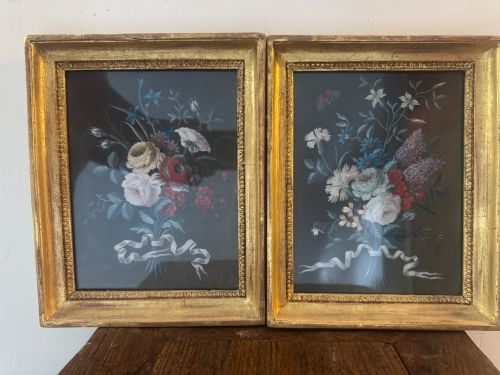
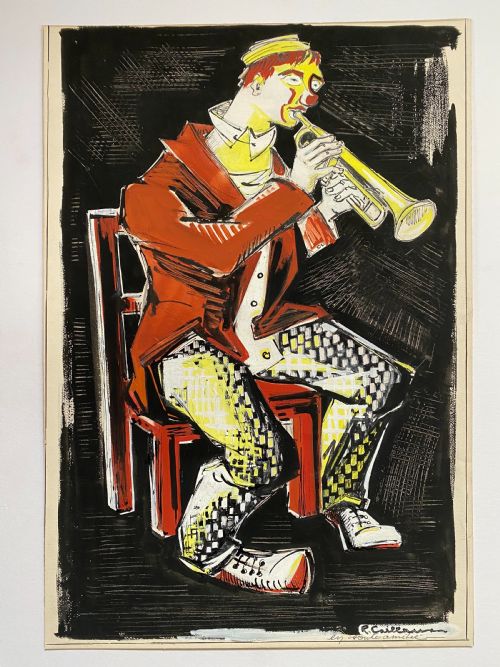
A french gouache painting brings together opaque watercolours on paper, board, or card, spanning eras from the early nineteenth century to the mid-twentieth century. These works appear in forms such as floral still lifes, maritime tributes, modernist landscapes, and avant-garde surrealist compositions.
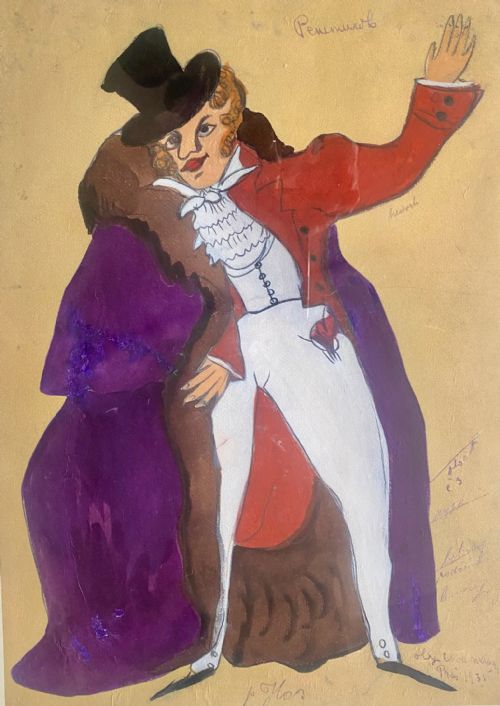
The pieces on this page are most commonly found in framed presentations behind glass, often housed within wood or gilded wood frames. Buyers encounter everything from neat botanical studies and maritime watercolours to dynamic mid-century abstracts and theatrical Harlequin scenes.
Materials and technique
Artists create these works using gouache, an opaque water-based medium that allows for dense blocks of saturated colour alongside fine details executed in ink or watercolour. The pigment is applied directly onto paper or board, sometimes accented with gold leaf.
Framing materials play an essential role in the preservation of these works, utilising glass to protect the delicate paint surface and wood or gilded wood moulding to finish the piece.
A sailor once painted an ironclad battleship in gouache to immortalise his sea days.
The measure of quality
The distinction between ordinary and exceptional pieces rests upon the surety of the brushwork and the ambition of the composition. A superior work demonstrates confident handling of opaque pigment, whether describing the petals of a botanical study or the dynamic lines of an avant-garde surrealist scene.
Preservation of the paper surface and the integrity of the original framing, such as gilded wood surrounds and protective glass, also define the standing of a piece.
Olga Choumansky·Gaston Cornil·Paul Lelong·Andrè Maurice·Archille Zavatta
The French Gouache Painting Glossary
- Gouache
- An opaque water-based paint composed of pigment, water, and a binding agent such as gum arabic, producing a flat, matte finish.
- Neoclassical
- A style drawing on classical antiquity, seen in works originating around eighteen hundred.
- Avant-Garde
- Experimental or innovative work, particularly prominent in surrealist and modernist pieces from the twentieth century.
- Gilded wood
- Wood treated with a thin layer of gold leaf or metallic gilt, commonly used for traditional framing.
- Maritime
- Pertaining to the sea and ships, represented in naval tributes and coastal subjects.
French Gouache Painting: Frequently Asked Questions
What is a french gouache painting?
A french gouache painting is an artwork created with opaque water-based pigments on paper or board, hailing from periods like the early nineteenth century or the mid-twentieth century. These pieces encompass diverse subjects ranging from botanical still lifes and maritime scenes to surrealist compositions.
Collectors prize them for their matte opacity and vibrant colour retention, which distinguishes them from transparent watercolour works.
How should I display these works?
These paintings require protection behind glass to shield the delicate water-based pigment from moisture, dust, and direct handling. They are best hung away from direct sunlight to prevent the fading of colours on paper.
Matching the period of the frame, such as wood or gilded wood, helps maintain the historical context of the artwork.
How do I identify the period?
Dating relies on stylistic clues, subject matter, and materials, moving from Neoclassical botanical studies of eighteen hundred to Art Deco surrealism and mid-century modern abstracts. Signatures, inscriptions, and framing styles also provide clear chronological markers.
Examining the type of paper and backing often confirms the era of production.
Were these used as studies or finished works?
Gouache serves both as a preparatory medium for larger projects and as a finished medium in its own right. Many surviving pieces are fully realised gallery works, while others record botanical specimens or naval tributes.
Framed examples usually indicate works intended for display rather than private studio reference.