

French Glass Light
When choosing a french glass light, you are selecting a piece that brings period illumination and historic metalwork to an interior space.
French Glass Light
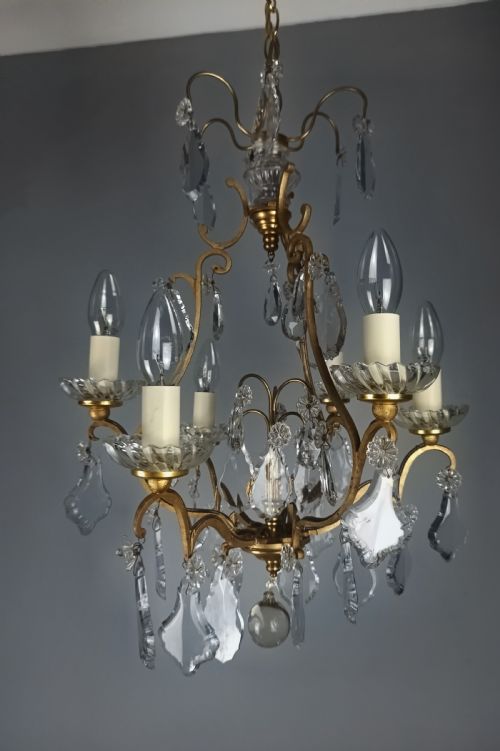
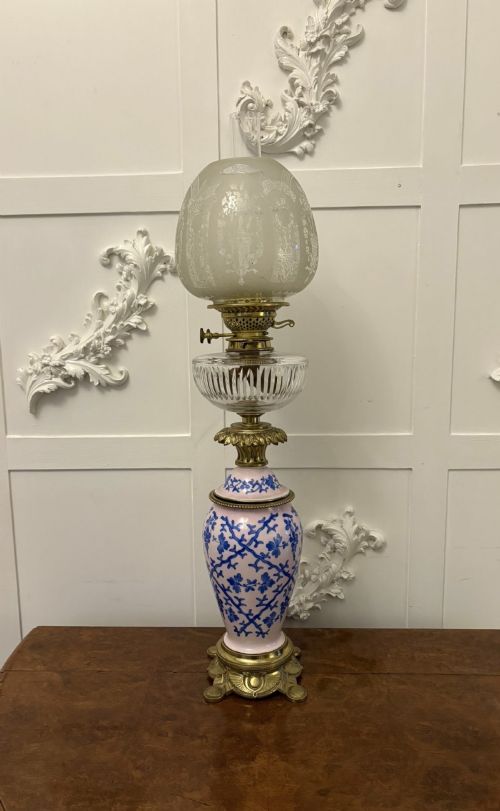
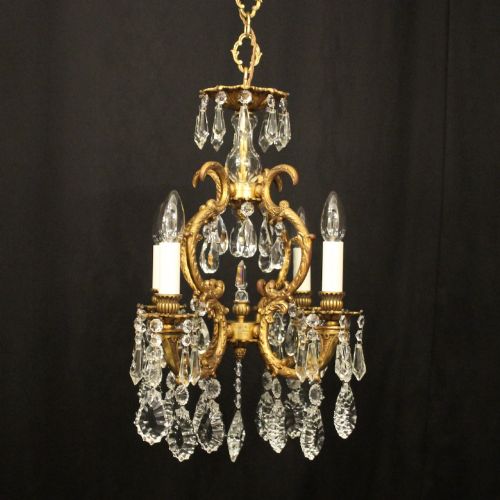
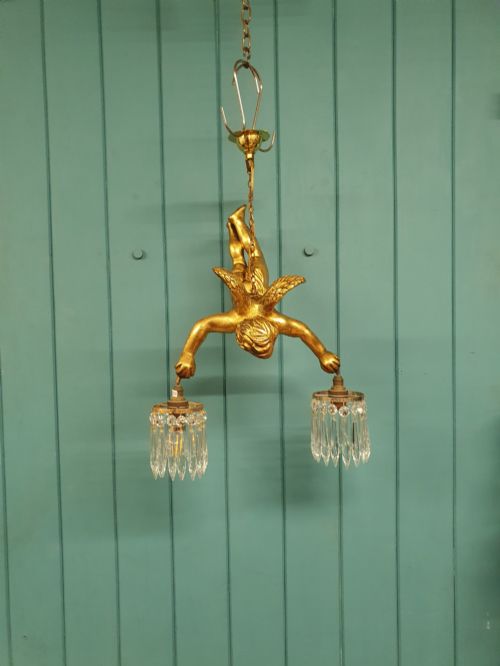
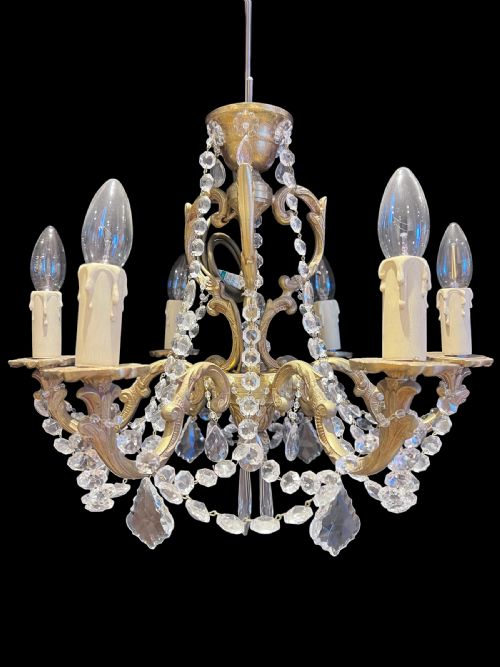
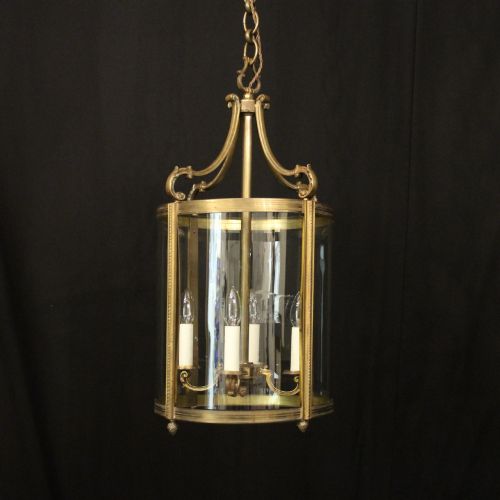
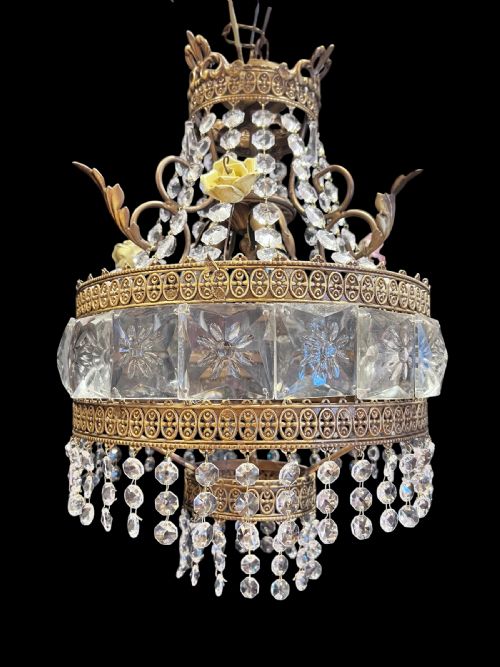
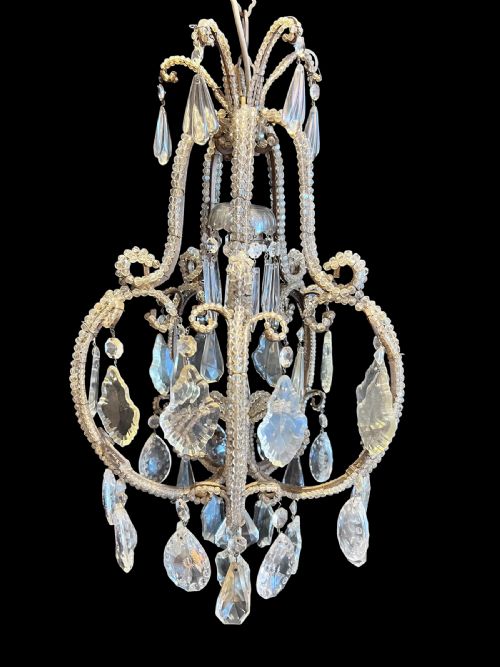
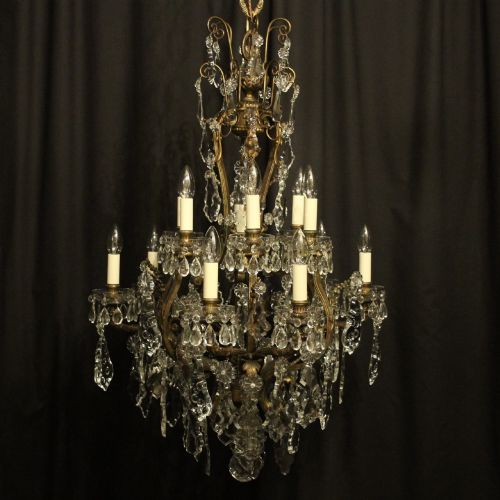
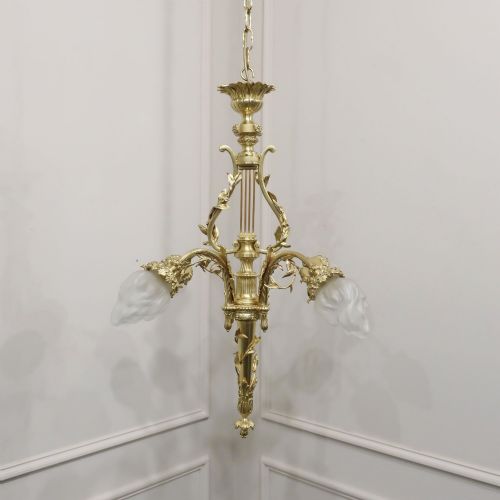
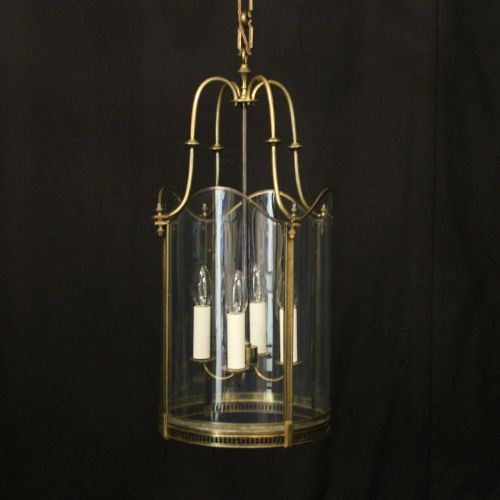
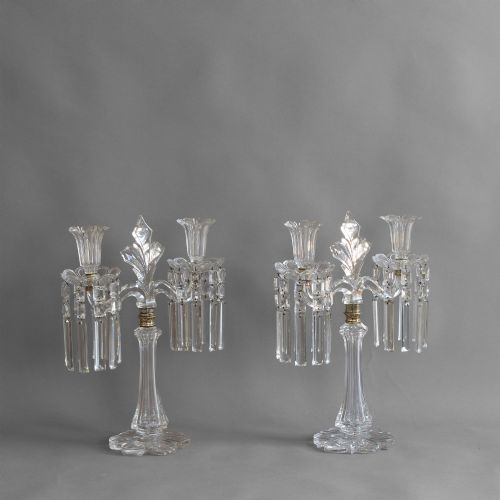
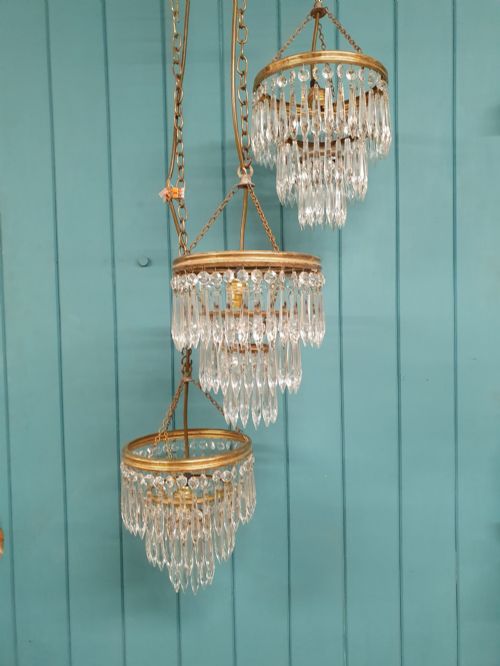
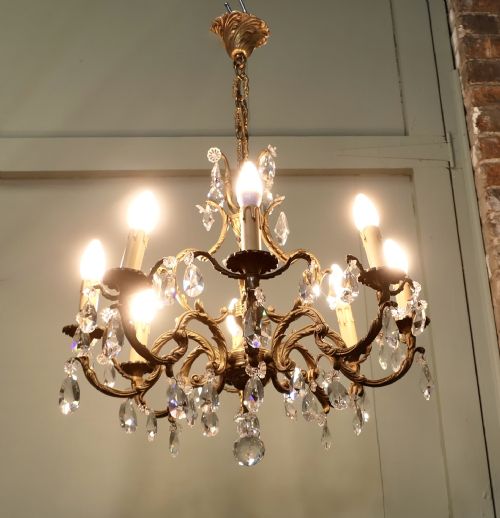
A french glass light encompasses a wide variety of historic lighting fixtures, ranging from grand multi-light chandeliers and hall lanterns to wall sconces and pendant lights. These pieces originate from the nineteenth and early twentieth centuries, spanning periods such as the Edwardian era, the Art Deco movement, and the late nineteenth century. The selection on this page frequently includes bronze and brass frames ornamented with cut crystal, moulded glass shades, and delicate glass drops.
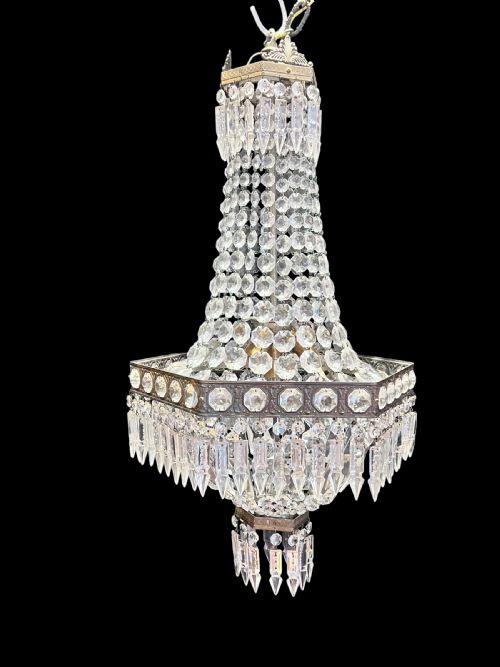
Buyers often encounter styles reflecting French Neoclassical, Empire, Rococo, and Art Deco design sensibilities. Common forms include tent and waterfall chandeliers, convex hall lanterns, and opaline glass ceiling pendants. These fixtures were originally manufactured to illuminate formal salons, hallways, and boudoirs in continental residences.
How they were made
The construction of these fixtures relies on combinations of cast metal and worked glass. Frames are commonly formed from brass, gilt bronze, or gilt brass, providing a sturdy skeletal structure to support hanging elements. Glass components are produced through techniques including pressing, cutting, and blowing, resulting in clear crystal prisms, frosted shades, and opaque glass bowls.
Metal elements are frequently gilded or cast with ornamental detailing typical of Louis Revival or Neoclassical styles. Glass droplets, icicles, and beads are wired directly to the metal armature by hand, creating the characteristic reflective surfaces seen on chandeliers and wall lights.
What varies in quality
The distinction between standard and superior pieces rests on the weight and intricacy of the metal casting and the clarity of the glass. Finer fixtures utilise heavy gilded bronze with deeply chased decorative motifs rather than lighter stamped brass. The cut crystal drops on better examples exhibit sharp facets and high light refraction, whereas lesser pieces utilise moulded glass with softer edges.
Proportion and completeness also determine the standing of a fixture. Original matched sets of glass shades, intact beadwork, and uniform crystal dressing elevate the integrity of a chandelier or wall sconce. The precision with which the metal arms align and the retention of original gilding further separate everyday production from exceptional craftsmanship.
Émile-Jacques Ruhlmann·Maison Baguès·Degue
The French Glass Light Glossary
- Chandelier
- A large, branched hanging light fixture designed to hold multiple lamps or candles. These pieces are frequently hung with crystal lustres and drops.
- Hall Lantern
- An enclosed ceiling-hung light fixture, often featuring glazed panels within a brass or bronze frame. They were traditionally used to illuminate entrance spaces and corridors.
- Opaline Glass
- A type of semi-translucent pale glass, often white or pastel in tone, widely utilised for nineteenth-century and Art Deco lighting shades.
- Tent and Waterfall
- A chandelier configuration where strings of glass beads form an upper tent shape above a lower cascading tier of crystal drops.
- Lustre
- A cut glass pendant or hanging prism attached to a light fixture to increase light reflection and refraction.
French Glass Light: Frequently Asked Questions
How do I hang a heavy antique chandelier safely?
These heavy brass and bronze fixtures require direct attachment to a ceiling joist using a structural metal hook capable of supporting the combined weight of the metal frame and glass components.
Professional electrical installation is recommended to ensure the internal wiring meets current standards while preserving the historic ceiling rose and suspension chain.
Can I adjust the drop height of these pendant lights?
Most pendant lights and chandeliers hang from original link chains or rods that can be shortened by removing links. Care must be taken to adjust the internal electrical flex in proportion to the physical chain length.
Consulting a specialist conservator ensures that structural alterations do not compromise the vintage suspension mechanism or the balance of the fixture.
How should I clean antique crystal and glass?
Regular maintenance involves gentle dusting with a soft, dry cloth to prevent grime accumulation on the glass surfaces and metal mountings. Detachable crystal drops can be washed individually in warm, soapy water and dried thoroughly before rehanging.
Harsh chemical cleaners should be avoided to protect the historic gilding on the bronze and brass frames.