


French Giltwood Occasional Table
A french giltwood occasional table brings gilded elegance and practical surface space into a room, making it a sought-after piece for classic interiors.
French Giltwood Occasional Table
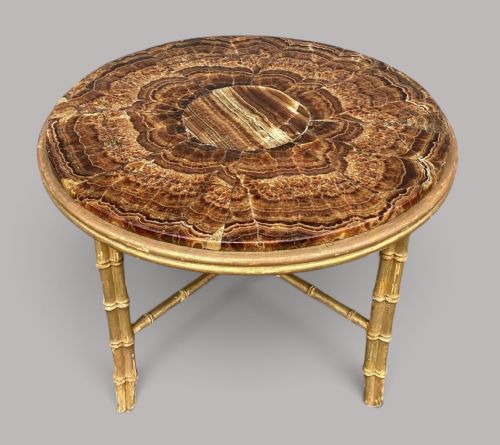
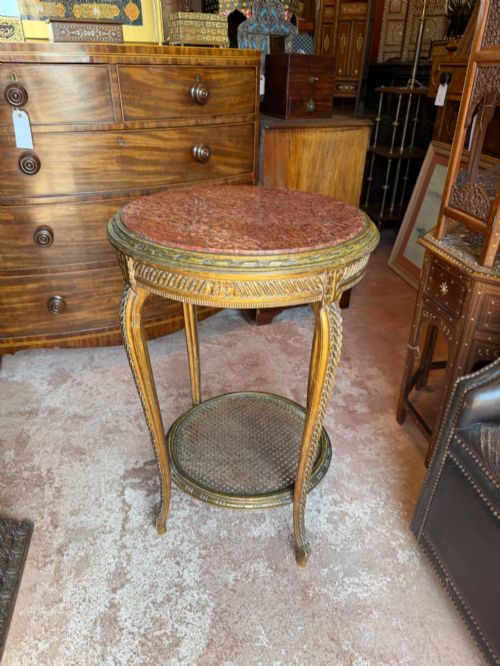
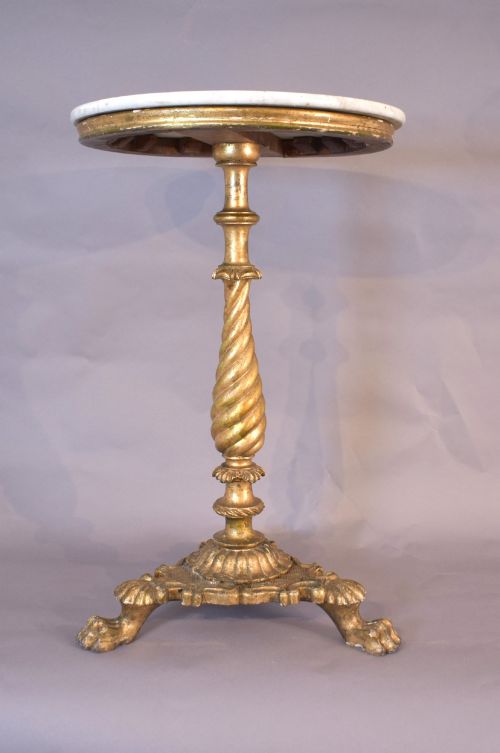
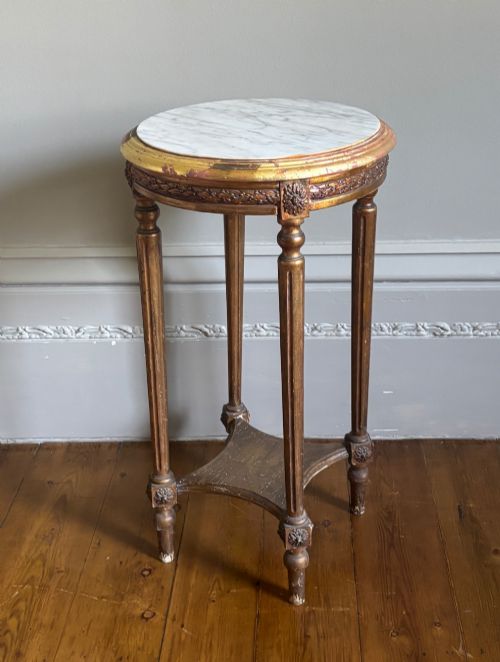
A french giltwood occasional table encompasses small decorative pieces designed for functional placement, frequently appearing as side tables, centre tables, and tripod stands. These items emerge from various periods including the nineteenth century, the Regency era, and the early twentieth century, showing diverse forms like round wine tables, urn stands, and low coffee tables.
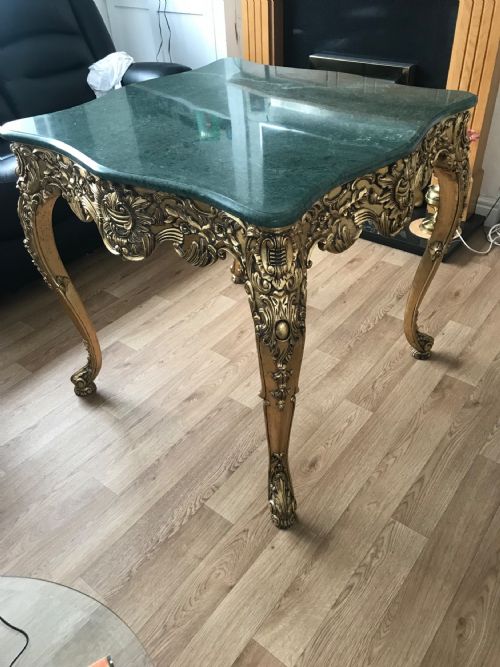
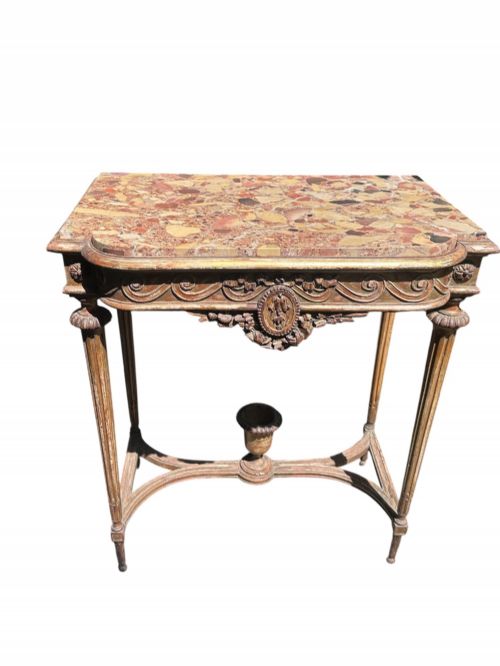
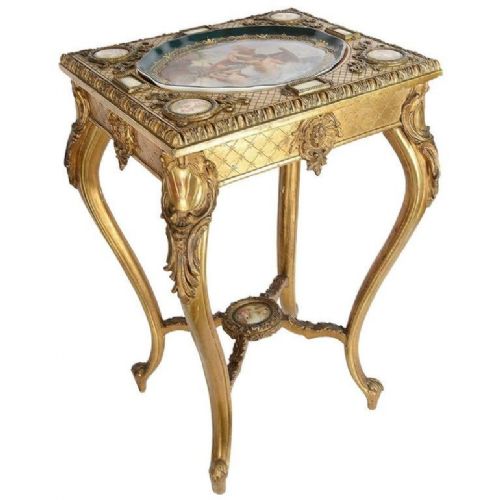
The aesthetic leans heavily towards revival and neoclassical movements, with Louis XVI style and French Rococo Revival occurring often across the selection. Buyers regularly encounter pieces featuring carved wooden frames coated in gold leaf or gesso, frequently paired with inset stone surfaces.
Origins span classical French chateau designs to Victorian interpretations and occasional Italian or Japanese painted variants. The fundamental purpose remains providing a portable, decorative surface that elevates the richness of a room.
Materials and construction methods
Construction relies upon timber frameworks shaped into cabriole legs, fluted columns, or tripod supports, decorated with intricate flower mouldings and carved motifs. Giltwood and gesso provide the bright metallic finish, utilising gold leaf applied over prepared wooden bases to catch the light.
Heavy polished stone tops in green or white marble, alongside smooth onyx slabs, form the functional surfaces of many examples. Detail work sometimes incorporates porcelain mounts, bobbin turnings, or cane panels, supported by structural elements like ebonised wood and red velvet inserts.
Listings feature items spanning the nineteenth century through the 1960s, constructed from giltwood, marble, onyx, and cane in side table and centre table forms.
Distinctions in quality
Superior examples reveal themselves through the crispness of the wood carving and the depth of the gilding, where hand-applied gold leaf retains its luminosity and texture. Lesser pieces often display flat, mechanical moulding and modern paint treatments that lack the warmth of genuine period gesso.
The integrity of the inset top significantly influences the character of the table, with solid polished marble or onyx securely seated within the timber frame representing higher craftsmanship. Structural stability in slender tripod supports and column joints also separates standard decorative items from finer artisan works.
The French Giltwood Occasional Table Glossary
- Giltwood
- Timber coated with gold leaf or a gold-coloured metallic finish. This surface treatment defines the bright, reflective appearance characteristic of these decorative tables.
- Gueridon
- A small French table, typically round and supported by a central column or tripod legs. The form often functions as a plant stand, urn stand, or wine table.
- Tripod table
- A small freestanding table supported by three legs radiating from a central pillar. This construction provides stable placement on uneven floors.
- Gesso
- A plaster-like material applied to wood surfaces as a base for gilding or painting. It allows craftsmen to carve sharp, detailed ornamental motifs before applying gold leaf.
- Louis XVI Style
- A neoclassical design vocabulary characterised by straight lines, symmetry, and classical motifs like fluting and swags. It influences many of the nineteenth-century revival tables.
French Giltwood Occasional Table: Frequently Asked Questions
What is a french giltwood occasional table used for?
These tables provide a decorative surface for lamps, vases, or small objects while adding a touch of classical elegance to a reception room or hallway. Their portable nature allows them to be moved easily to wherever an extra surface is required.
Historically, specific variants such as urn stands or wine tables held particular items, but today they function primarily as versatile accent furniture in living spaces.
How do I identify the period of a gilt table?
Dating relies upon observing the style of the carving, the method of construction, and the materials used in the frame and top. Nineteenth-century pieces often display hand-applied gesso and traditional joinery typical of revival movements.
Comparing the specific decorative motifs, such as floral mouldings or neoclassical swags, against known stylistic eras helps narrow down the decade of manufacture.
How should I care for marble top tables?
The stone surface requires simple cleaning with a damp cloth and mild soap, avoiding acidic cleaners that can etch the polish. Gentle dusting of the giltwood frame preserves the delicate gold leaf finish without causing abrasion.
Placing felt pads under heavy decorative objects helps protect both marble and onyx surfaces from scratches over time.
Are these tables sturdy enough for daily use?
While many feature slender tripod legs or delicate column supports, sound historical construction makes them suitable for holding lamps and small decorative items. However, their light frames mean they are not designed to bear heavy loads or serve as seating.
Placing them away from high-traffic areas prevents accidental knocks that might destabilise the joints or damage the carved wooden elements.