

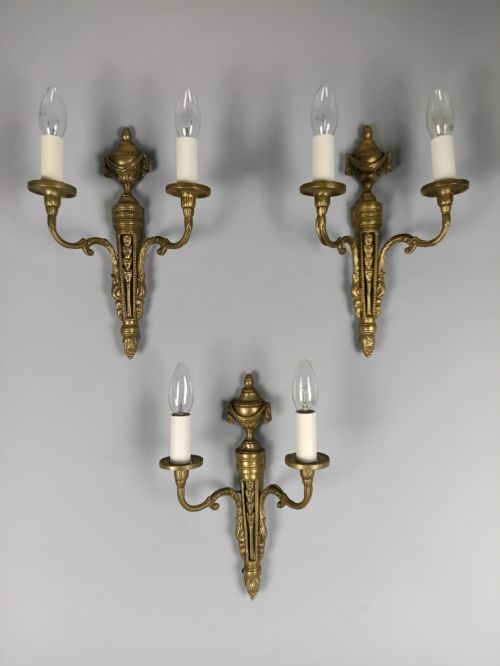
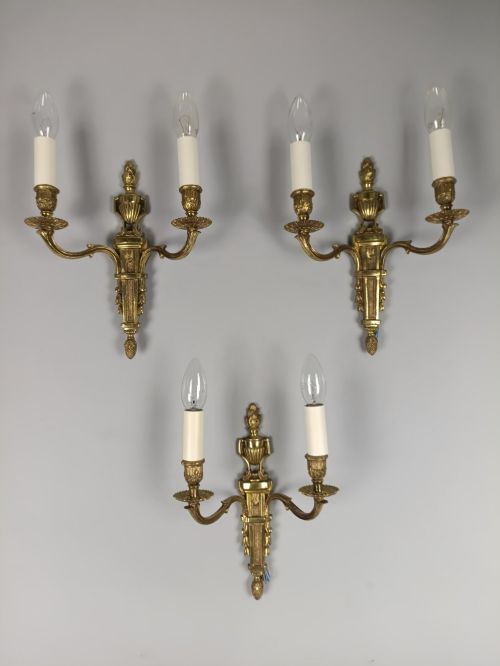
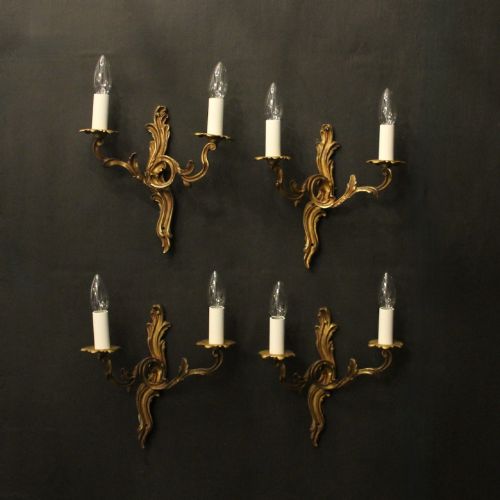
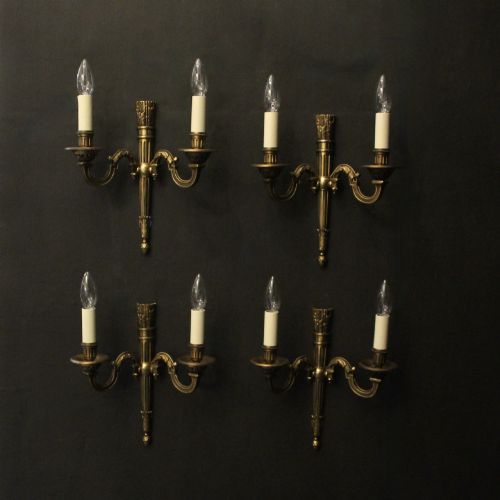
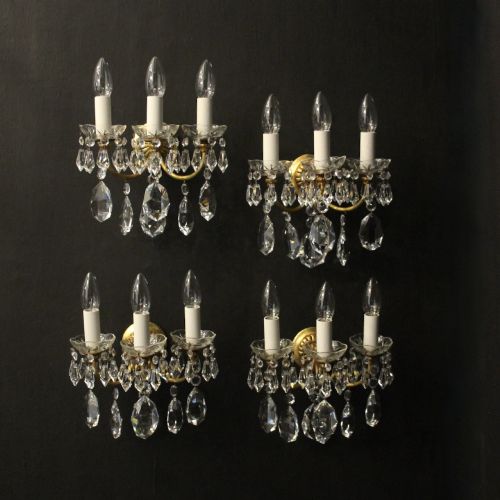
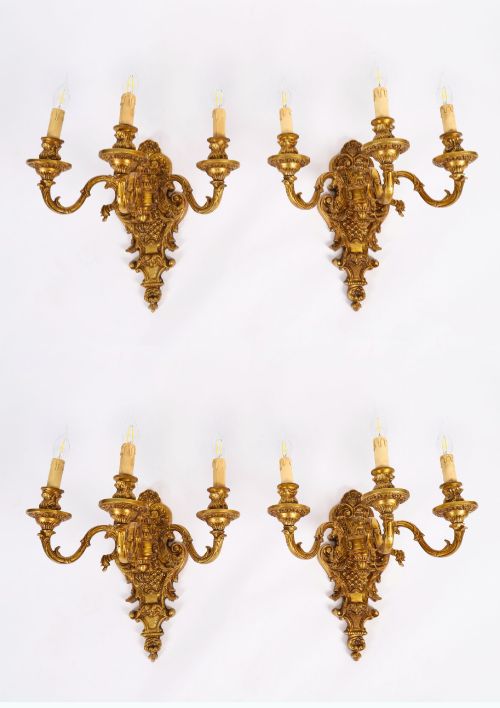
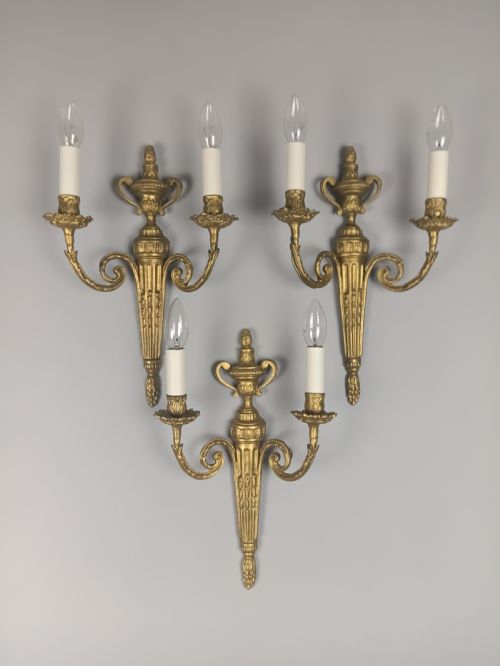
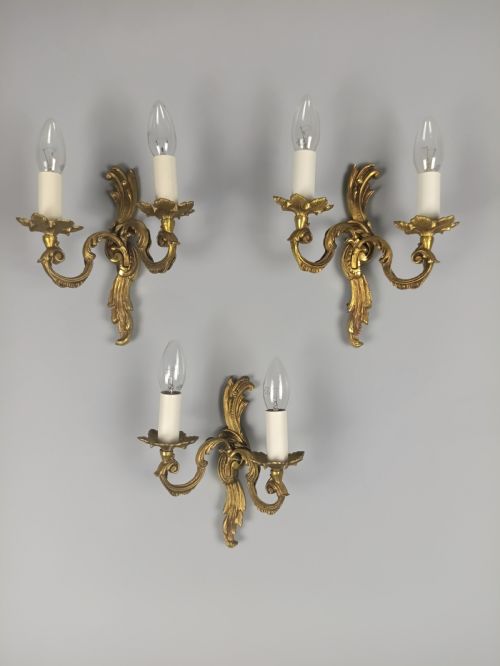
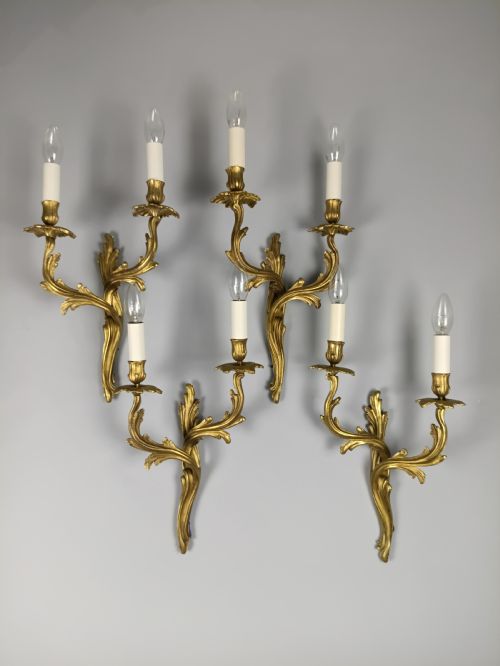
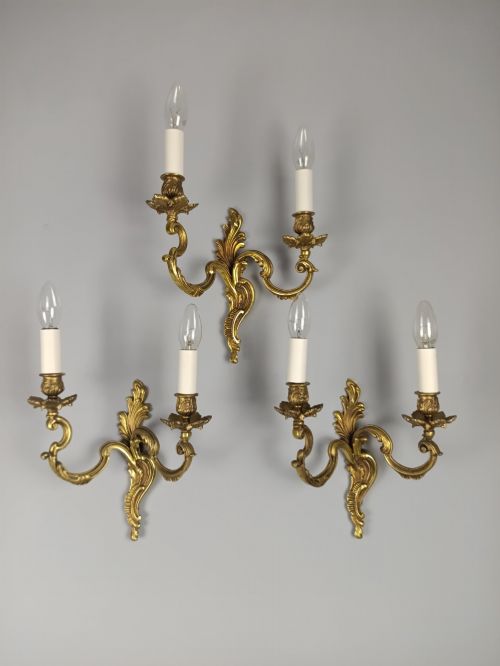
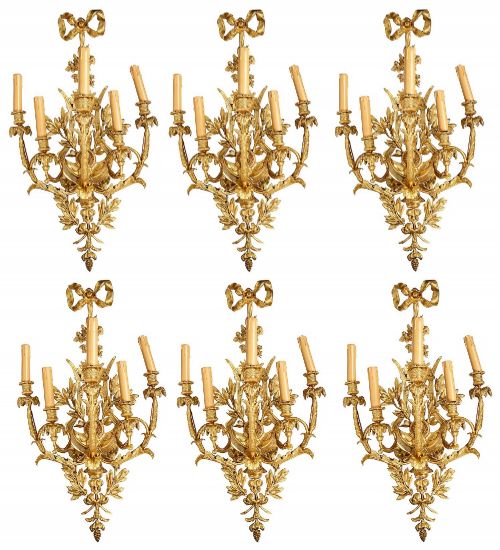
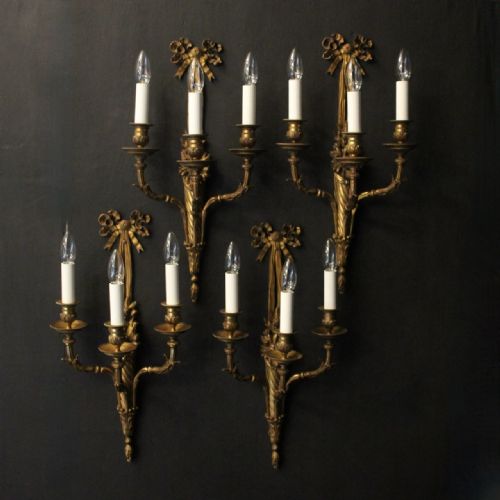

French Gilt Sconces Set
French gilt sconces set pieces bring warm, reflected candle or electric light to a room through matched pairs and larger groupings of ornate wall fixings.
French Gilt Sconces Set
When someone searches for a French gilt sconces set, they look for matched groupings of wall-mounted light fittings designed to illuminate a room with decorative brilliance. These pieces take the form of wall lights, appliques, and light fittings configured with twin, triple, or single arms.
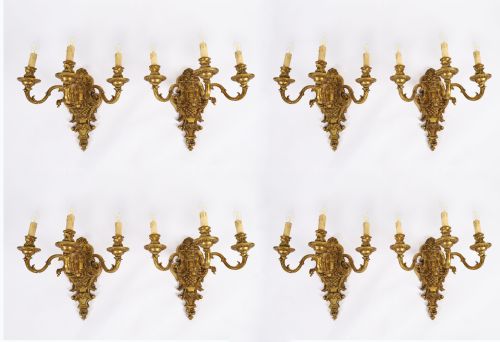
Buyers meet sets of three, four, six, or eight matching pieces spanning periods from the nineteenth century into the 1930s. The designs draw heavily upon French Rococo, Neo-Classical, Empire, and Rococo Revival styles.
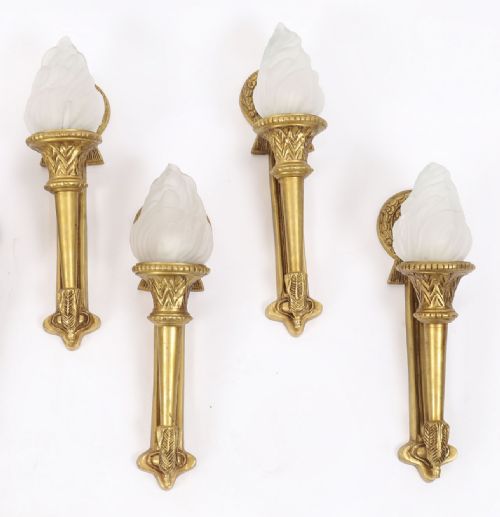
The most common configurations on this page are matched sets of four twin-arm wall lights in gilded brass, gilt bronze, and ormolu. These fixtures often incorporate decorative motifs such as cherubs, flaming torches, or griffins.
How They Were Made
Maker workshops utilised base metals including brass, bronze, and metal alloys, casting them into intricate scrollwork, figures, and arm structures. Artisans then applied rich surface treatments such as gilding, gilt bronze, or ormolu to achieve a bright, reflective golden finish.
Many designs integrate glass elements, such as crystal drops or panels, alongside metal arms to catch and refract the light. Construction methods relied on mechanical fastening of cast branches and backplates, allowing for multi-arm configurations to mount securely to walls.
French Gilt Sconces Set Retail Price Guide 2026
Typical asking prices for french gilt sconces set among the pieces listed under this phrase on Sellingantiques today, from the lower quarter to the upper quarter. They describe what is for sale here now, not the wider market.
What Varies in Quality
Quality in these wall lights rests upon the crispness of the metal casting and the depth of the original gilding or ormolu finish. Finer examples display sharp relief in decorative elements like scrollwork, acanthus leaves, and figural details, whereas simpler versions show softer contours.
The weight of the cast metal and the substantial nature of the backplates also separate standard production from superior work. Furthermore, the inclusion of hand-cut crystal components or complex figural motifs such as cherubs elevates the sophistication of a set.
The French Gilt Sconces Set Glossary
- Ormolu
- Gilded bronze produced by applying a mercury and gold amalgam to a bronze object and heating it. This technique creates a durable, luminous golden surface characteristic of fine nineteenth-century French lighting.
- Appliques
- Wall-mounted lighting fixtures designed to hold candles or electric lamps against vertical surfaces. The term is frequently used interchangeably with wall sconces in French decorative arts.
- Rococo
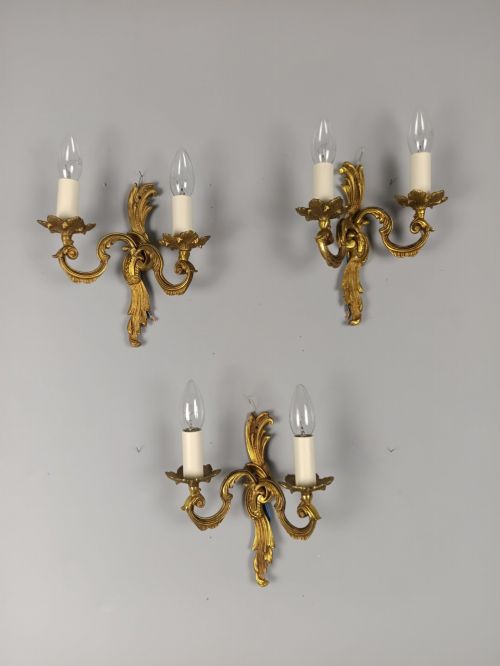
- A decorative style characterised by asymmetry, curves, scrollwork, and naturalistic plant motifs. It heavily influences many of the nineteenth and early twentieth-century wall lights seen here.
- Neo-Classical
- A style reviving classical Greek and Roman motifs such as urns, flaming torches, and symmetry. It provides a formal contrast to the flowing curves of Rococo designs.
- Twin Arm
- A lighting configuration featuring two candle branches or lamp holders extending from a central backplate. These create balanced illumination across a matched set of wall fixtures.
French Gilt Sconces Set: Frequently Asked Questions
How many sconces come in a typical set?
Sets generally comprise three, four, six, or eight matching wall lights. These groupings were originally manufactured to provide symmetrical illumination across large salon or dining room walls.
Buyers searching for larger rooms frequently seek sets of four or six to maintain consistent decorative symmetry throughout the space.
Are these wall lights wired for electricity?
Many surviving sets have been rewired for modern electrical use while retaining their historic appearance. Listings often specify if a set has been updated for contemporary fittings.
Buyers should inspect the wiring details in individual listings to confirm compatibility with their home installation requirements.
What periods do these sconces date from?
The pieces span from the nineteenth century through the 1910s, 1920s, and 1930s. This timeframe includes both original nineteenth-century works and early twentieth-century revivals.
Twentieth-century pieces often emulate earlier Louis XV, Louis XVI, or Empire aesthetics with considerable craftsmanship.
How do I identify Neo-Classical sconces?
Neo-Classical sconces display formal symmetry, clean architectural lines, and classical motifs such as flaming torches, urns, or griffins. They contrast sharply with the curving, asymmetrical scrollwork of Rococo style pieces.
Examining the backplate and arm decoration reveals whether the design leans towards classical restraint or exuberant curves.