



French Gilt Hardware
French gilt hardware brings bright, heavy metalwork to drapery and furniture, giving rooms a rich historical finish.
French Gilt Hardware
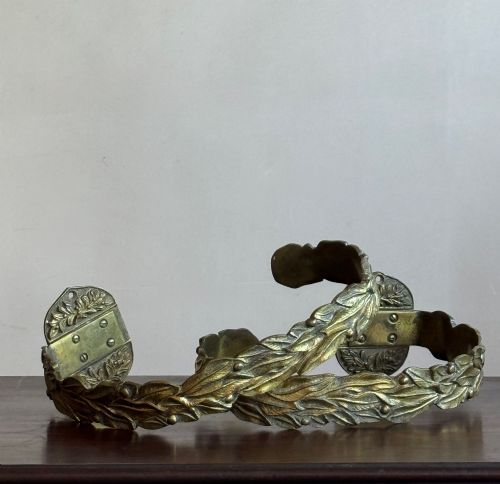
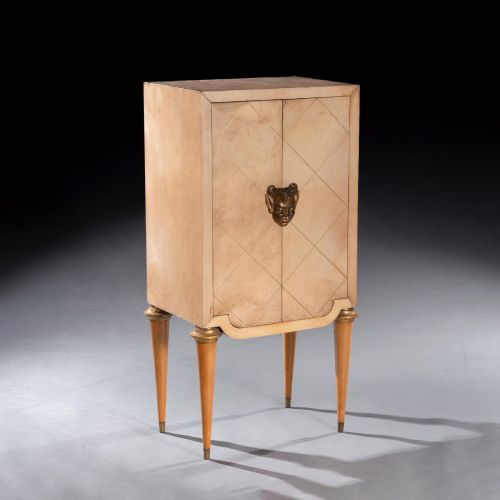
French gilt hardware covers decorative metal furnishings such as curtain tie-backs, pelmets, and cabinets found across several centuries. The selection on this page leans heavily towards curtain tie-backs and tie-backs cast in brass or bronze.
Most pieces date from the nineteenth century, including examples from the eighteen-eighties and the Victorian era, alongside eighteenth-century items and later twentieth-century cabinets. Buyers encounter various decorative styles, from French Rococo Revival and Louis XVI to Art Deco and Victorian Gothic Revival.
Object forms range from simple pairs of curtain tie-backs to sets of four, alongside larger pelmets and parchment inlaid cabinets. These items serve both a practical function for drapery and a purely decorative role within period interiors.
Materials and methods
Items in this category utilise copper-alloy bases such as ormolu, gilt bronze, brass, gilt brass, and gilded bronze, which provide a heavy foundation for surface gilding. Wood and parchment appear on larger cabinet pieces.
Metal components involve casting and chasing techniques to create intricate surface relief, seen particularly in Rococo scrolls and Gothic dragon motifs. Enamel is also utilised on select eighteenth-century tie-backs for added colour.
French Gilt Hardware Retail Price Guide 2026
Typical asking prices for french gilt hardware among the pieces listed under this phrase on Sellingantiques today, from the lower quarter to the upper quarter. They describe what is for sale here now, not the wider market.
Look closely at the nineteenth-century tie-backs to spot fierce Gothic dragons guarding your curtains.
Assessing the work
Quality rests upon the crispness of the metal casting and the depth of the subsequent chasing work done by hand after the mould. Softer, worn details indicate secondary casting or heavy cleaning over generations.
The choice of base metal and the durability of the gilding dictate longevity, with genuine mercury-gilded ormolu showing a deep, warm lustre compared to later, flatter brass finishes.
Henri Picard·Maurice Jallot
The French Gilt Hardware Glossary
- Ormolu
- Gilt bronze produced by applying a finely ground high-carat gold-mercury amalgam to a bronze object, then heating it to drive off the mercury. This technique creates a durable, warm metallic surface found on fine nineteenth-century items.
- Tie-back
- A decorative fixture attached to a wall beside a window to hold drapery back in an open position. These fixtures often feature elaborate cast metal designs.
- Pelmet
- A board or framework placed above a window to conceal curtain fixtures and heading tracks. Wooden examples often carry matching gilt metal mounts.
- Rococo Revival
- A nineteenth-century design style reviving the asymmetrical scrolls, shell motifs, and naturalistic curves of the eighteenth century. It dominates many of the tie-backs on this page.
- Gilded brass
- Brass treated with a thin layer of gold leaf or electroplated finish to simulate solid gold or heavier gilt bronze. It offers a brighter, paler yellow tone than traditional ormolu.
French Gilt Hardware: Frequently Asked Questions
How do I secure vintage curtain tie-backs?
Most tie-backs feature integrated screw threads or mounting plates designed to fix directly into wooden window frames or wall anchors. Care must be taken not to overtighten the metal against brittle plaster.
Using appropriate wall plugs ensures the heavy brass or bronze weight remains secure over time without pulling loose from the wall.
What is the difference between ormolu and gilt brass?
Ormolu consists of a mercury-gilded bronze base that yields a rich, soft golden depth through a complex chemical fire-gilding process. Gilded brass uses a different base metal and often employs modern electroplating methods.
Visual inspection reveals that ormolu retains a warmer, more nuanced patina than standard gilt brass items.
Can I clean antique gilt hardware?
Dusting with a dry, soft microfibre cloth is the safest method to remove surface particles without damaging the thin layer of gold. Water and chemical polishes strip the historic surface layer entirely.
Harsh abrasive cleaning destroys the delicate chased details and exposes the base metal underneath.
How do I date a set of tie-backs?
Dating relies on stylistic clues, such as the exuberant asymmetry of Rococo Revival pieces from the eighteen-eighties compared to the clean geometric lines of Art Deco furniture. The manufacturing technique of the mounting screw also provides an indicator of age.
Comparing the weight and casting sharpness against known period examples helps narrow down the decade of production.