

French Gilt Glass Cabinet
A french gilt glass cabinet brings warmth and polished display space to a room, catching the light across ormolu mounts and glazed panels.
French Gilt Glass Cabinet
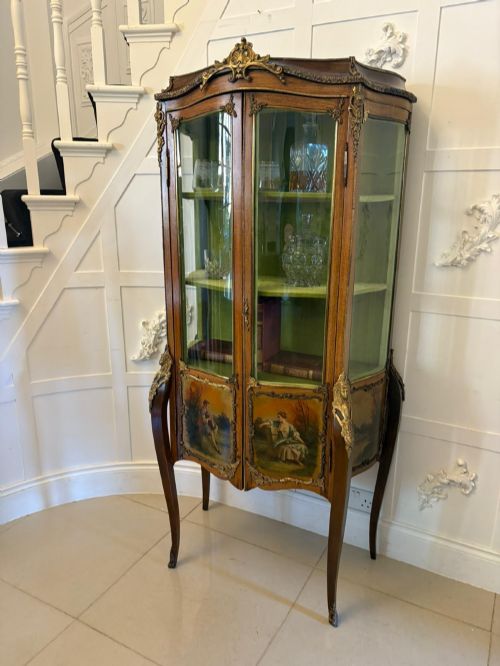
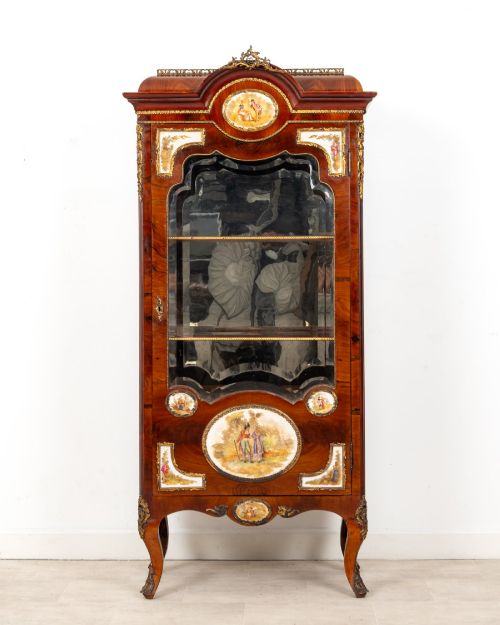
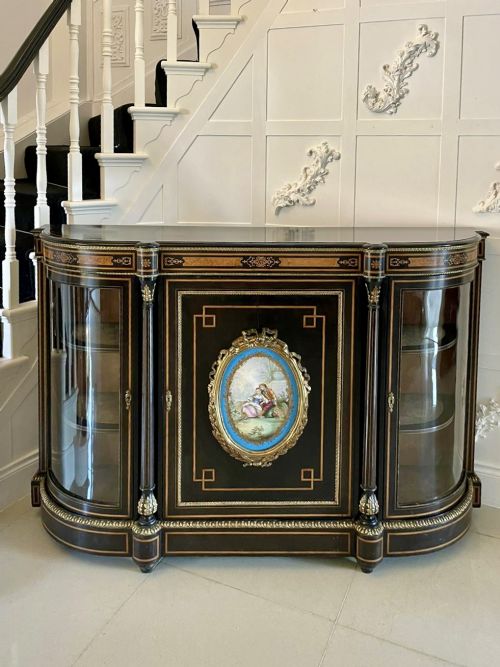
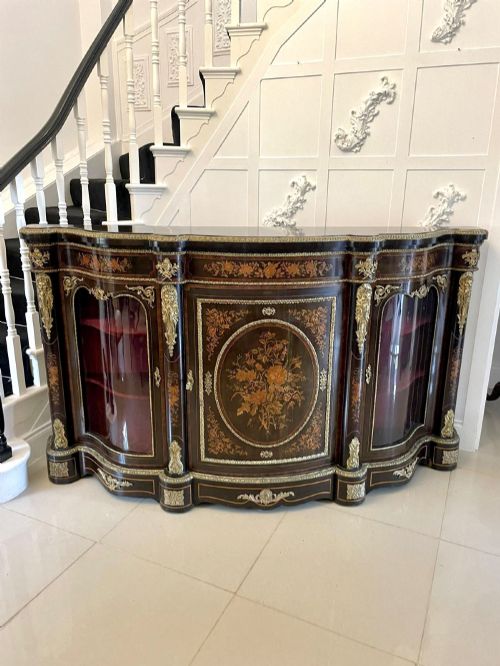
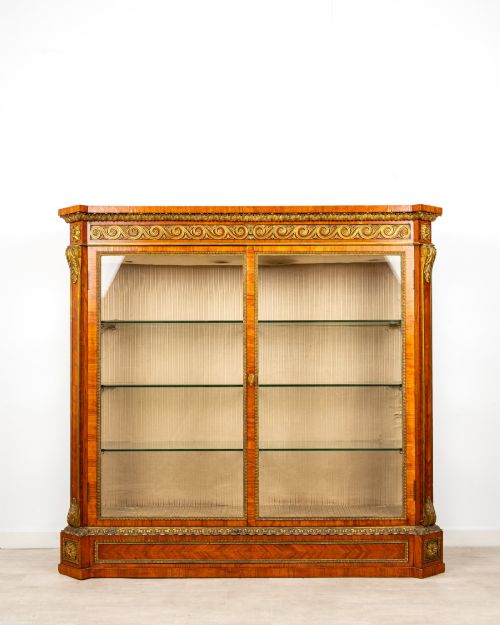
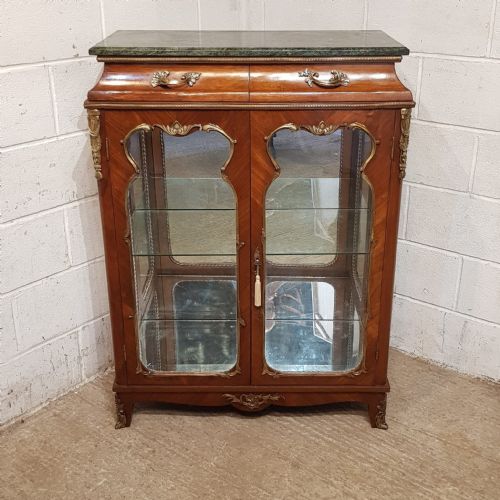
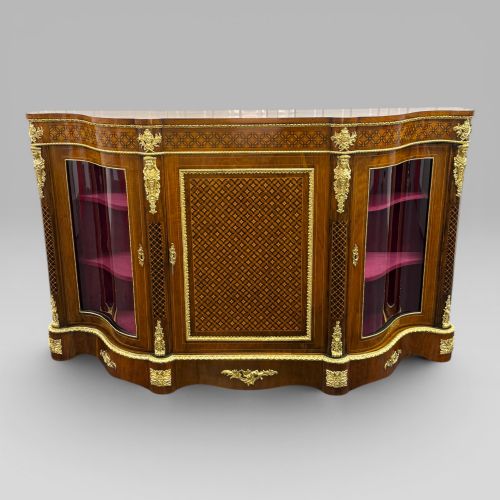
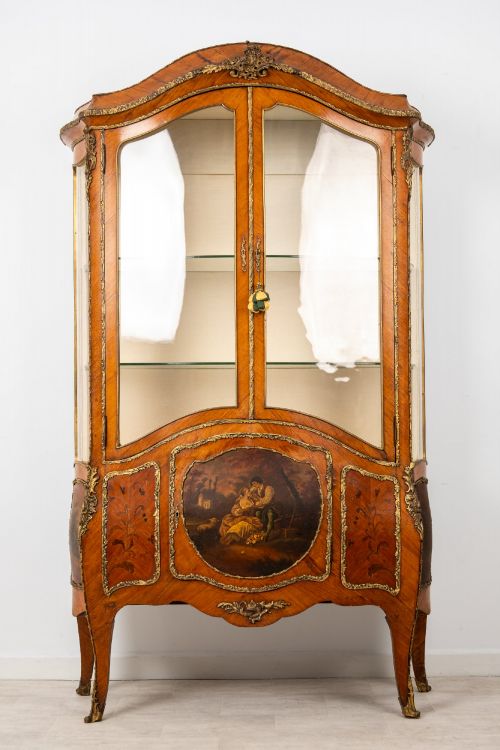
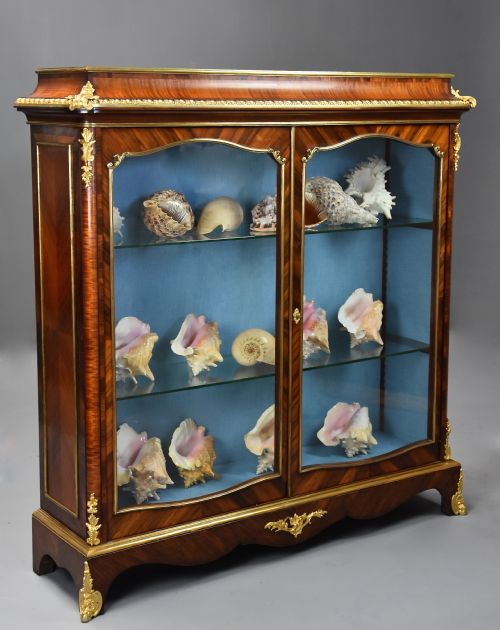
A french gilt glass cabinet is primarily a vitrine or display cabinet designed to showcase porcelain, glassware, and small ornaments behind glass panes. These pieces emerge predominantly from the nineteenth century into the Edwardian era, bearing the stylistic influence of Louis XV and Louis XVI revivals.
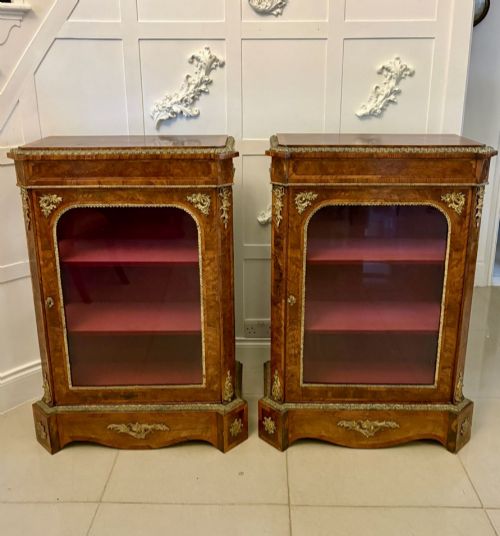
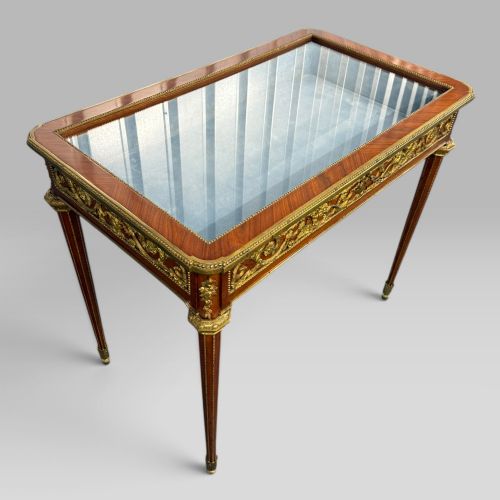
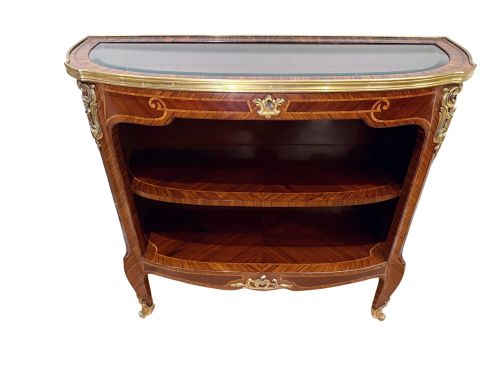
The form frequently incorporates serpentine or straight wooden bodies mounted with gilt metal, often standing on slender cabriole legs or plinth bases. Alongside dedicated vitrines, related forms such as credenzas, sideboards with display sections, and bijouterie tables appear across the selection.
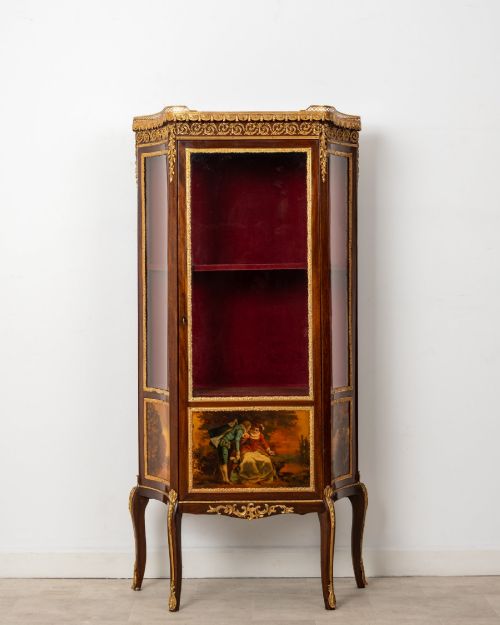
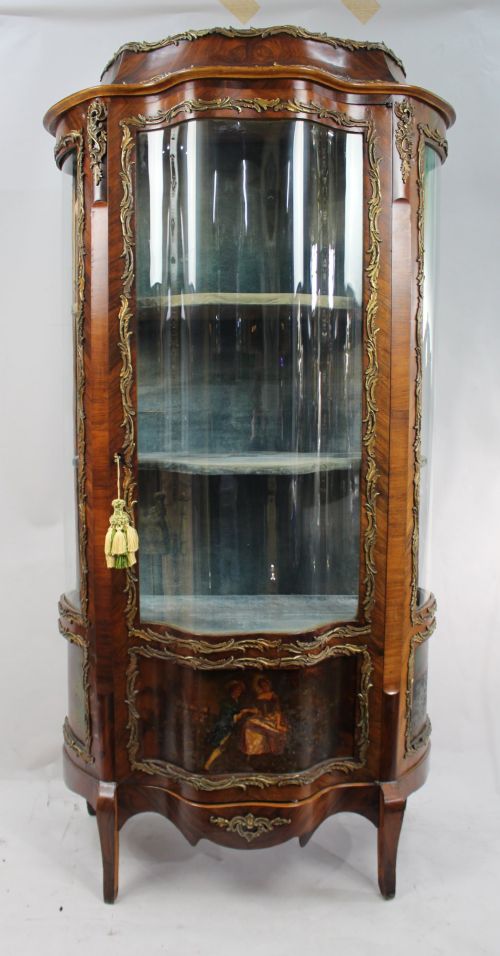
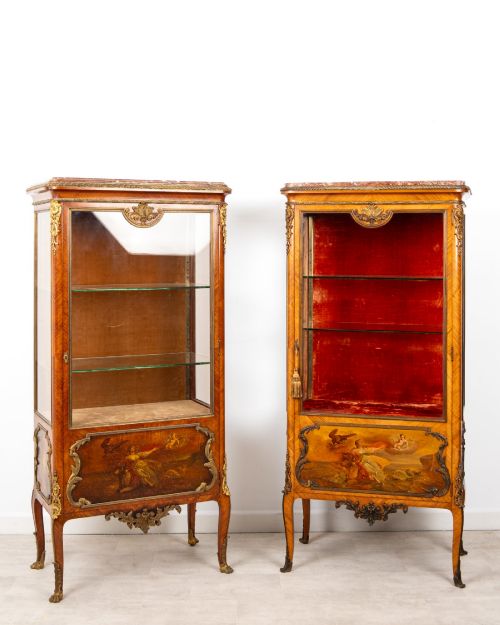
Origins span both English Victorian interpretations and continental French workshops, uniting classic continental silhouettes with domestic cabinet-making traditions of the period. Cabinets may include painted panels in the Vernis Martin manner, adding pictorial scenes beneath the glass and gilt framework.
Materials and Construction Methods
Cabinetmakers constructed the structural carcasses using hardwoods like mahogany, walnut, and kingwood, frequently applying elaborate veneers and marquetry in floral or geometric patterns. Ebonised finishes and amboyna also surface among the timber selections.
Gilt bronze, ormolu, and gilt metal mounts frame the glass doors and accentuate corners, cornices, and feet, providing the characteristic metallic gleam. Many pieces incorporate marble tops in white or coloured varieties, fitted precisely to the upper surface of the cabinet.
Glazing panels wrap around the sides and front to maximise internal light, while interiors often feature velvet linings to cushion displayed items. Painted decorations utilising Vernis Martin techniques adorn lower panels on specific French examples.
Listings feature periods spanning from the Victorian era and 1860 through to 1920, incorporating walnut, kingwood, mahogany, and marble.
Assessing Craftsmanship and Distinction
Quality rests heavily on the crispness and weight of the ormolu mounts, where hand-chased gilt bronze demonstrates far greater definition than cast gilt metal. The complexity of the timber marquetry and the precision of the veneer matching further separate standard production from masterwork pieces.
Structural integrity shows in the fluidity of serpentine curves and the smoothness with which doors operate within their rebated frames. Master makers contribute documented attribution through signatures or distinctive construction habits, elevating the standing of a cabinet.
H. J. Hatfield & Sons·François Linke·Maison Gagneau·Paul Sormani·G. Durand
The French Gilt Glass Cabinet Glossary
- Ormolu
- Gilt bronze mounted onto furniture, cast and hand-chased to provide bright metallic ornament. This technique defines the rich decorative highlights of nineteenth-century revival pieces.
- Vitrine
- A glass-fronted display cabinet intended for showing ceramics and curiosities. The term derives from the French word for glass.
- Vernis Martin
- A simulated Japanese lacquer technique developed in France, using translucent varnishes over painted panels. It appears on cabinet doors and lower friezes.
- Marquetry
- Inlaid wood veneers arranged to form decorative pictures or patterns. Craftsmen utilised contrasting timbers such as walnut and kingwood to create floral motifs.
- Bijouterie table
- A glass-topped display table designed for precious trinkets and jewellery. These tables share the gilt mounts and slender legs of companion vitrines.
French Gilt Glass Cabinet: Frequently Asked Questions
What is a vitrine?
A vitrine is an enclosed cabinet featuring glass panels on the front and sides, designed specifically to display decorative objects and porcelain collections. These pieces protect delicate items from dust while allowing full visibility from multiple angles.
In period interiors, they served as focal points for drawing rooms, often matching other gilt-mounted furniture in the same reception space.
How do I clean the ormolu?
Ormolu mounts require gentle dusting with a soft, dry brush to prevent accumulation in the recesses of the cast metal. Avoid harsh commercial metal polishes, which can strip the original gilding.
Professional care is recommended if the gilt surface requires deeper cleaning or stabilisation over time.
Where should I place a cabinet?
Position these cabinets away from direct sunlight and strong heat sources to protect sensitive wood veneers, interior velvet linings, and antique glass. Ambient light from a side window highlights the gilt bronze mounts and internal displays effectively.
Ensure the floor is level so that the glazed doors hang true within their frames.
How do I identify French revival styles?
French revival styles from the nineteenth century emulate the curves of Louis XV rococo or the geometric symmetry of Louis XVI neoclassical design. Look for signature elements like cabriole legs, floral marquetry, and scrolling ormolu mounts.
Cabinet construction details and timber choices usually point clearly to nineteenth-century workshop practices rather than eighteenth-century originals.