




French Gilt Folding Screen
These french gilt folding screen examples divide spaces or block hearths with gilded splendour, bringing nineteenth-century continental theatricality straight into a room.
French Gilt Folding Screen
A french gilt folding screen is a hinged room divider or fire screen designed in nineteenth-century France to segment interiors or ornament a hearth. The pieces on this page span the 1800s through to 1910, reflecting various revivals of Louis XIV and Rococo styles alongside grand chateau aesthetics.
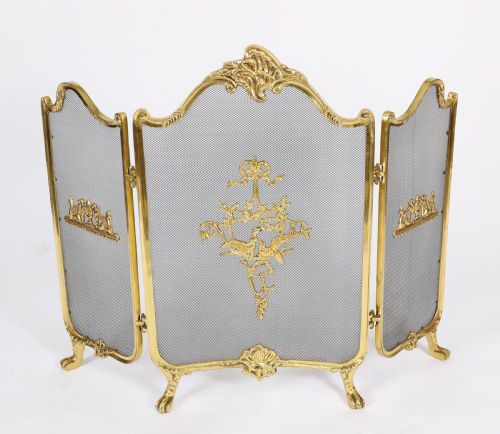
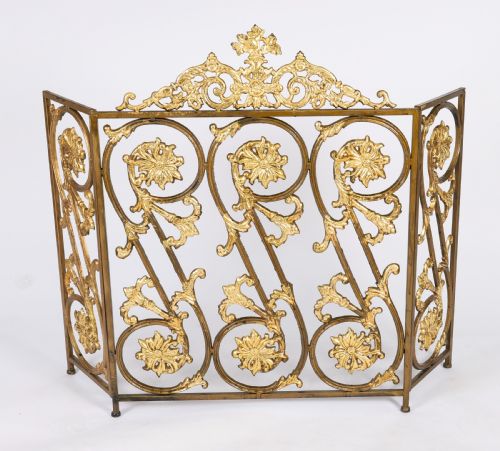
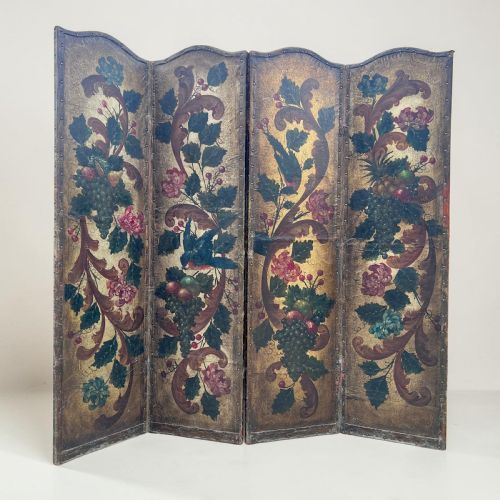
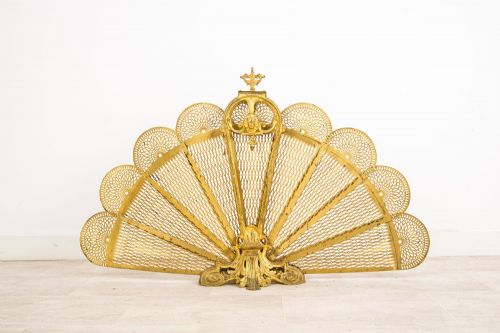
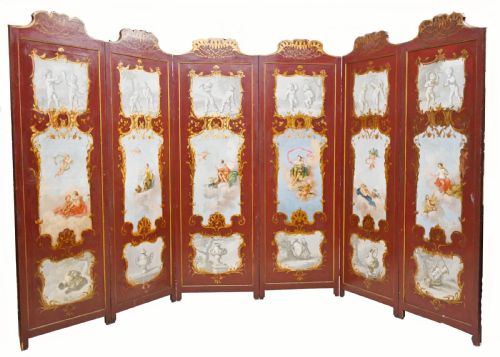
Buyers encounter multifold room dividers alongside smaller fire screens intended for the fireplace. Most examples deploy three or four folds, though larger six-panel leather screens and peacock fan designs also appear.
The forms originate primarily in the nineteenth century, encompassing Victorian interpretations and distinct Rococo Revival aesthetics. They function as both decorative furnishings and practical architectural barriers within domestic spaces.
How they were made
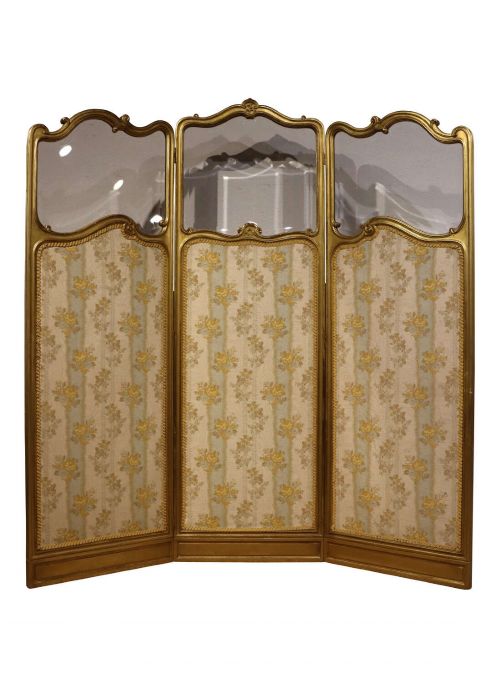
Frames take shape in timber, giltwood, brass, gilt bronze, and ormolu, creating sturdy armatures for intricate decoration. Wood is frequently carved or painted, then gilded to achieve a brilliant metallic sheen.
Insets vary from bevelled glass and silk panels to hand-painted leather and oil paint. Some fire screens incorporate intricate metalwork like peacock fan folding mechanisms and flaming torch motifs.
Some fire screens unfold into the striking shape of a peacock's tail, bringing avian drama directly to the hearth.
What varies in quality
Quality rests upon the depth of the metal casting and the crispness of the giltwood carving. Heavy ormolu and hand-chased gilt bronze represent a higher standard than simpler stamped brass frames.
The sophistication of the secondary materials dictates the tier of the piece. Hand-painted leather panels, bevelled glass, and fine silk inserts elevate a screen far above plain painted wood versions.
Paul Sormani
The French Gilt Folding Screen Glossary
- Ormolu
- Gilded bronze. This technique involves applying finely ground high-carat gold to a bronze base, producing a rich and lasting metallic lustre.
- Rococo Revival
- A nineteenth-century design movement. It resurrects the exuberant, asymmetric curves, scrollwork, and natural motifs characteristic of the eighteenth-century French court.
- Bevelled glass
- Glass with an angled edge. This treatment catches the light and adds a layer of refinement to multi-fold screens.
- Fire screen
- A decorative hearth accessory. These screens shield occupants from radiant heat when the fire is unlit.
French Gilt Folding Screen: Frequently Asked Questions
What is the difference between room dividers and fire screens?
Room dividers are tall multi-panel pieces built to separate spaces within a larger interior. Fire screens are substantially smaller, intended specifically to sit before a fireplace.
While both share French gilt characteristics, their scale and intended placement dictate how they are used in a room.
How do I date a nineteenth-century screen?
Dating relies on stylistic clues like Rococo Revival curves versus later simpler forms, alongside construction methods in the hinges and frames. Specific decades are often indicated by the revival movement prevalent at the time of manufacture.
Materials such as hand-painted leather or ormolu also point toward specific periods within the 1800s.
How are multi-fold screens supported?
Hinges connect the individual panels, allowing the screen to stand in a zig-zag configuration for stability. The weight of materials like giltwood or gilt bronze keeps the structure upright.
Careful positioning of the folds prevents the screen from tipping during everyday use.
Where should I place a room divider?
These screens suit large reception rooms, bedrooms, or open-plan areas needing visual breaks. They work effectively to create intimate corners or conceal specific zones.
Positioning them away from heavy foot traffic protects delicate silk or painted leather panels.
What maintenance do gilt surfaces require?
Giltwood and gilt bronze need gentle dusting with a dry, soft cloth to prevent abrasive particle build-up. Moisture and chemical cleaners damage the delicate gold leaf and patination.
Keeping them out of direct sunlight preserves the painted leather and silk inserts.