
French Gilt Ceiling
When searching for a french gilt ceiling fixture, buyers encounter ornate brass and bronze chandeliers, hall lanterns and pendant lights from the nineteenth and early twentieth centuries.
French Gilt Ceiling
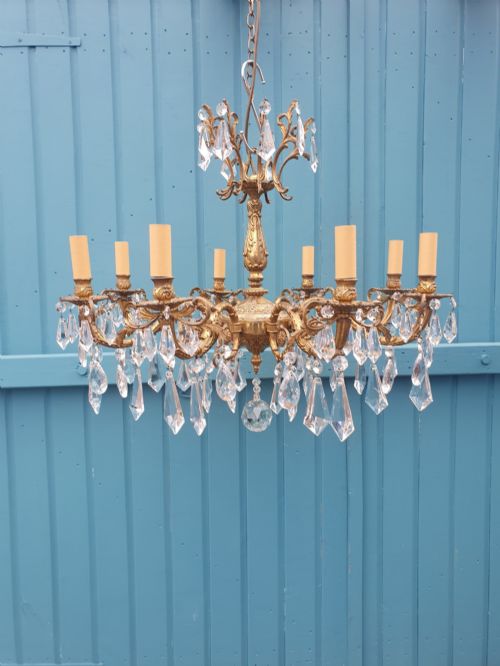
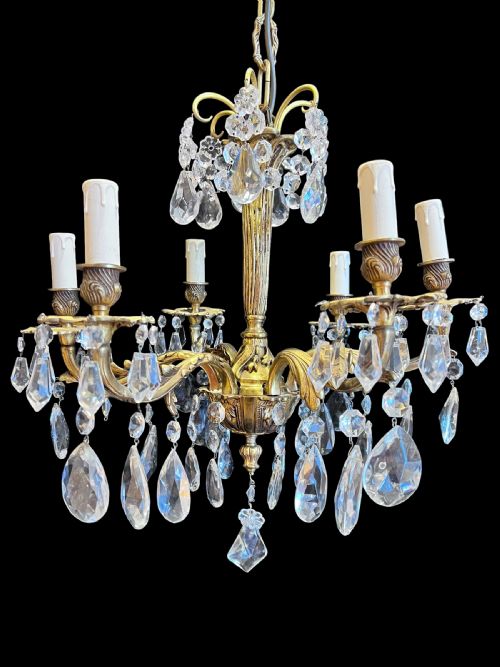
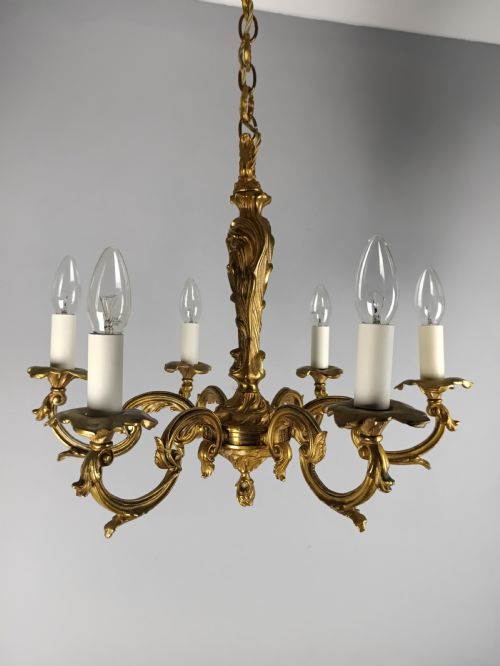
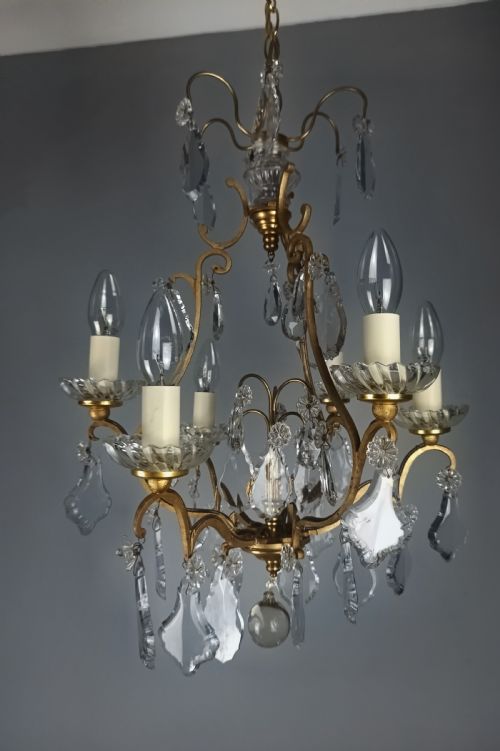
A french gilt ceiling fixture encompasses multi-armed chandeliers, hall lanterns, and pendant lights originating primarily from the nineteenth century through the early decades of the twentieth century. The selections available on this page lean heavily toward early twentieth-century interpretations of French design, alongside significant nineteenth-century bronze and giltwood examples.
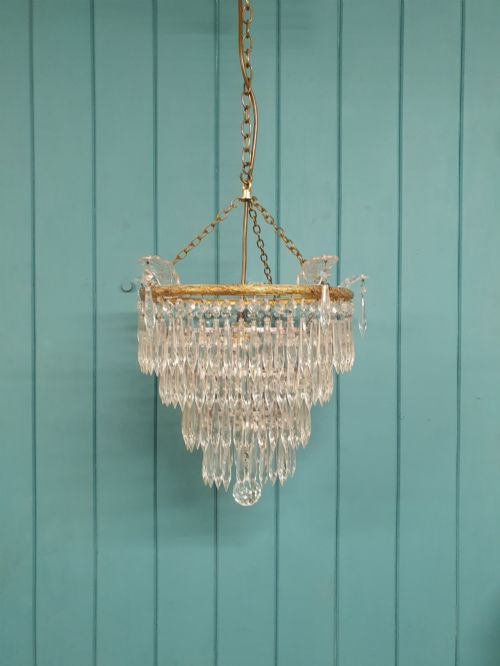
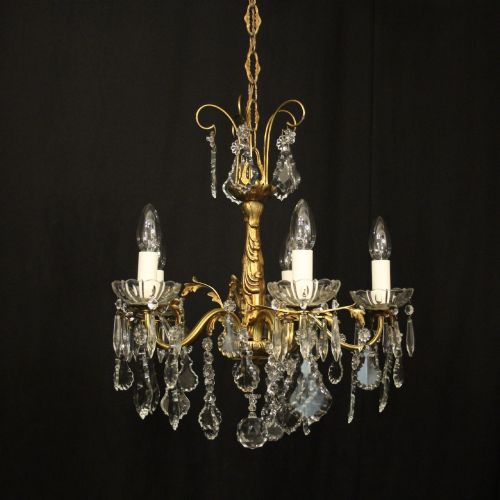
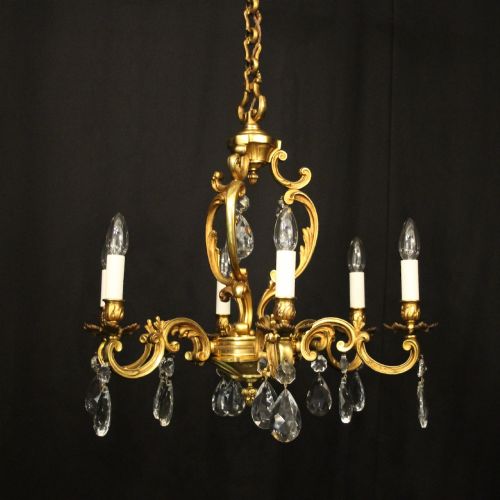
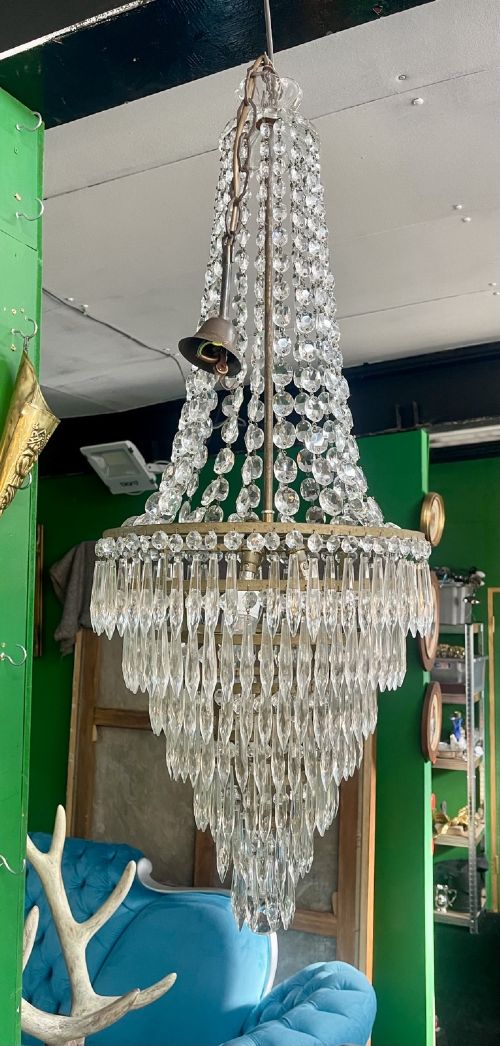
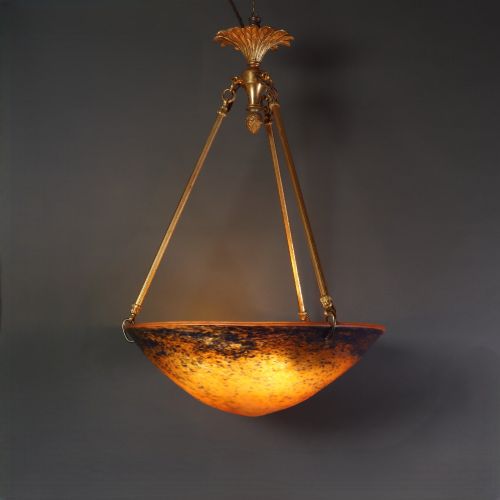
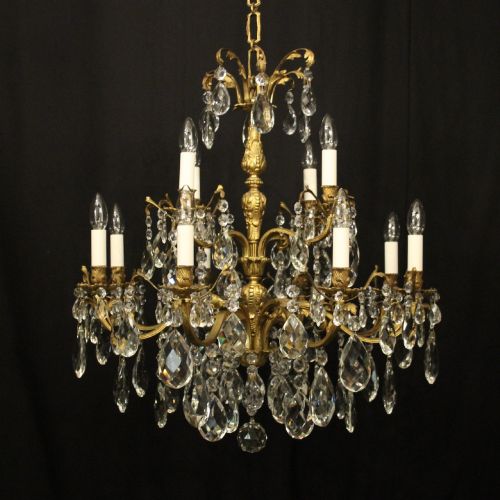
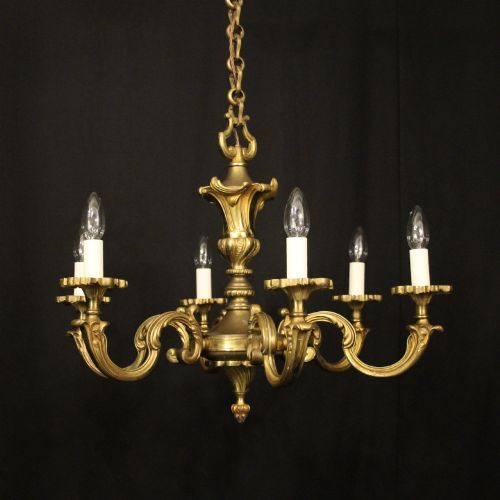
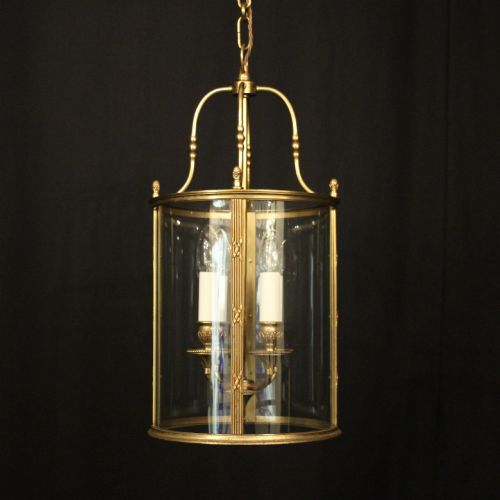
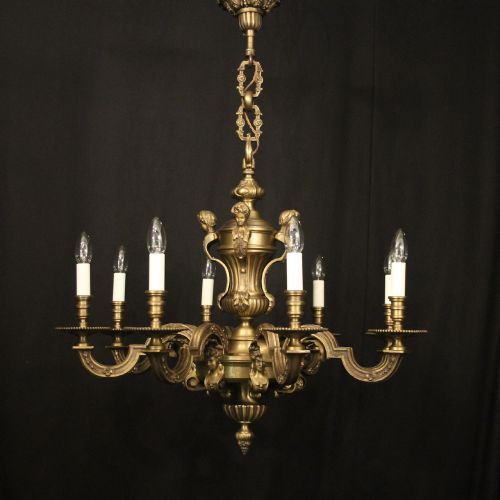
Forms range from compact single-light hanging lanterns and convex hallway lights to grand multi-tiered crystal waterfalls and birdcage chandeliers carrying numerous branches. Buyers frequently encounter styles referencing French Empire, Louis XVI, and Rococo aesthetics, marked by classical symmetry or ornate leaf and cherub decorations.
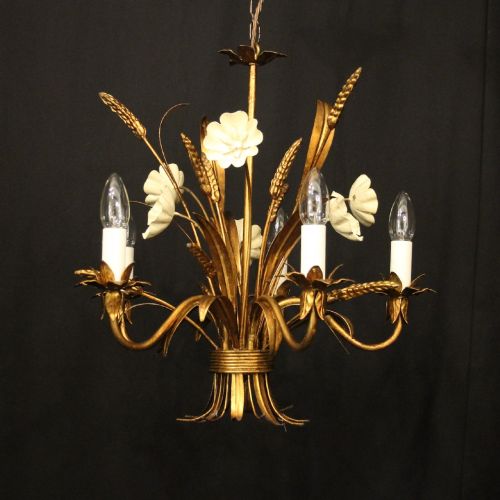
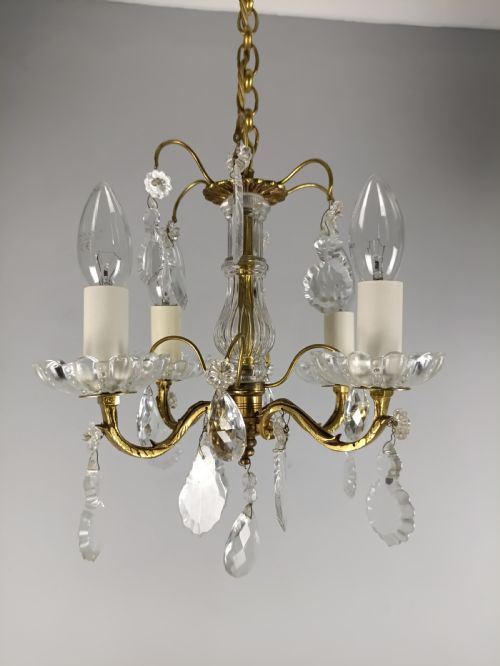
The materials span gilt bronze, brass, and spelter, often embellished with cut glass prisms, crystal drops, and occasionally porcelain flowers or toleware ceramic elements. These pieces were designed to hang centrally in principal rooms and hallways, casting warm reflections through their metallic surfaces and glass components.
Assessing quality
The quality of a gilt ceiling fixture rests upon the crispness of the metal casting and the depth of the chased details on the bronze or brass branches. Finer examples display sharp, hand-finished ornamentation rather than soft, smoothed edges typical of mass production.
The integrity and clarity of the crystal or cut glass components further distinguish pieces, with high-end examples utilising heavy, hand-cut prisms that refract light cleanly. Original gilding intact on the metalwork indicates careful preservation compared to later, heavy-handed overpainting.
Listings span the nineteenth century through the 1930s, featuring glass, brass, gilt bronze, crystal, and gilt metal shaped into lanterns, pendants, and multi-arm chandeliers.
The French Gilt Ceiling Glossary
- Gilt bronze
- An alloy of copper and zinc finished with a layer of gold leaf or mercury gilding, commonly known as ormolu in French pieces. This material maintains its rich metallic sheen over decades.
- Tent and waterfall
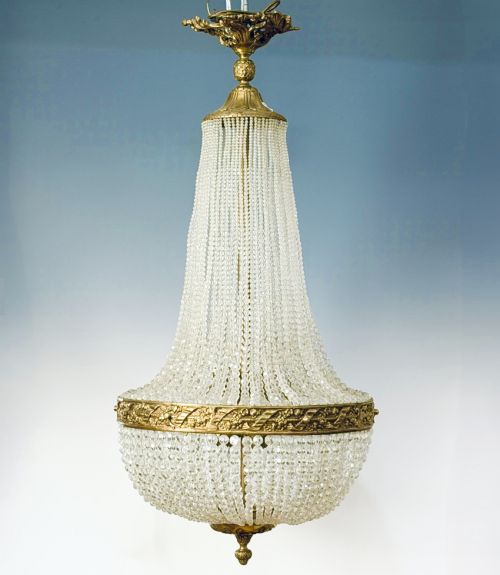
- A chandelier configuration featuring strings of small crystal beads gathered into a tent shape at the top, flowing down into a cascading arrangement of larger drops below. It maximises light refraction from a central light source.
- Hall lantern
- An enclosed hanging light designed specifically for corridors and entranceways, often featuring convex glass panels mounted within a brass or bronze frame. These protected bulbs from drafts in high-traffic spaces.
- Spelter
- A zinc alloy used as a cost-effective alternative to bronze for decorative figures and castings, typically painted or gilded to resemble higher-grade metals. It appears frequently in figural ceiling mounts.
- Prism
- A cut glass or crystal pendant suspended from the arms or crown of a fixture to disperse light into spectral colours. Different cuts, such as coffin prisms or spear points, define the period style.
French Gilt Ceiling: Frequently Asked Questions
How do I hang a heavy antique chandelier?
These fixtures require direct attachment to a structural ceiling joist using a rated steel hook or mounting box capable of supporting the full weight of the bronze and crystal. Professional installation ensures the electrical wiring safely manages the load without straining the decorative chain.
Weight varies considerably between a simple single-light lantern and a multi-branched crystal waterfall fixture. Consulting an electrician before purchase prevents structural issues during placement.
Can these antique lights be rewired for modern use?
Most period fixtures accommodate modern electrical standards, and many surviving examples have already received updated wiring to meet current safety regulations. Rewiring involves running new heat-resistant flex through the internal channels of the arms and securing standard lamp holders.
Preserving original sockets and components is possible when restoration prioritises historical accuracy over daily utility. A qualified restorer can adapt the internal workings without altering the exterior appearance.
How do I clean crystal drops safely?
Maintenance involves removing dust with a soft feather duster or microfiber cloth while the chandelier remains suspended from the ceiling. For a deeper clean, individual crystal drops can be unhooked and washed in lukewarm water with mild soap.
Harsh chemical cleaners strip the delicate gilding from the metal frame surrounding the glass. Drying each piece thoroughly before reattachment prevents water spots and protects old pins.
What is the difference between Empire and Louis XVI styles?
Empire style fixtures draw inspiration from ancient Roman and Greek motifs, displaying heavier proportions, martial symbols, and winged figures or laurel wreaths. The lines remain bold and commanding, reflecting early nineteenth-century tastes.
Louis XVI style emphasises neoclassical restraint, featuring straighter structural lines, urn motifs, delicate swags, and refined ribbon bows. The ornamentation is lighter and more symmetrical than the preceding Rococo exuberance.