




French Four Light Chandelier
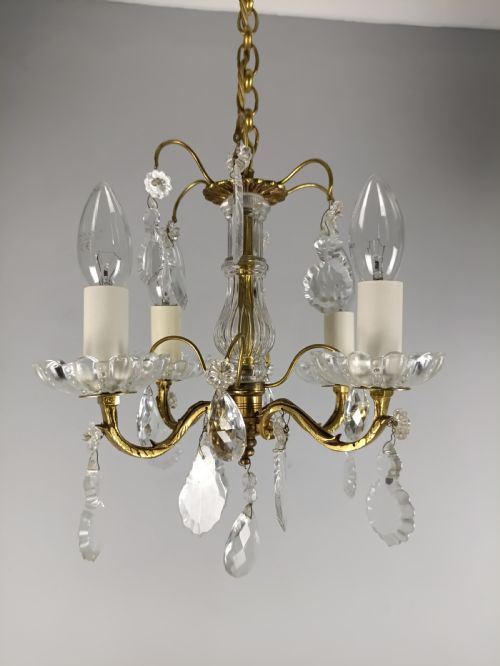
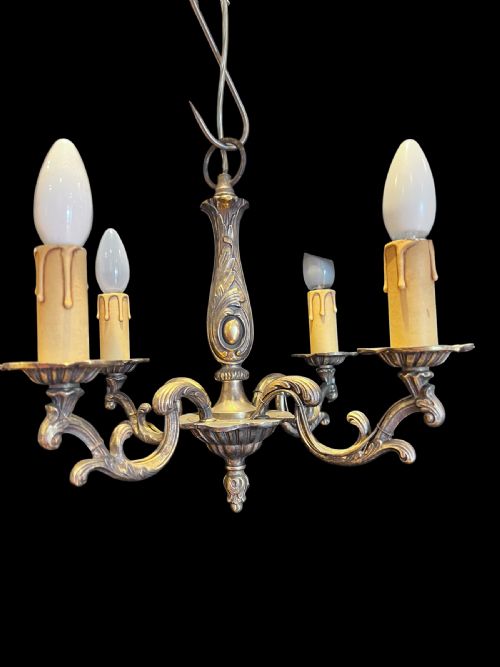
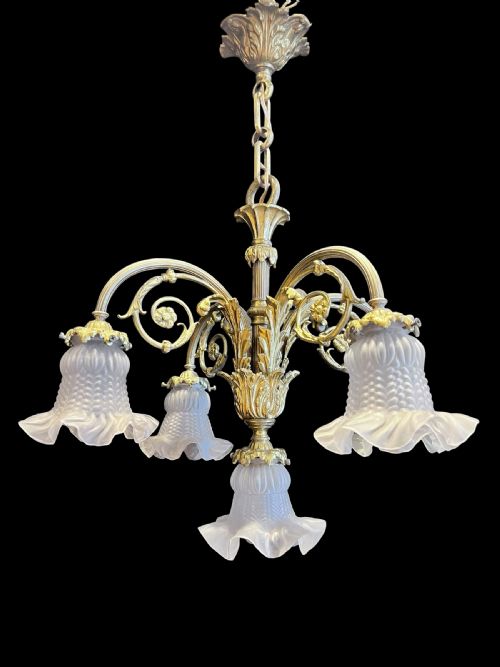
A french four light chandelier brings distinct continental elegance to a room, offering balanced illumination through four dedicated branches.

French Four Light Chandelier
When searching for a french four light chandelier, buyers encounter a specific range of antique ceiling lighting rooted in continental design. These fixtures span multiple decades, appearing frequently from the early twentieth century alongside nineteenth-century examples.
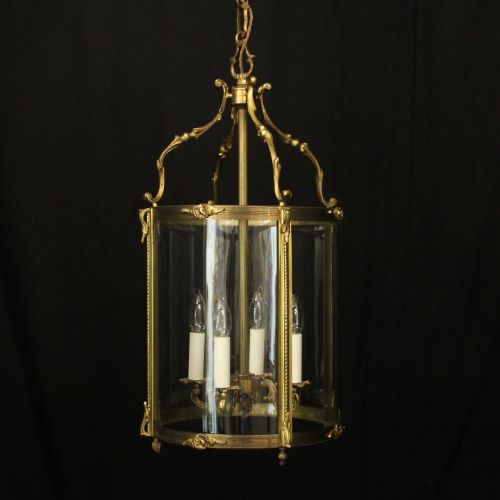
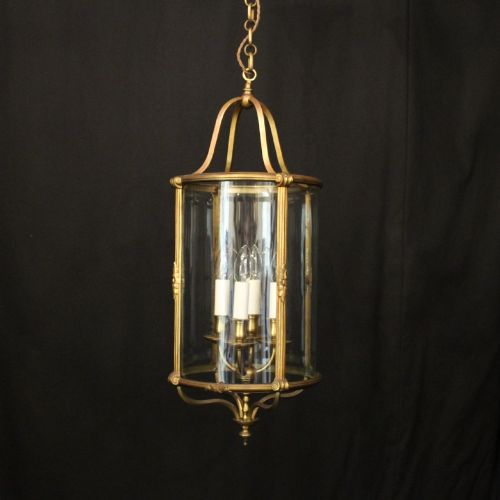
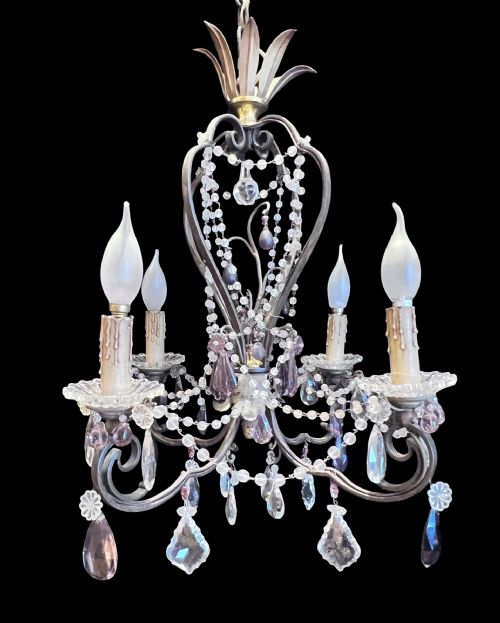
The selections on this page encompass various forms beyond standard chandeliers, including hall lanterns, pendant lights, and wall lights. Birdcage and bag chandeliers also feature prominently among the available formats.
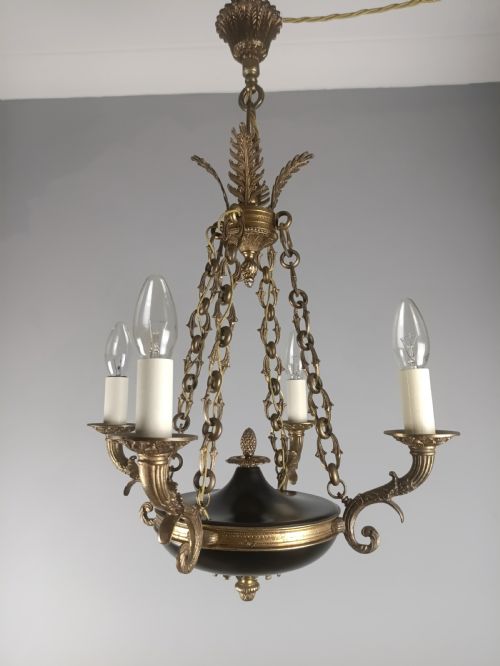
Stylistic influences range from Empire and Louis XVI to Neoclassical and Rococo Revival. Most pieces originate from France, though occasional English and Italian variants appear in the broader selection.
Materials and Construction
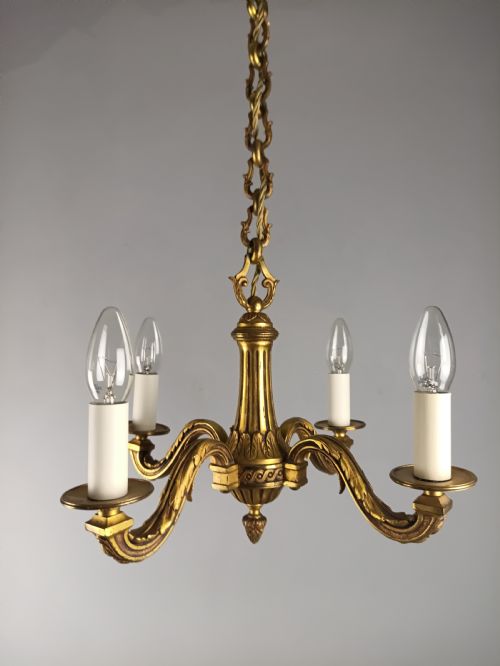
Makers utilised cast and forged metals for the primary frames, relying heavily on brass, gilt bronze, ormolu, and steel. Gilded finishes are common, applied to brass and bronze substrates to create a bright reflective surface.
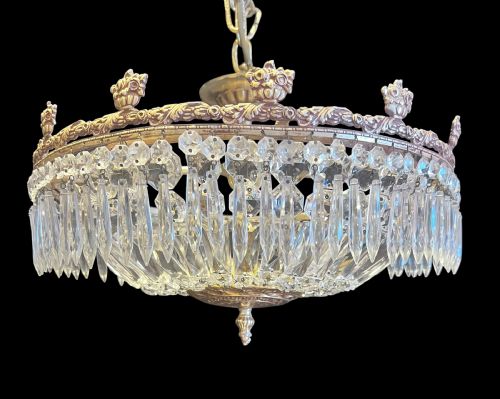
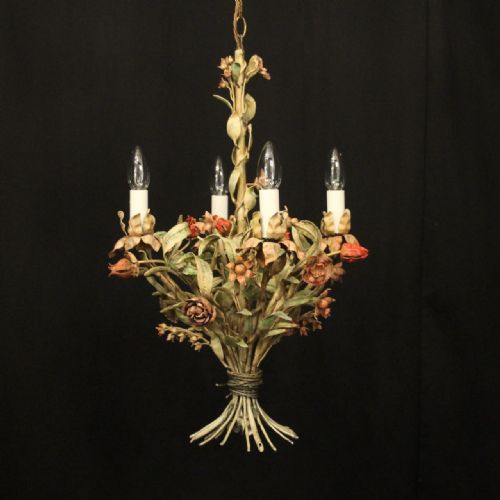
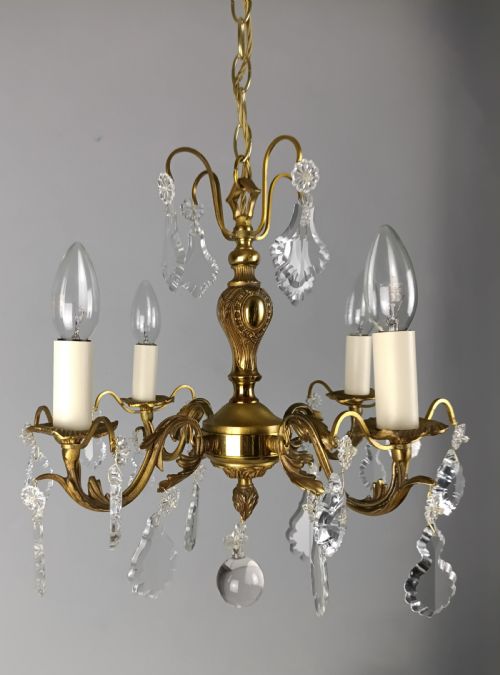
Glass and crystal elements adorn many fixtures, forming drops, plates, and enclosing lanterns. Polychrome toleware appears in specific decorative variants, introducing painted colour to the metalwork.
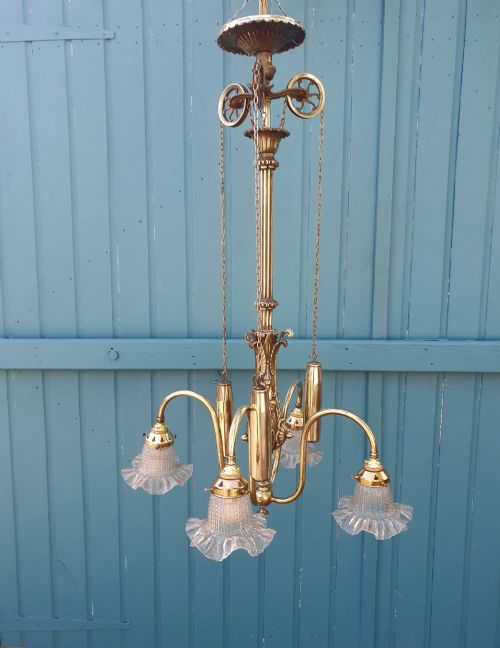
Object forms span conventional ceiling lights, wall lights, convex hall lanterns, and birdcage chandeliers.
Assessing Quality
Quality in these fixtures rests upon the crispness of metal casting and the depth of the original gilding. Finer examples display intricate chased detailing on bronze and brass components rather than plain, uniform surfaces.
The integration of crystal elements also dictates distinction, where cut glass drops and fitted glass panels exhibit superior clarity and secure mounting within the metal frame.
The French Four Light Chandelier Glossary
- Ormolu
- A gold-coloured alloy of copper, zinc, and sometimes tin, applied to bronze mounts. This technique provides a rich, decorative metallic finish on period light fittings.
- Toleware
- Painted or lacquered sheet metal items. The method allows for colourful floral or polychrome decoration on chandelier bodies.
- Birdcage Chandelier
- A lighting fixture featuring a skeletal metal frame shaped like an avian cage. Crystal strands and drops typically drape across this open framework.
- Plafonniere
- A ceiling-mounted light fixture set flush or close to the plaster surface. These pieces often incorporate glass panels held within a decorative metal mount.
- Gilt Bronze
- Bronze metal coated with a thin layer of gold leaf or gold amalgam. The process enhances the visual warmth and prestige of the object.
French Four Light Chandelier: Frequently Asked Questions
Where should a four light chandelier be hung?
These fixtures suit medium-sized rooms, entrance halls, or dining spaces where four light sources provide adequate ambient illumination without overwhelming the ceiling height.
Hanging height depends on clearance requirements beneath the fitting, particularly when placed above furniture or walkways.
How do I identify an Empire style chandelier?
Empire style pieces typically exhibit classical architectural motifs, military symbols, and symmetrical profiles influenced by the Napoleonic era. Gilded bronze and strict geometric arrangements are standard markers.
They often incorporate restrained ornamentation compared to the later, more flowing Rococo Revival designs.
What is the difference between a lantern and a chandelier?
Lanterns generally feature enclosed glass panels held within a rigid metal cage, designed originally to shield candles from drafts in hallways and corridors. Chandeliers rely on open branches extending outward from a central stem to support multiple light points.
Both categories appear frequently in historical French interior lighting.
How do I care for gilt brass and crystal?
Dust metal surfaces gently with a dry, soft cloth to preserve the underlying gilding without abrasive cleaners. Crystal drops may be cleaned carefully with mild soapy water while attached or removed for detailed washing.
Avoid chemical sprays that might strip historical patinas from the brass or bronze frames.