





French Folding Side Table
These French folding side tables combine compact ingenuity with Continental flair, offering versatile surfaces that stow away neatly when not in use.
French Folding Side Table
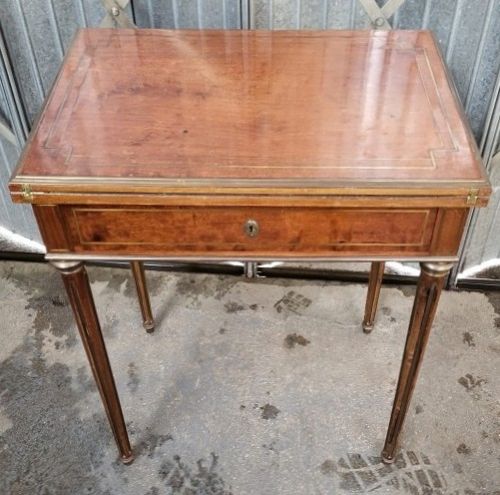
A French folding side table brings practical surface space and distinct period character to a room through clever pivoting or collapsing mechanisms. You will encounter various forms ranging from occasional tables and console tables to multi-functional card and games tables.
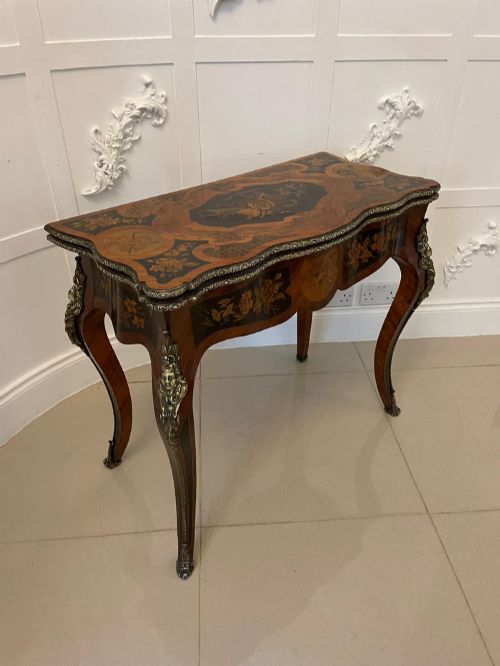
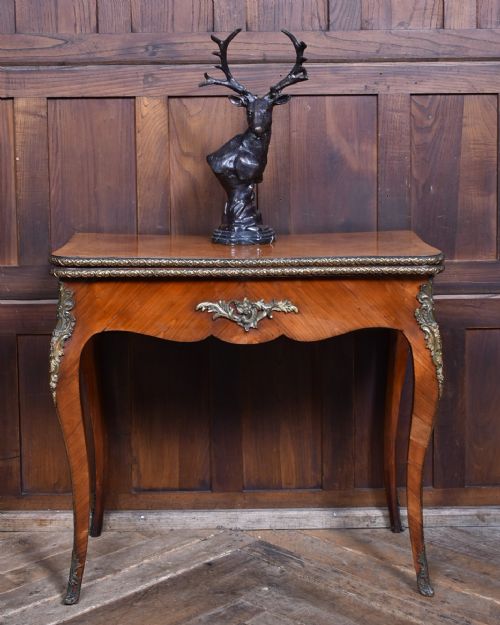
The selection draws on decades from the nineteenth century up to the early twentieth century, spanning Victorian eras and specific revival movements. Many examples reflect the ornate curves of the Louis XV style, while others demonstrate rustic farmhouse simplicity or refined Georgian tastes.
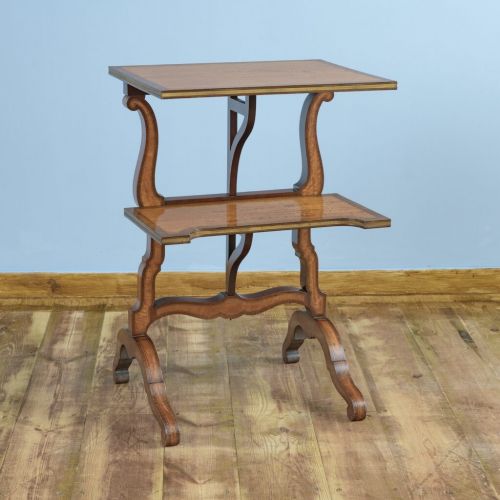
Makers utilised diverse woods and metals, resulting in pieces designed for both formal drawing rooms and practical domestic settings. Whether you need a compact garden table or an elaborate marquetry card table, these pieces serve as functional history.
Distinctions in quality and execution
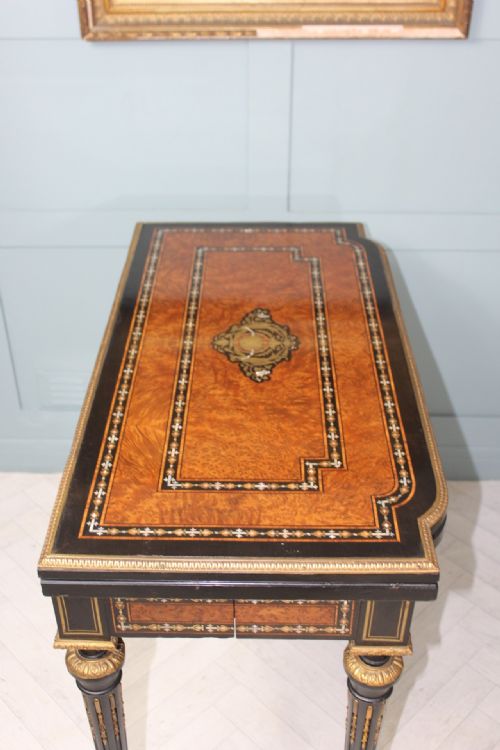
The standard of timber selection and the precision of the marquetry inlay dictate the visual hierarchy of these pieces. Elaborate floral patterns executed in contrasting woods demand high skill from the cabinetmaker.
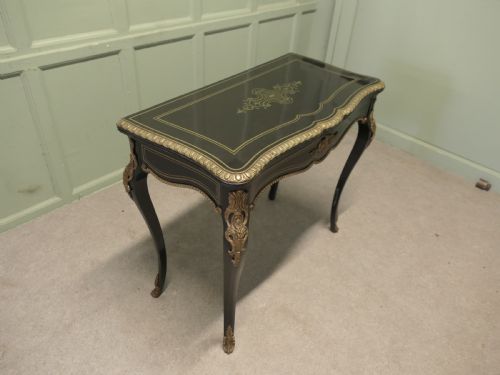
The integration of metal mounts, such as cast ormolu or brass stringing, reveals the level of workshop expenditure. Finer examples display fluid casting and secure fastening that complement the underlying wood.
Listings incorporate items from the 1850s, 1860s, 1870s, 1880s, 1890s, and 1920s alongside broader Victorian and Georgian designations.
Maison Giroux·Henry Dasson·Morison of Edinburgh
The French Folding Side Table Glossary
- Marquetry
- Decorative veneer applied to furniture in patterns and pictures using different woods, metals, or shells. This technique creates complex pictorial surfaces on tabletops.
- Ormolu
- Gilded bronze applications used for decorative mounts and furniture trim. Makers cast and finished these elements to accent the corners and borders of tables.
- Parquetry
- Geometric mosaic woodwork used for repeating patterns on tabletops and panels. It uses small pieces of timber to construct chequerboard or diagonal designs.
- Card table
- A folding table designed specifically for card games, often featuring a baize-lined interior and pivoting top. These tables expand to double their surface area when opened.
French Folding Side Table: Frequently Asked Questions
How do these folding tables work?
Many of these pieces utilise hinged leaves or pivoting tops that unfold to double the available surface area. Supporting legs often swing outward from the frame to hold the opened top steady.
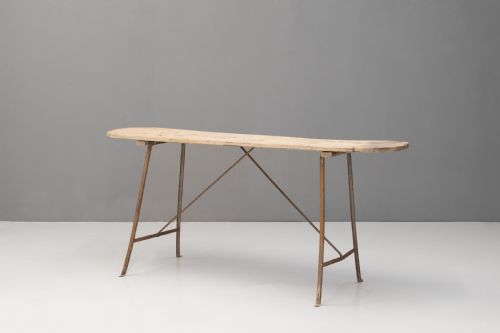
Simpler folding designs rely on trestle frames or folding metal structures that collapse entirely for storage. The mechanism depends on whether the table was built for gaming, tea, or garden use.
Where should I place a French folding side table?
These tables suit hallways, sitting rooms, and drawing rooms where flexible surface space is useful. Their compact folded footprint allows them to sit flat against a wall as a console until needed.
Keep them away from direct heat sources and strong sunlight to protect the polished wood veneers and inlay. Placing a card table open in the centre of a room highlights the marquetry top.
How do I identify a Louis XV style table?
Louis XV style pieces display characteristic cabriole legs, asymmetrical curves, and floral or scroll carvings. You will often see serpentine edges and delicate ormolu mounts following the natural contours of the wood.
Revival pieces from the nineteenth century adopted these same decorative elements while utilising contemporary construction methods. Look closely at the joinery and timber ageing to understand the true period.