




French Floral Wall Art
French floral wall art brings centuries of hand-painted canvases, woven tapestries, and carved panels into interior spaces with enduring elegance.
French Floral Wall Art
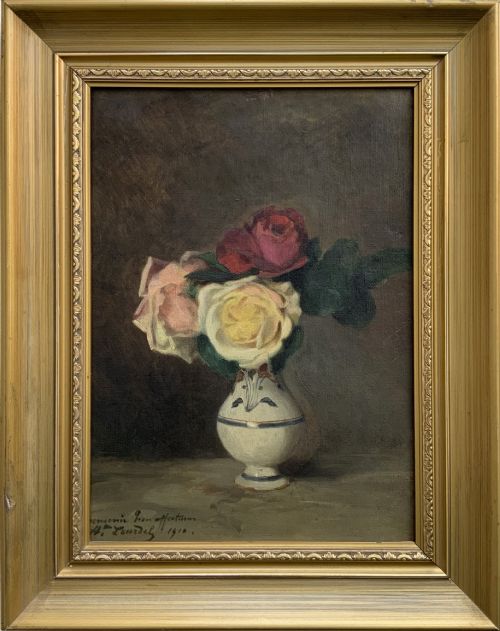
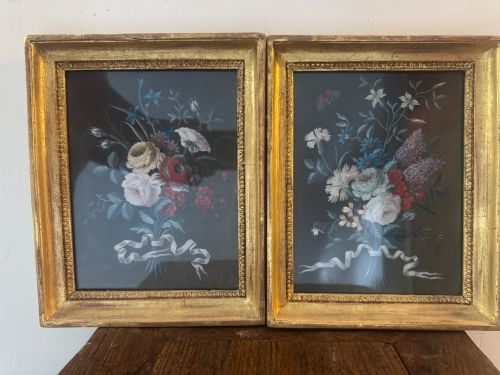
French floral wall art encompasses diverse decorative forms designed to adorn interior vertical surfaces with botanical and floral themes. Pieces span from oil paintings on canvas and board to woven tapestries and delicate gouache studies on paper.
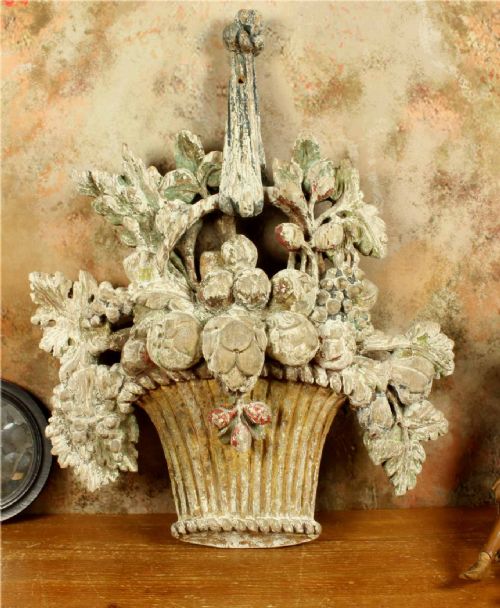
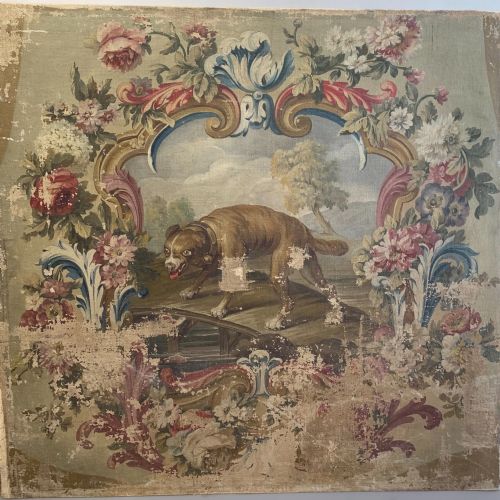
The selection ranges widely across periods, including 18th-century hand-painted panels, 19th-century oil paintings of roses and anemones, and mid-20th-century modernist floral still lifes. Buyers encounter framed botanical engravings, carved wooden floral reliefs, and large wall-hanging tapestries originating from France.
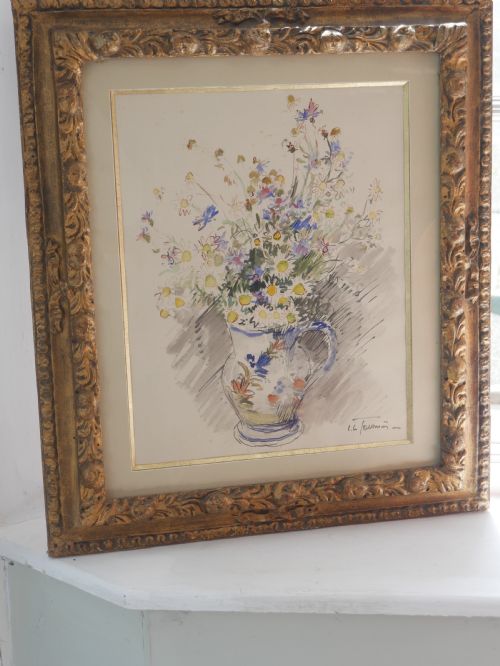
Traditional subjects feature prominently, capturing summer flowers in vases, water lilies on lakes, and intricate botanical studies. These works provide a direct connection to historical French interior ornamentation and classic botanical illustration.
How they were made
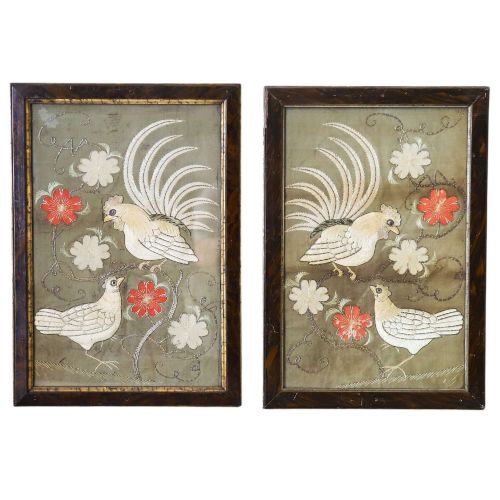
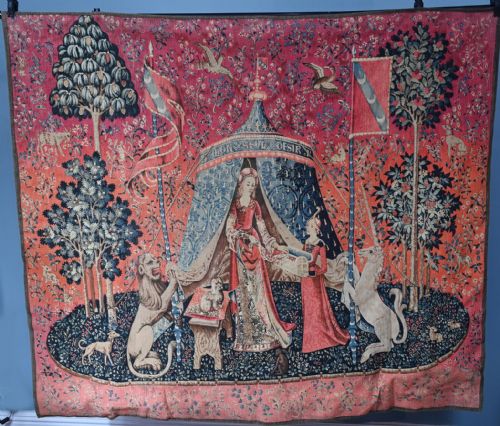
Makers utilised traditional artistic mediums such as oil paint on canvas or wood panels, alongside gouache on paper and silk embroideries. Woven textiles employ wool and silk yarns to construct complex verdure tapestries and wall coverings.
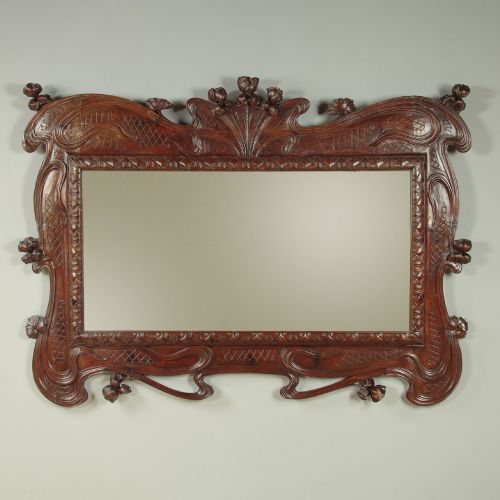
Frames and structural elements incorporate carved wood, often accented with gold leaf, alongside specialised glass and faux tortoiseshell surrounds. Hand-painted wallpaper panels and botanical engravings reflect meticulous craftsmanship from historic French workshops and studios.
French Floral Wall Art Retail Price Guide 2026
Typical asking prices for french floral wall art among the pieces listed under this phrase on Sellingantiques today, from the lower quarter to the upper quarter. They describe what is for sale here now, not the wider market.
Listings feature wood, oil paint, canvas, wool, glass, silk, paper, and gold leaf across multiple centuries.
What varies in quality
Quality rests in the precision of the brushwork, the depth of the pigment, and the preservation of the original surface texture whether on canvas, wood, or paper. Finer woven tapestries display intricate detail and rich colour variation across wool and silk threads.
The artistic competence demonstrated in composition and botanical accuracy distinguishes standard decorative pieces from works executed by accomplished artists or circle-attributed painters. Original framing and the integrity of historic mounts further influence the standing of each piece.
Pancrace Bessa·Pierre-Joseph Redoute·Bertoldo Taubert·Jules Felix Ragot
The French Floral Wall Art Glossary
- Gouache
- An opaque water-based paint that dries to a matte finish, frequently utilised for detailed botanical studies on paper.
- Verdure tapestry
- A historical woven wall hanging featuring predominant foliage and landscape motifs, often produced in French workshops during the 18th century.
- Botanical engraving
- A printed illustration derived from an engraved plate, capturing plant species with scientific precision and artistic grace.
- Still life
- An artwork depicting inanimate subject matter, typically featuring cut flowers in vases or baskets arranged on draped cloth.
- Aubusson
- A traditional style of hand-woven tapestry originating from the French town of Aubusson, known for floral and architectural designs.
French Floral Wall Art: Frequently Asked Questions
How do I identify an 18th-century French tapestry?
Eighteenth-century French tapestries typically exhibit verdure motifs with muted wool and silk tones, reflecting traditional weaving techniques from historical centres like Aubusson. Examination of the reverse side and edge stitching reveals the age of the weave and hand-finished construction.
These large wall coverings were woven on vertical or horizontal looms using natural dyed yarns. Their subject matter often centres on dense foliage, floral arrangements, and pastoral scenes typical of the period.
What is the difference between gouache and oil paint on these pieces?
Gouache utilises water-bound opaque pigments on paper or board, offering a matte surface finish ideal for detailed botanical studies. Oil paint employs slow-drying pigments suspended in medium, creating rich texture and depth on canvas or wood panels.
Oil paintings generally exhibit visible brushstrokes and greater luminosity, whereas gouache works rely on fine line work and flat colour application. Both mediums require appropriate framing behind glass or in sealed panels to prevent environmental degradation.
How do I care for antique silk embroideries?
Antique silk embroideries require protection from direct sunlight and high humidity to prevent fibre degradation and colour fading. Keeping them behind UV-filtered glass within their original frames maintains structural integrity.
Avoid hanging textile pieces in areas prone to temperature fluctuations or moisture, such as kitchens or unheated spaces. Gentle dusting with a soft, dry brush removes surface particles without disturbing delicate threads.