
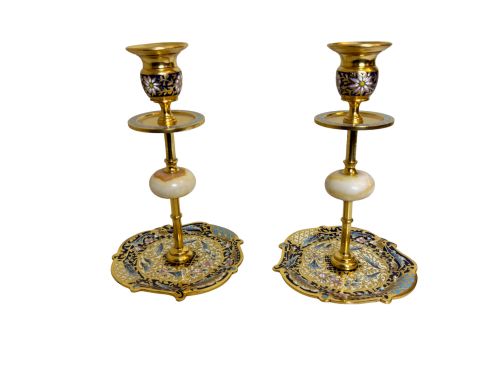


French Floral Sconces
French floral sconces are wall-mounted light fittings formed of metal, giltwood and porcelain, bringing botanical forms to period interiors.
French Floral Sconces
French floral sconces combine structural metal or wood with botanical ornamentation, taking the form of wall lights and twin arm or three branch sconces. These lighting fixtures emerge from periods such as eighteen ninety, nineteen hundred, nineteen twenty and nineteen thirty, spanning styles from French Rococo and Second Empire to Art Nouveau and Florentine.
Buyers encountering this selection will most frequently find nineteen thirty pieces alongside examples from eighteen ninety and nineteen twenty. The forms range from simple pairs of wall lights to ornate compositions incorporating champleve, onyx and gilt bronze.
Materials and construction
The construction relies on metals including wrought iron, painted metal, toleware, gilt bronze and general metalwork combined with carved giltwood. Artisans shape these rigid materials into organic stems and leaves, often pairing them with carved onyx bases or delicate porcelain flowers.
Surface finish is integral to the manufacture, utilising polychrome paint, green daisy motifs and gilding to render the botanical elements. These treatments create the varied textures seen across ironwork, glass components and gilt metal frameworks.
The site listings span four distinct decades from eighteen ninety to nineteen thirty, showcasing metal, giltwood, glass, iron and porcelain.
Assessing quality and execution
Quality reveals itself in the fineness of the botanical modelling, where hand-painted polychrome details and porcelain flowers display botanical accuracy rather than generic stamping. The articulation of wrought iron stems and the weight of gilt bronze or onyx components separate superior examples from simpler productions.
The harmony between the structural metal or giltwood and the decorative floral elements dictates the overall success of the piece. Finer sconces maintain integrated design across the backplates, arms and candle holders without heavy or clumsy junctions.
The French Floral Sconces Glossary
- Champleve
- An enamelling technique where troughs are carved into a metal surface and filled with vitreous enamel before firing. This method creates decorative patterns on metal bases and candle holders.
- Toleware
- Painted or lacquered metalware, typically tin or iron, shaped into decorative household objects. These items often feature hand-painted floral motifs in polychrome palettes.
- Giltwood
- Timber, such as wood or gesso-coated carved elements, covered with a thin layer of gold leaf. This finish provides a reflective golden surface on antique wall lights.
- Polychrome
- Decorated or printed in several colours. This term describes painted metal and porcelain flower components on wall sconces.
- Wrought iron
- Iron that is heated and hammered into shape by hand, resulting in durable structural elements with visible craftsman marks. It forms the robust stems and scrolls of period wall lights.
French Floral Sconces: Frequently Asked Questions
What rooms suit French floral sconces?
These wall lights suit reception rooms, hallways and bedrooms where traditional lighting is desired. Their botanical motifs complement period interiors and add decorative interest to plain walls.
Pairs are typically mounted either side of mirrors, fireplaces or beds to create balanced illumination and focal points within the space.
How do I wire antique wall sconces?
Professional electricians should handle the rewiring of antique metal and giltwood wall lights to ensure safety compliance. Modern wiring can be threaded discreetly through the existing arms and backplates.
Low-wattage candle bulbs or LED equivalents help replicate the soft glow of original lighting while protecting delicate porcelain and painted components from excessive heat.
How are different periods identified?
Dating relies on stylistic markers, materials and manufacturing techniques observable in the metalwork and decoration. Pieces from eighteen ninety often exhibit ornate Art Nouveau or champleve details, while nineteen thirty examples frequently feature painted toleware or wrought iron.
Comparing the specific floral forms, such as porcelain flowers versus painted metal leaves, helps place items within the nineteen hundred to nineteen thirty continuum.