


Ceramic Flower Lights
Ceramic flower lights bring botanical forms and delicate illumination into a room, offering both sculptural presence and functional glow.
Ceramic Flower Lights
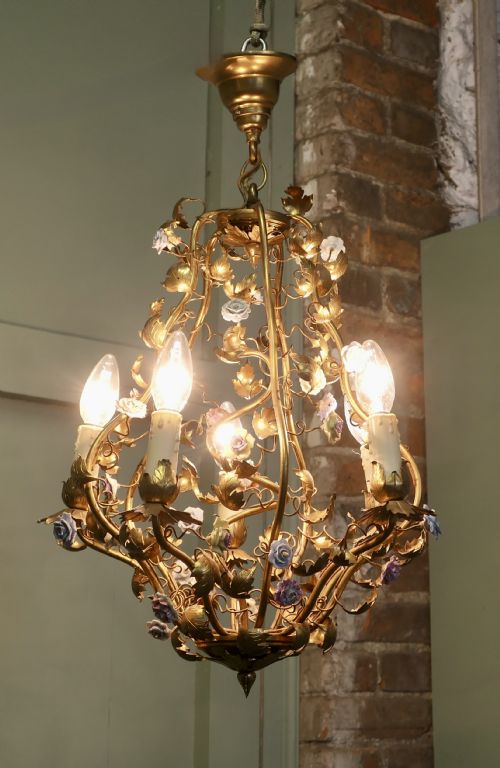
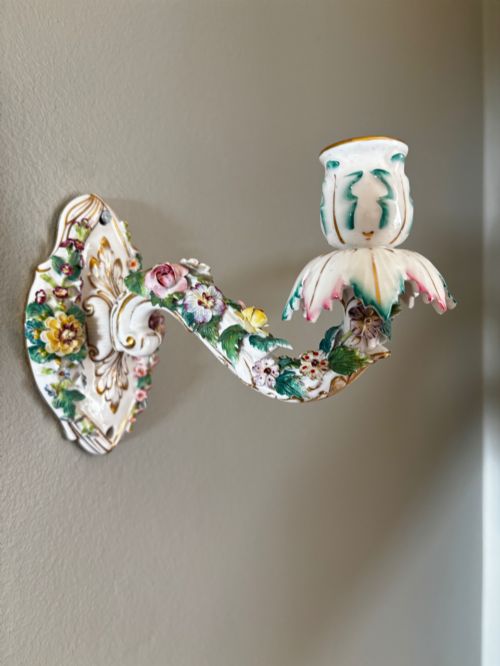
When buyers search for ceramic flower lights, they encounter lighting fixtures and lamps adorned with floral elements fashioned from porcelain, ceramic, or hard-paste porcelain. The examples seen here span from the late nineteenth century into the mid-twentieth century, including pieces from the 1880s, 1900, 1920s, and 1930s.
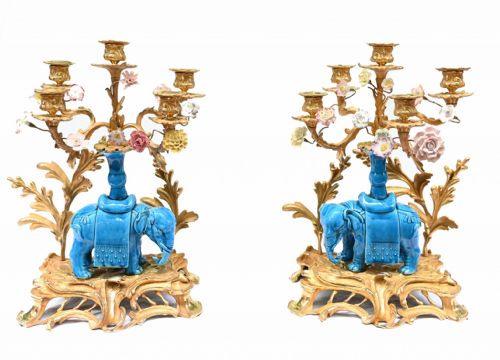
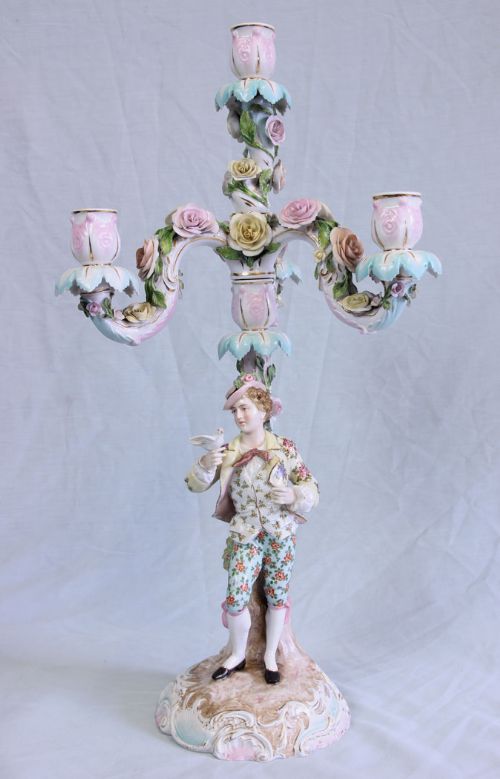
The most common forms on this page include multi-bulb chandeliers, wall sconces, candelabras, and table lamps. These objects frequently combine botanical ceramic components with gilt metal, brass, or tole frameworks.
Stylistic influences range widely across the inventory, taking in Rococo Revival, French Chateau, French Country, Art Deco, and Chinoiserie aesthetics. Makers such as Meissen, Sitzendorf, and Denby Ware appear alongside French toleware and Scottish painting.
Materials and construction
These fixtures rely on the combination of delicate fired ceramics and robust structural metals. Porcelain and hard-paste porcelain form the intricate petals and leaves of the floral decorations.
Gilt metal, brass, and painted tole provide the armature, branching arms, and backplates that support the ceramic elements and electrical or candle components.
The listings span from the 1880s through the 1950s, incorporating porcelain, gilt metal, brass, and wood.
Assessing quality
Quality in these pieces rests upon the fineness of the modelled ceramic petals and the precision of the hand-painted details on the flowers. Finer examples display realistic botanical depth and careful assembly within the metal framework.
The integration of the ceramic components with the gilt metal or brass structure distinguishes finer manufacturing. Heavier metal fittings and robust mounts support the delicate porcelain elements without visual clumsiness.
Meissen·Sitzendorf·Denby Ware·Margaret Laing
The Ceramic Flower Lights Glossary
- Tole
- Painted or lacquered sheet metal used extensively in decorative lighting and decorative accessories. It often provides a contrasting dark or painted finish against gilt mounts.
- Hard-Paste Porcelain
- A dense, durable type of ceramic fired at high temperatures, known for its bright white body and resistance to scratching. It forms the crisp, detailed petals seen in many floral light fittings.
- Candelabra
- A branched lighting fixture designed to hold multiple candles, though many period examples have been adapted for electricity. They frequently incorporate sculptural figures or floral motifs.
- Sitzendorf
- A nineteenth-century German porcelain factory celebrated for its intricate figurative and floral porcelain works. Pieces from this manufacturer often feature elaborate modelled decoration.
Ceramic Flower Lights: Frequently Asked Questions
What are ceramic flower lights?
These are decorative lighting fixtures that incorporate porcelain or ceramic floral forms into chandeliers, wall sconces, candelabras, and table lamps.
They combine functional illumination with sculptural botanical decoration, drawing on periods from the late nineteenth century through the mid-twentieth century.
How were these lights used?
Original period fixtures provided illumination in principal rooms through candles or early electrical conversion, serving as both light sources and decorative focal points.
Today, they function as statement overhead lighting, wall accents, or table lamps within traditional and eclectic interiors.
How do I live with them?
Integrating these pieces into a room works best when their specific aesthetic style - such as Rococo Revival, Art Deco, or French Country - complements the surrounding interior architecture and furnishings.
Careful placement allows the delicate porcelain flowers and gilt metal work to catch natural light during the day and provide ambient illumination at night.
How do I tell periods apart?
Examining the underlying materials, manufacturing style, and design markers helps distinguish between nineteenth-century porcelain works and later twentieth-century items like Art Deco pieces.
Stylistic shifts from ornate Rococo Revival and French Chateau designs to cleaner Mid-Century Modern or Art Deco forms provide clear chronological clues.