

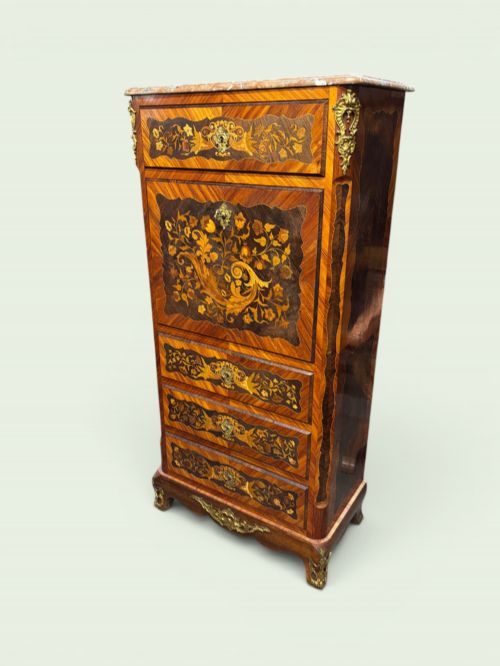


French Floral Inlaid Desk
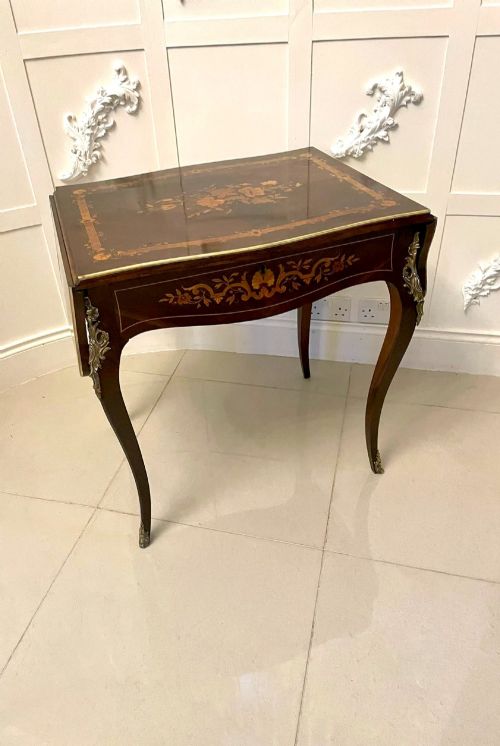
A french floral inlaid desk brings the decorative warmth of nineteenth century cabinet making into a room.
French Floral Inlaid Desk
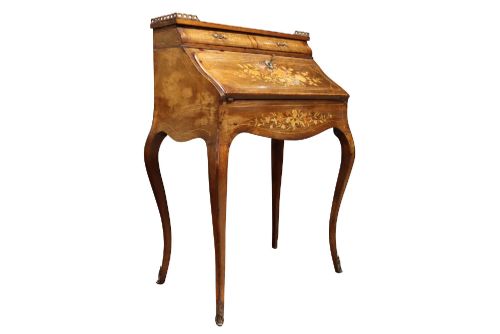
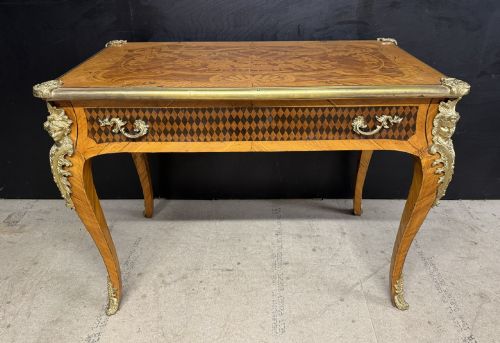
A french floral inlaid desk covers various writing forms, from bureau plats and writing tables to compact bonheur-du-jours and secretaire cabinets. These pieces date predominantly from the nineteenth century, reflecting revival movements associated with Louis XV and Napoleon III aesthetics.
The most frequent examples encountered here are nineteenth-century ladies writing desks and centre tables featuring intricate wood patterns on surfaces designed for domestic use. Makers built these forms using walnut, rosewood, and kingwood as foundations for detailed floral ornament.
Buyers choose a french floral inlaid desk to introduce patterned timber surfaces and gilt metal mounts into domestic interiors, combining a functional writing space with decorative marquetry.
Materials and technique
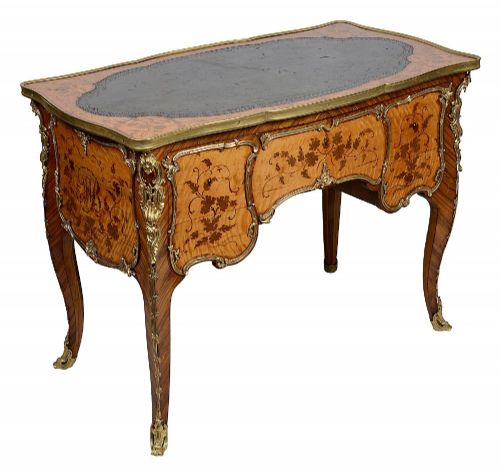
Cabinet makers constructed these desks using native and exotic timbers, laying down grounds of rosewood, walnut, satinwood, and kingwood. Artisans then hand-cut delicate veneers of fruitwood and other contrasting woods to form floral marquetry patterns across the top and drawer fronts.
Gilt bronze ormolu mounts typically frame corners, aprons, and legs, providing structural reinforcement alongside decorative contrast against the dark wood. Leather writing inserts frequently complete the surface, surrounded by intricate brass stringing and floral borders.
Listings feature eighteenth and nineteenth-century pieces incorporating walnut, rosewood, kingwood, and ormolu mounts.
Distinctions in quality
Quality rests in the precision of the marquetry cutter and the depth of the timber selection, where contrasting grain directions create natural shading within each leaf and petal. Superior pieces exhibit seamless veneer alignment across opening drawers and complex curved surfaces.
The crispness of the cast ormolu mounts and the weight of the timber carcass distinguish standard production from exceptional cabinet work. Maker attribution, through signatures or stamps on the bronze and timber, elevates a desk from general nineteenth-century stock to a documented workshop piece.
Henry Marc·Malecot of Paris·Paul Sormani
The French Floral Inlaid Desk Glossary
- Marquetry Inlay
- The art of fitting decorative wood veneers into a prepared ground to form pictures or floral patterns. This technique defines the visual character of nineteenth-century French tables and desks.
- Ormolu
- Gilded bronze mounts applied to furniture edges and feet. This material protects vulnerable corners while adding metallic contrast to the timber surface.
- Bureau Plat
- A flat-topped writing table with drawers in the frieze, designed to stand free in the middle of a room. These tables feature finished backs and detailed floral marquetry visible from all sides.
- Bonheur-du-Jour
- A light ladies writing desk featuring a small superstructure of shelves and drawers above the main work surface. This form gained popularity during revival periods inspired by eighteenth-century French design.
- Kingwood
- A dense, heavily figured South American timber utilised for high-status cabinet work. Its rich purple-brown tones provide a contrasting background for lighter floral marquetry.
French Floral Inlaid Desk: Frequently Asked Questions
What is a french floral inlaid desk used for?
These desks serve as functional writing surfaces or decorative centre tables in studies and living rooms. They provide compact areas for correspondence while displaying nineteenth-century marquetry work.
Many examples include small drawers or compartments for stationery, combining utility with ornamental appeal.
How do I identify a nineteenth century piece?
Dating relies on timber selection, construction methods, and stylistic revival cues associated with Napoleon III and Louis XV revivals. Nineteenth-century examples frequently combine rosewood or walnut grounds with machine-sawn veneers and cast ormolu mounts.
Examining secondary timbers inside the drawer linings helps confirm the manufacturing era.
How should I care for a marquetry desk?
Keep wooden surfaces away from direct sunlight and steady heat sources to prevent the delicate fruitwood veneers from drying and lifting. Regular dusting with a dry cloth maintains the finish without needing harsh polishes.
Leather writing inserts benefit from occasional gentle conditioning to keep the material supple.
Are these desks freestanding?
Many writing tables and bureau plats feature finished floral marquetry on all four sides, allowing them to sit in the middle of a room. Other forms, such as secretaire abattants, stand flat against a wall.
Checking the back panel reveals whether the piece was designed for central placement.