


French Floral Accent Table
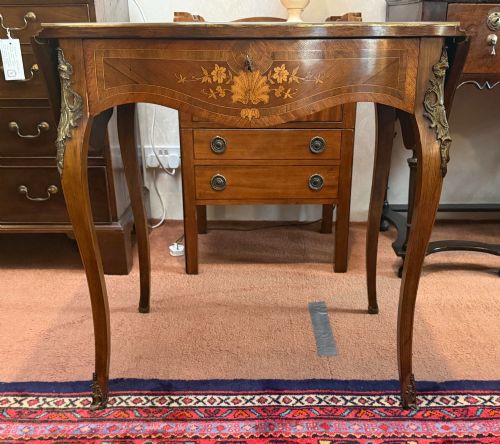
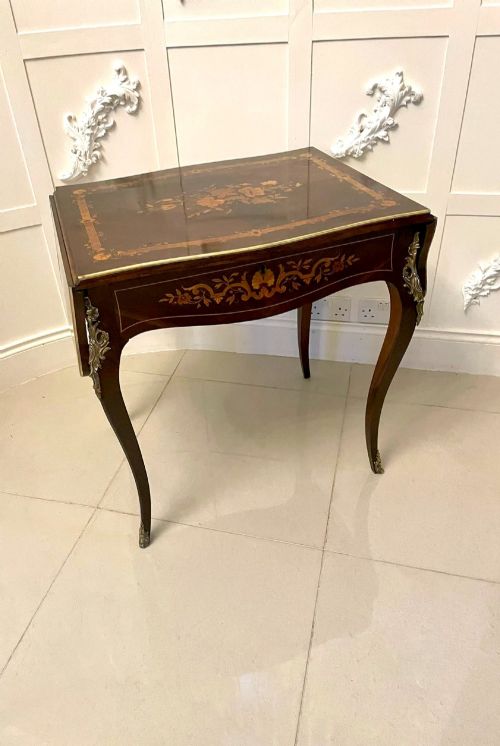
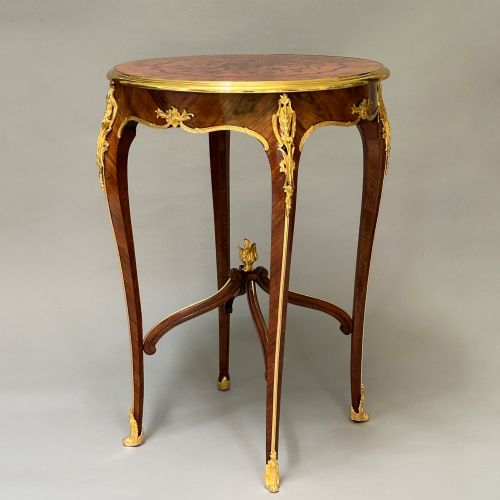
A French floral accent table brings walnut, rosewood, kingwood and ormolu together in occasional, side and centre tables bearing floral marquetry.
French Floral Accent Table
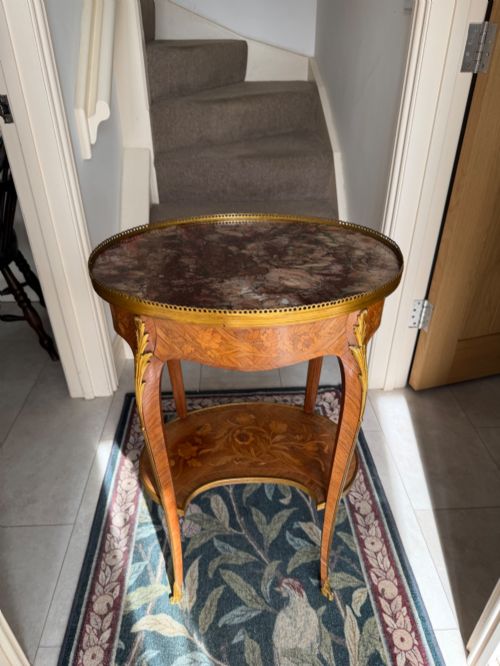
A French floral accent table encompasses occasional tables, side tables, and centre tables originating from the nineteenth century into the early twentieth century. These pieces frequently appear in revival styles such as Louis XV, Louis XVI, and Napoleon III, displaying distinct floral marquetry and parquetry on their surfaces.
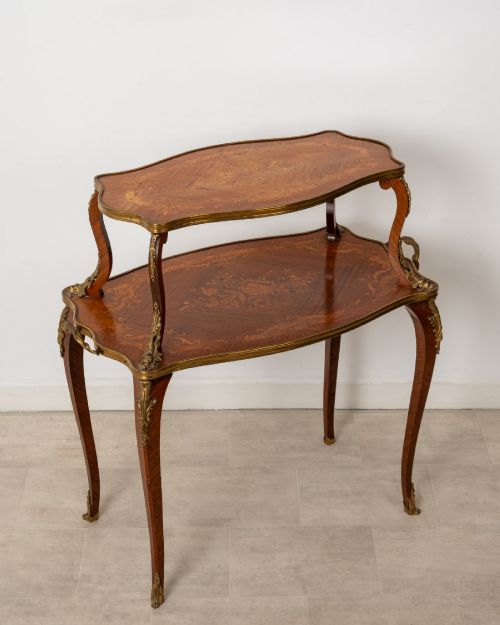
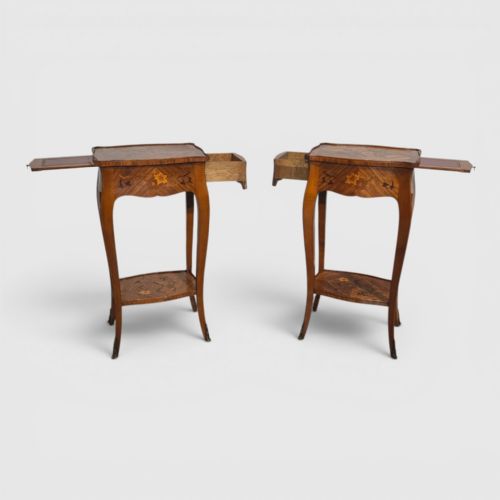
Buyers encounter smaller formats like lamp tables, two-tier etageres, and nests of tables alongside freestanding centre tables and work tables. Woods such as walnut, rosewood, kingwood, and satinwood form the primary bodies, often accented with brass or ormolu mounts.
Materials and Construction
Cabinetmakers utilised dense hardwoods like kingwood, walnut, and rosewood as carcase and surface timbers, cutting contrasting fruitwoods for delicate floral marquetry designs. These veneers were meticulously hand-cut and pieced together to create floral sprays and geometric parquetry patterns across table tops.
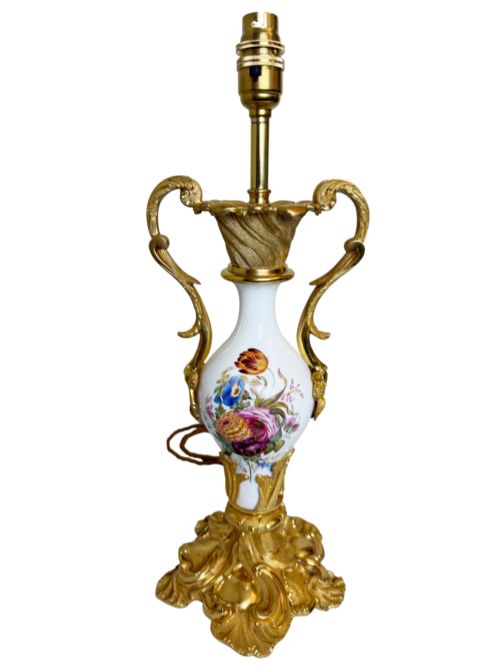
Cast bronze and ormolu mounts were chased and applied to edges, legs, and feet, adding structural reinforcement and decorative detail. Where lighting or decorative hardware was incorporated, hand-blown frosted glass or enamelled glass complemented the metalwork.
Listings feature 19th-century and early 20th-century pieces in walnut, rosewood, kingwood, and ormolu, spanning Louis XV revival and Art Deco styles.
Distinctions in Quality
Quality rests upon the precision of the veneer work and the crispness of the chased ormolu mounts rather than mere age. Superior examples exhibit tightly fitted floral marquetry with naturalistic shading in the wood, whereas simpler pieces rely on basic parquetry or painted decoration.
The choice of secondary timbers and the weight of the cast bronze mounts separate standard production from fine workshop pieces. Heavier framing, balanced proportions, and refined finishing define the upper end of these occasional furnishings.
Edwards & Roberts·Daum·Ince & Mayhew
The French Floral Accent Table Glossary
- Marquetry
- Decorative veneer applied to a structure in patterns resembling pictures or designs. In these pieces, floral arrangements are typically depicted using various coloured woods.
- Ormolu
- Gilded bronze used for mounts and decorative accents on furniture. This material provides bright metallic contrast against dark hardwoods like kingwood and rosewood.
- Etagere
- A set of open shelves or tiers used for display. These multi-level occasional tables provide surface area in compact footprints.
- Poudreuse
- A dressing or work table fitted with compartments and mirrors. Examples from the nineteenth century often feature folding lids and marquetry inlay.
- Parquetry
- Geometric mosaic woodwork used for floors or furniture surfaces. It differs from marquetry by employing repeating angular shapes rather than pictorial motifs.
French Floral Accent Table: Frequently Asked Questions
How do I identify a French floral accent table?
Look for characteristic revival styling, notably Louis XV or Napoleon III influence, combined with wood veneer marquetry depicting floral motifs.
Ormolu mounts, walnut or kingwood frames, and forms such as occasional tables, etageres, or kidney-shaped lamp tables confirm the origin and type.
What periods do these tables date from?
The pieces span the nineteenth century up to the 1920s and 1930s, encompassing periods like Napoleon III, Edwardian, and Art Deco.
Nineteenth-century pieces often favour ornate revival marquetry, while early twentieth-century examples occasionally incorporate wrought iron or specialised glassware.
Where were these tables placed in a home?
They served as flexible occasional furniture, positioned beside seating to hold lamps, decorative urns, or small objects.
Centre tables stood free in larger rooms, while nests of tables and etageres provided tiered surfaces that could be moved easily.
Are these tables purely decorative?
While highly decorative due to floral marquetry and ormolu, many were built for specific domestic utility.
Work tables and poudreuses offered storage compartments for sewing or writing, and multi-tier etageres held lamps and small display items.