




French Floor Light
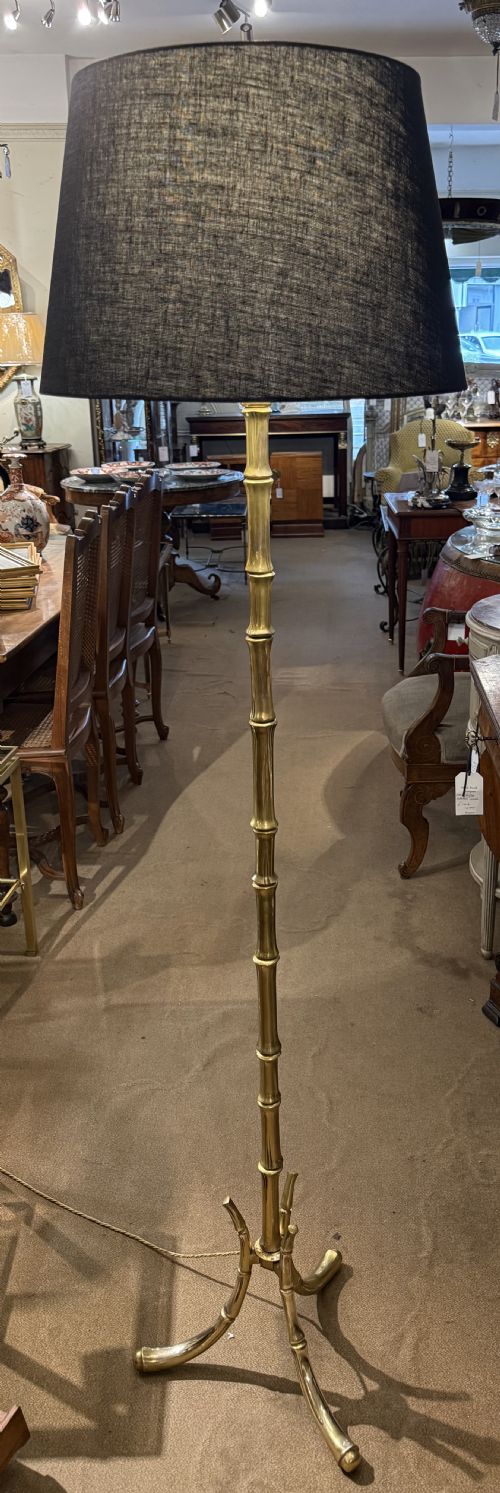
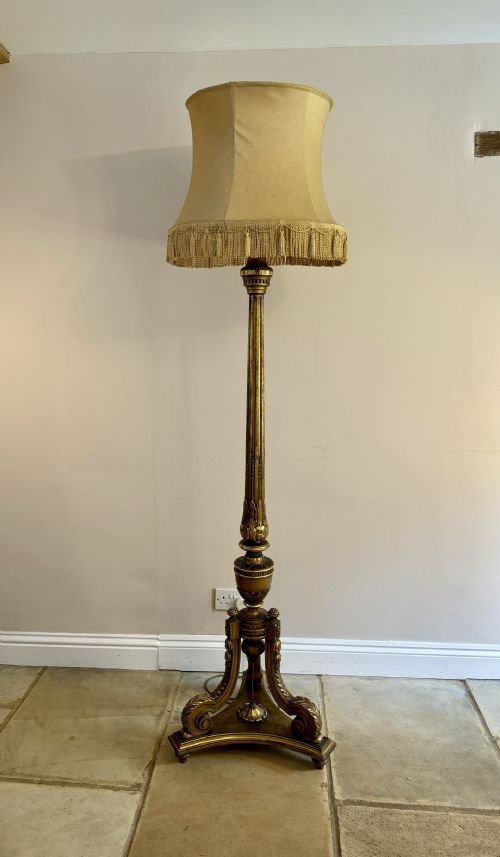
These French floor light pieces bring historic illumination and height to a room, ranging from brass standards to carved giltwood torchères.
French Floor Light
A french floor light encompasses tall lighting and candelabra standards designed to stand upon the floor. These pieces span periods from the nineteenth century through to the mid-twentieth century.
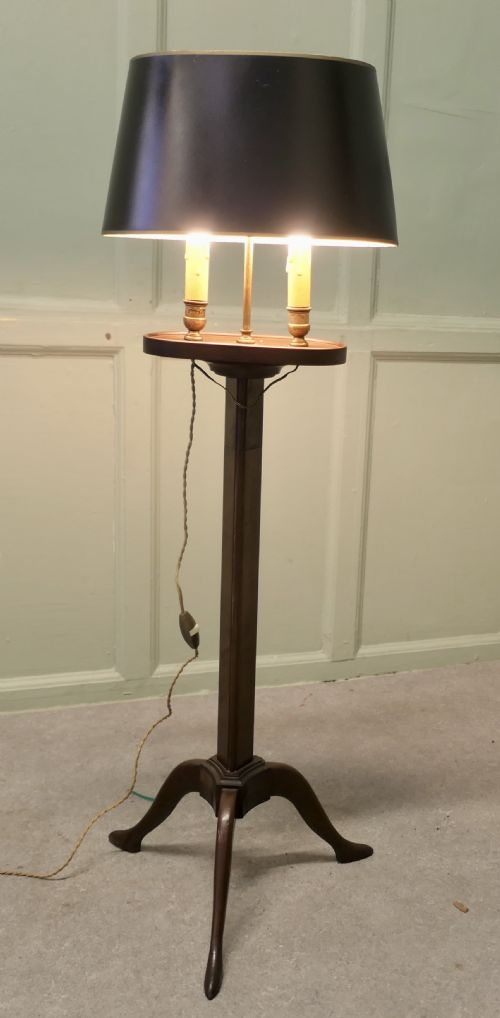
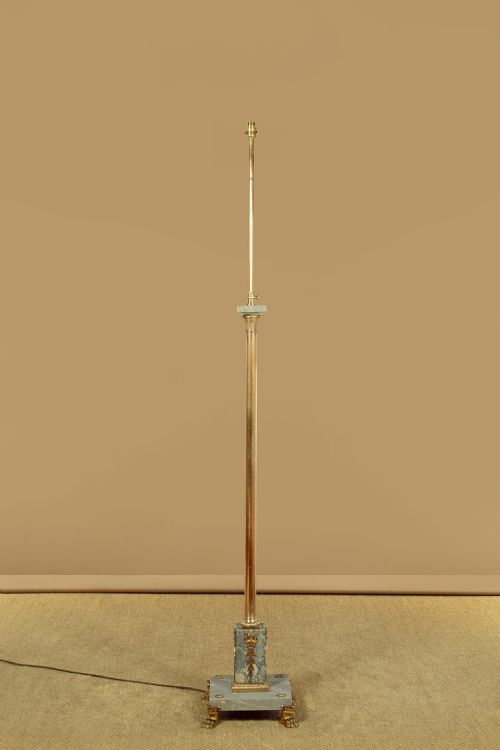
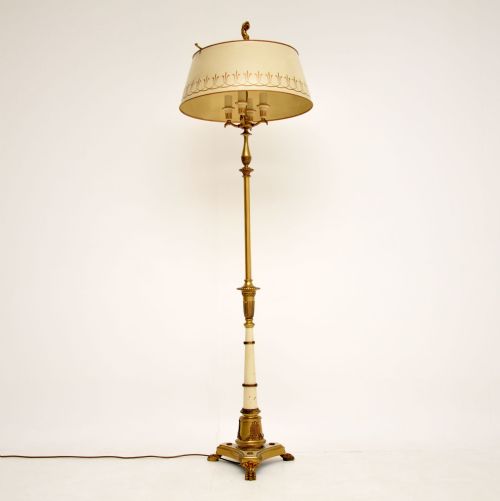
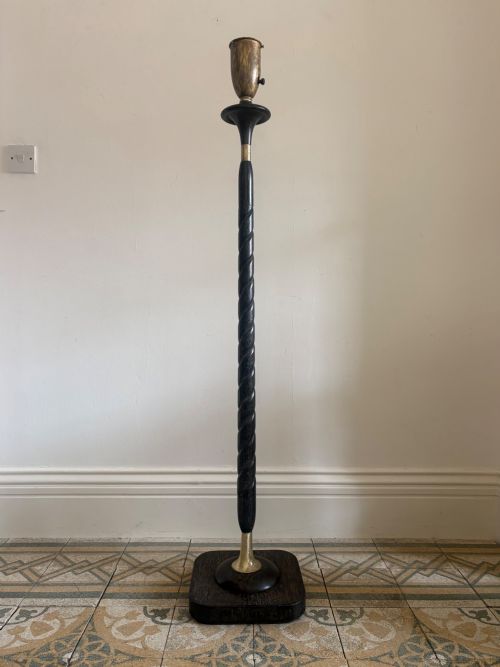
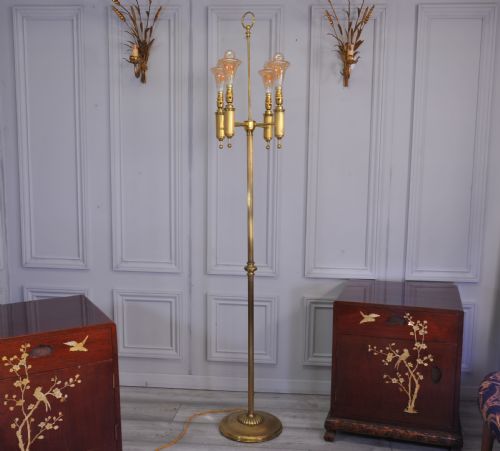
The selection frequently includes standard lamps and floor lamps alongside converted candlesticks and torchères. Examples take forms such as bouillotte lamps, neoclassical columns, and ebonised barley twist supports.
Origins stretch across various French aesthetic movements including neoclassical, empire revival, and hollywood regency. Buyers regularly encounter standard lamps fashioned from brass, giltwood, and bronze.
Materials and construction methods
Construction relies on metals such as cast brass, bronze, and ormolu alongside carved timber including giltwood, ebonised wood, and various woods. Artisans combined these structural materials with fabric shades and glass elements.
Techniques involve detailed carving on wood and giltwood frames, metal casting for standard lamps and torchères, and turning for elements like barley twist stems. Ormolu and patinated bronze finishes appear alongside painted or gilded surfaces.
Listings feature brass, giltwood, marble, glass, and bronze materials across periods from the eighteenth-century styles up to the nineteen-fifties.
Quality variations in antique lighting
Quality rests upon the crispness of metal casting and the depth of hand-carving on wooden and giltwood standards. Finer examples display meticulous attention to detail in ormolu mounts, figural bronze work, and structural joins.
The choice of materials dictates the standing of a piece, with solid brass, onyx, marble, and heavy bronze commanding attention over simpler metal or wooden constructions. Original surface treatments and period wiring adaptations further distinguish superior items.
Maison Bagues·RENE MATHIEU·François-Christophe-Armand Toussaint·Coutan
The French Floor Light Glossary
- Bouillotte lamp
- A traditional adjustable shade lamp originating from card game lighting. These typically feature twin arms and a central column.
- Torchère
- A tall ornamental stand or candlestick designed to carry a light source. Mid-nineteenth century examples often incorporate figural bronze casting.
- Ormolu
- Gilt bronze mounted onto furniture or lighting fixtures. This technique was widely utilised during neoclassical and empire revival periods.
- Standard lamp
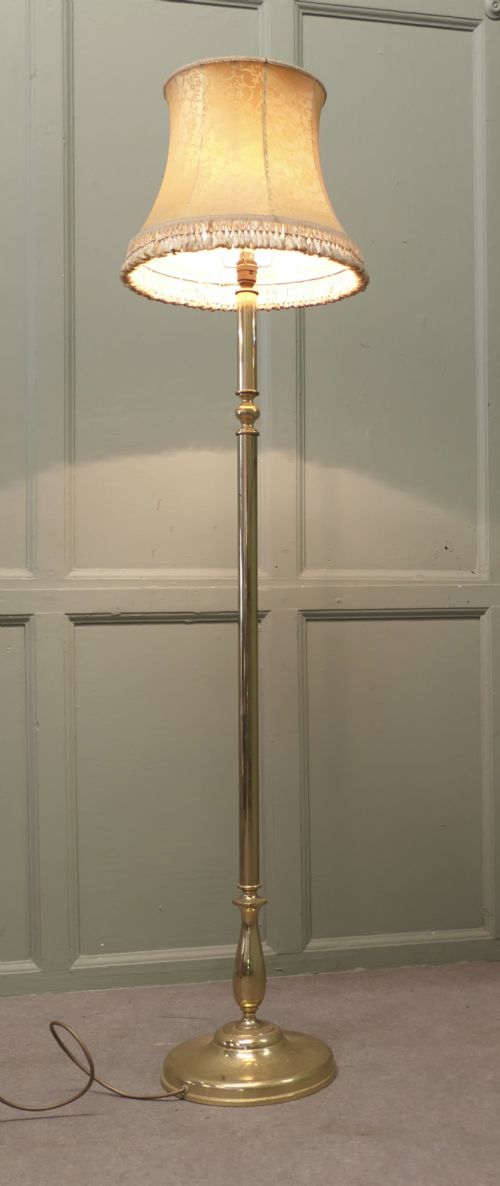
- A vertical floor-standing pole fitted for electrical illumination. These form a major category within nineteenth and twentieth century listings.
- Barley twist
- A spiral turning technique applied to wooden floor lamp stems. This decorative profile appears on twentieth century pieces.
French Floor Light: Frequently Asked Questions
What is a french floor light?
A french floor light is a tall vertical lighting fixture designed to stand directly on the floor. These pieces include standard lamps, torchères, and converted candelabra.
Such objects provide ambient room illumination while serving as sculptural decorative elements. They draw on historical design traditions from the nineteenth and twentieth centuries.
How were antique floor lamps used?
Antique floor lamps and torchères provided practical illumination in grand salons and boudoirs. They supplemented table lighting and chandelier light by lifting burners or bulbs higher into the room.
Adjustable variants allowed users to direct light downward for reading or upward for general brightness. Many began life as candle or oil standards before later conversion to electricity.
How can I tell periods apart?
Distinguishing periods relies on observing stylistic motifs, materials, and construction techniques. Nineteenth century examples often feature heavy cast brass, patinated bronze, or elaborate figural torchères.
Twentieth century pieces move towards streamlined forms, ebonised barley twists, or glass stems from the nineteen-twenties and thirties. Neoclassical and empire revival revivals borrow classical vocabulary from earlier centuries.