



French Flame Mahogany
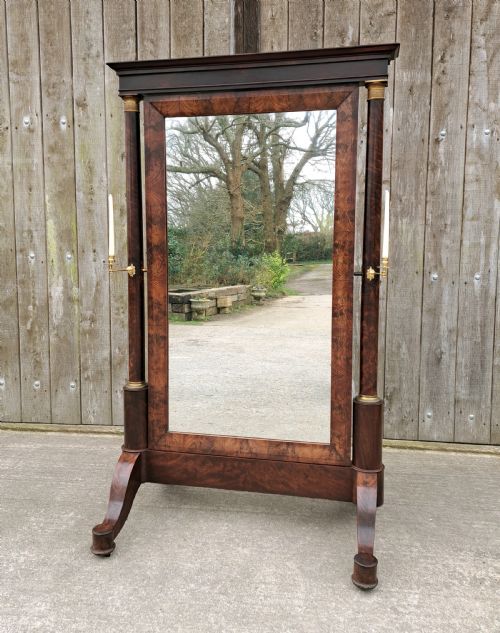
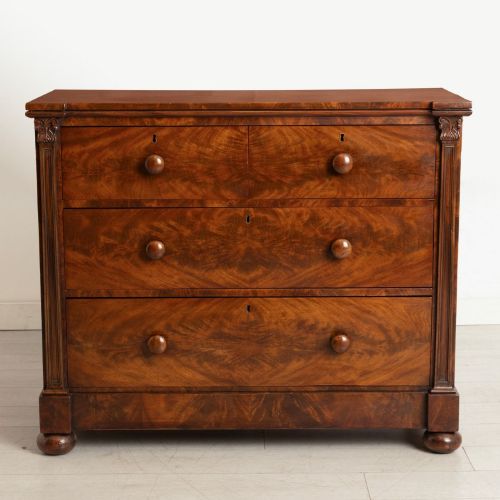
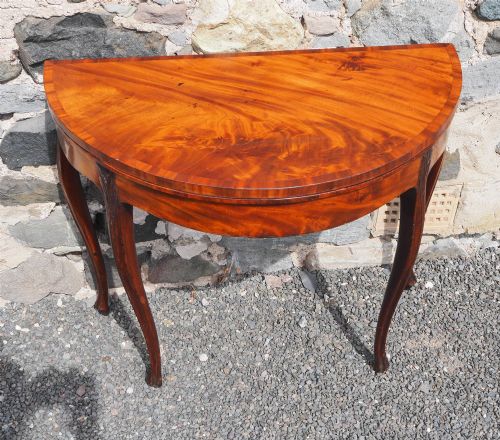
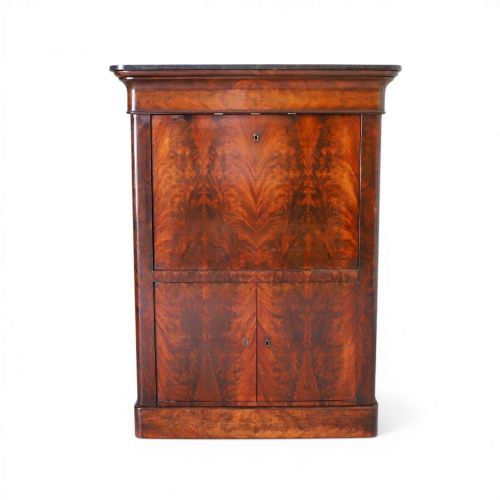
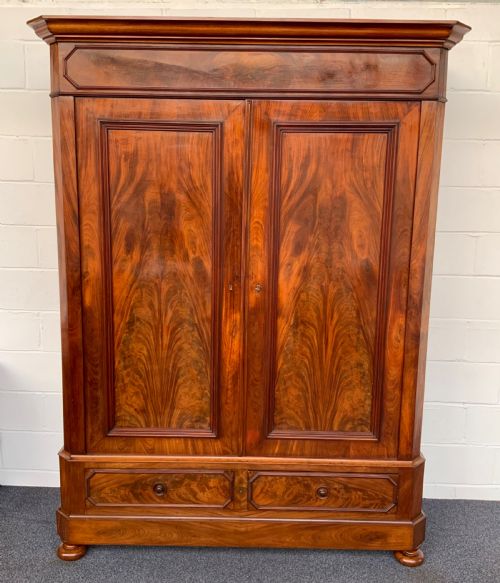
French flame mahogany furniture delivers deep, rippling grain patterns across chests of drawers, secretaires and console tables designed to anchor a room with rich warmth.
French Flame Mahogany
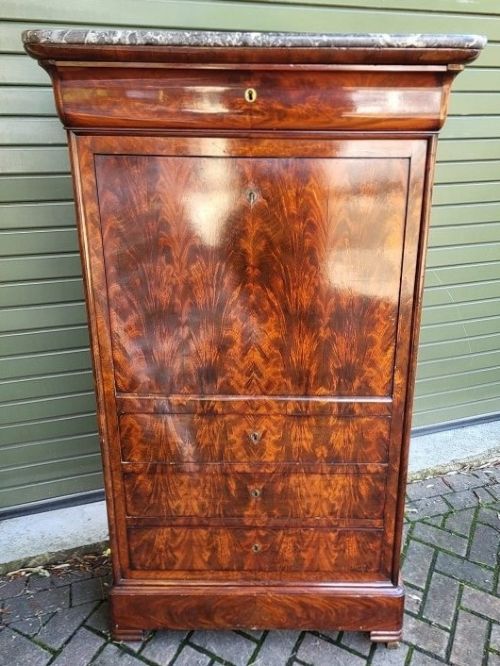
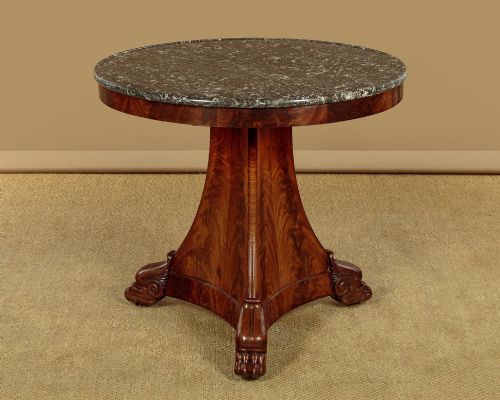
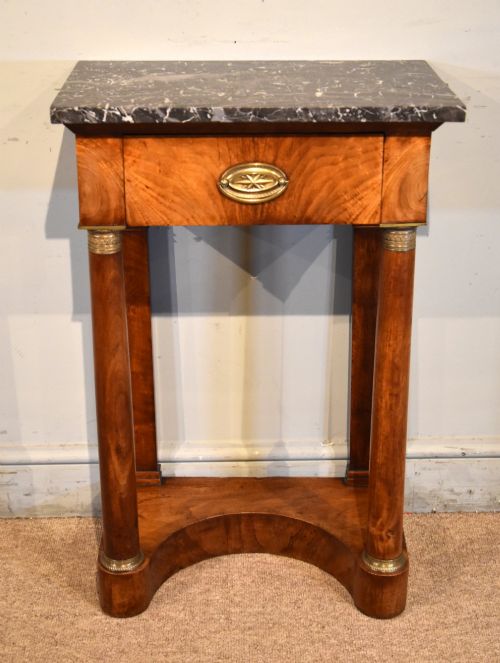
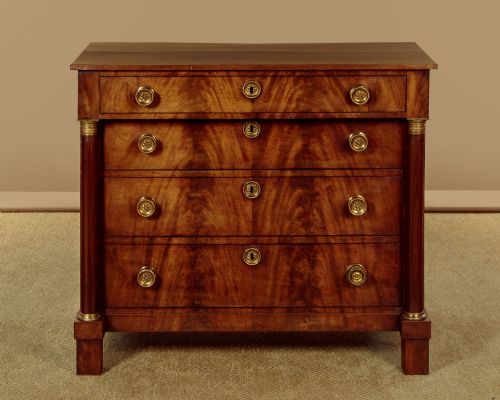
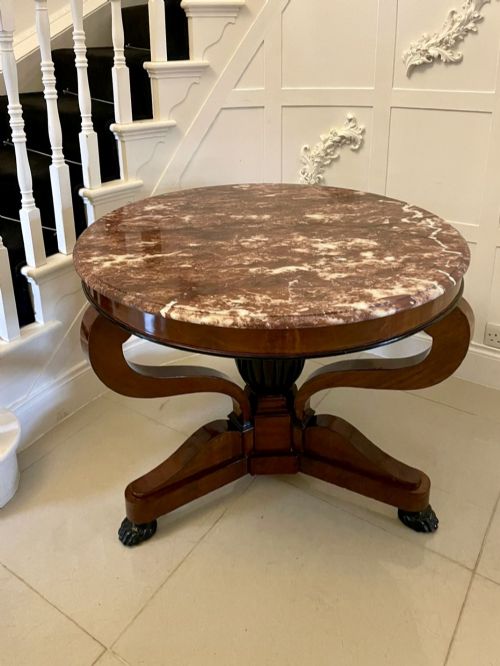
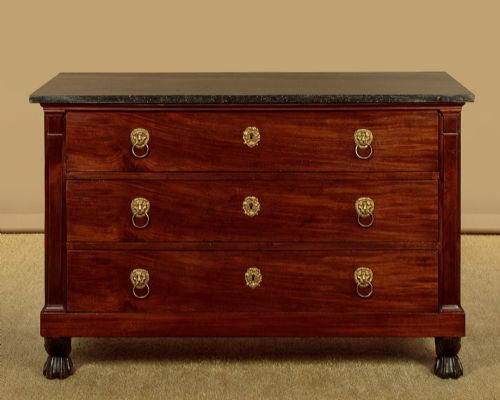
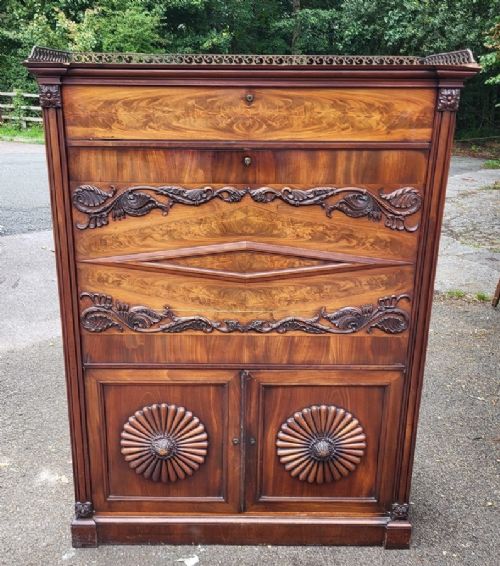
French flame mahogany pieces encompass substantial case furniture and tables, with chests of drawers, commodes, and secretaire à abattants appearing most frequently alongside console tables and gueridons. These forms emerge primarily from the nineteenth century, drawing heavily on French Empire, Louis XVI, and Louis Philippe stylistic vocabularies.
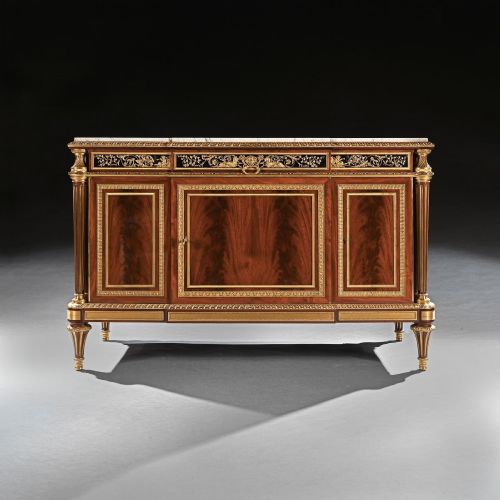
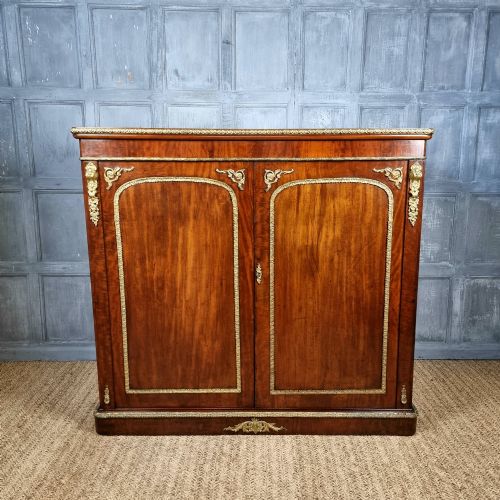
The selection here bridges formal reception room furniture like marble top pier tables and cylinder desks with bedroom pieces including armoires, dressing tables, and semainiers. Makers applied richly figured veneers to architectural forms, often pairing the timber with contrasting marble tops and gilded bronze mounts.
How they were made
Cabinetmakers selected timber cuts from the fork of the mahogany tree to yield dramatic flame figure veneers, laying these thin slices carefully over secondary woods like oak. This veneer work required steady hand-matching across drawer fronts and cabinet doors to create symmetrical ripples of grain.
Workshops integrated heavy white or grey marble slabs onto console tables, commodes, and secretaires, while mounting cast or chased ormolu brass fittings around keyholes and drawer mounts to punctuate the dark timber.
French Flame Mahogany Retail Price Guide 2026
Typical asking prices for french flame mahogany among the pieces listed under this phrase on Sellingantiques today, from the lower quarter to the upper quarter. They describe what is for sale here now, not the wider market.
Concealed secret drawers hide inside many nineteenth-century secretaire cabinets, waiting behind false fronts for private letters.
What varies in quality
The visual impact rests upon the selection and balance of the flame mahogany veneer, where dynamic, intensely figured grain patterns create far more presence than plain straight-grained timber. Master craftsmen aligned these patterns meticulously across multiple drawers to form continuous waves of wood figure.
Hardware and secondary materials signal the grade of execution, distinguishing standard production from pieces carrying crisply chased ormolu mounts, substantial original marble tops, and secondary structural oak framing.
Henry Dasson·Gillows·Weisweiler
The French Flame Mahogany Glossary
- Flame mahogany
- A veneer cut from the branch junction of the mahogany tree that produces a distinctive feather or flame-like pattern across the wood surface. This figuring forms the primary visual hallmark of these items.
- Secretaire à abattant
- A tall upright cabinet featuring a drop-down writing flap that conceals a fitted interior of small drawers and pigeonholes. It frequently combines a top drawer, a fall-front desk, and lower cupboard doors beneath a marble slab.
- Ormolu
- Gilded bronze mounts cast and chased with decorative motifs, applied to enrich the corners, feet, and key escutcheons of Empire and Louis XVI furniture.
- Gueridon
- A small round freestanding table supported by a central pillar or three legs, often topped with marble and utilised as a centre or side table.
- Commode
- A low French chest of drawers designed for formal living spaces, usually standing on short legs and topped with polished stone.
French Flame Mahogany: Frequently Asked Questions
What is a secretaire à abattant?
A secretaire à abattant is a tall upright cabinet designed with a hinged writing surface that folds down to reveal compartments and small drawers inside.
When closed, it presents a flat architectural front, often accented with flame mahogany veneer and topped with marble.
How do I identify French Empire style?
French Empire pieces display classical architectural proportions, dark mahogany surfaces, and symmetrical arrangements accented by gilt bronze mounts.
They rely on stately forms without excessive carving, letting the natural grain and metal highlights define the aesthetic.
Where should I place a console table?
Console tables fit flat against walls in hallways, drawing rooms, or beneath large mirrors, serving as decorative display surfaces.
Because many feature finished backs or narrow profiles, they occupy minimal floor space while adding architectural weight to a room.