


French Figural Mantle Clock
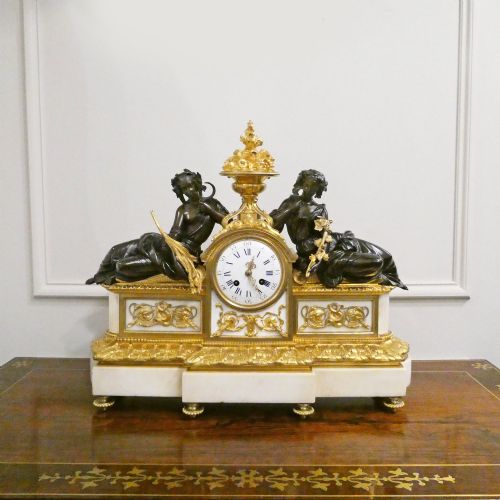
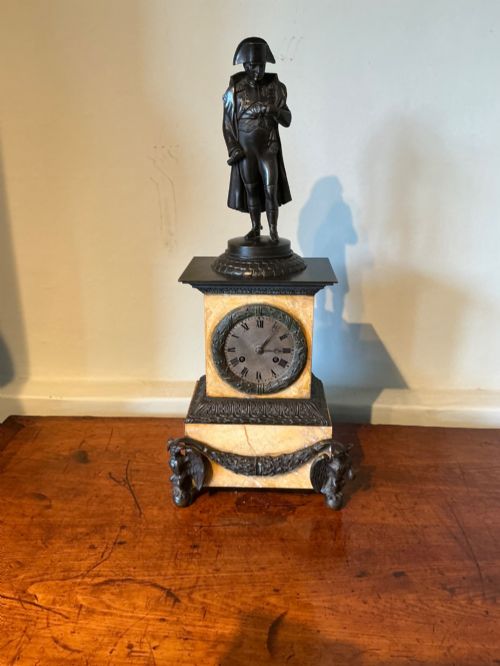
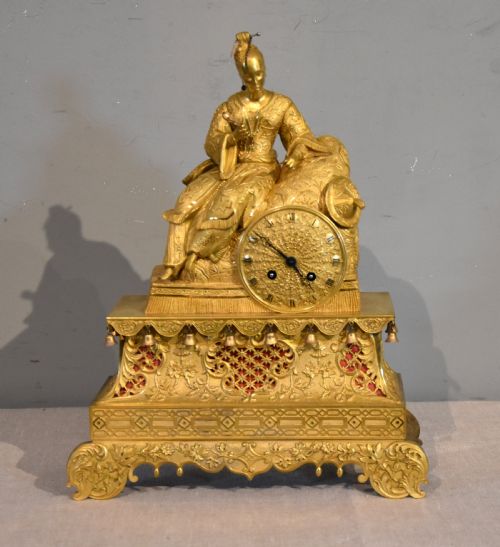
A french figural mantle clock brings sculptural presence and mechanical precision together, capturing mythological or historical figures cast in bronze, ormolu, or spelter.
French Figural Mantle Clock
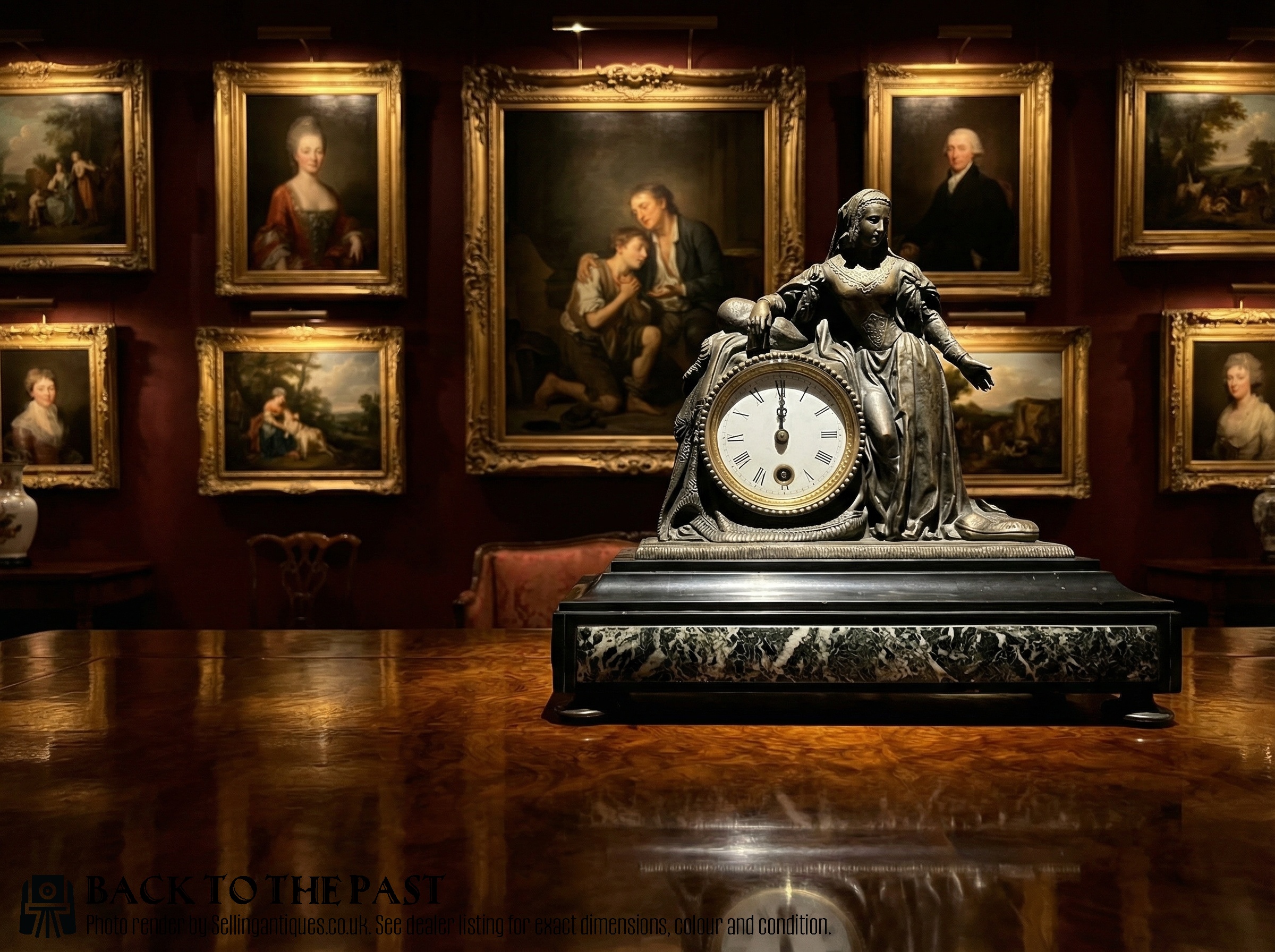
A french figural mantle clock combines a functional timepiece with a sculptural figure, often cast in bronze, ormolu, or spelter, depicting historical characters, mythological subjects, or allegorical scenes. These pieces frequently appear alongside matching side ornaments to form a complete clock garniture, anchoring a mantelpiece with balanced decorative impact.
The objects recorded here span the nineteenth century, with notable examples originating from the eighteen fifties, sixties, and eighties, alongside Victorian interpretations and Louis XVI style revivals. You will encounter subjects ranging from Napoleon and medieval knights to figures like Amphitrite and Gutenberg, reflecting diverse European decorative tastes from Empire to Art Nouveau.
How they were made
Metalwork forms the sculptural foundation of these pieces, utilising cast bronze, gilded ormolu, and spelter to render intricate figures and detailed architectural cases. Craftspeople combined these metals with contrasting materials such as marble, onyx, porcelain panels, and enamel dials to create visual depth and texture.
Movements were engineered for eight-day striking performance, often utilising silk suspension systems in earlier nineteenth-century examples before transitioning to more robust pendulum configurations. Cases were frequently assembled from multiple cast components, hand-chased, and gilded or patinated to achieve a refined surface finish.
A mediaeval knight in armour rides eternally into battle across the archived bronze horse.
What varies in quality
The refinement of the casting and the crispness of the hand-chasing separate standard production from exceptional work, particularly in the rendering of facial expressions, drapery, and fine ornamentation. Superior examples display deep, even gilding or rich patination on the bronze and ormolu components, whereas lesser pieces rely on simpler patination or lower-grade spelter.
The integration between the sculptural figure and the clock case indicates overall ambition, with top-tier pieces featuring bespoke architectural marble plinths, specialist porcelain panels, and named makers such as Vincenti or P.H. Mourey. Movement sophistication also dictates standing, where complex bell-striking mechanisms and signed components elevate the piece.
Vincenti·Auguste Moreau·P.H. Mourey·Gillion
The French Figural Mantle Clock Glossary
- Ormolu
- Gilded bronze, where finely ground gold is amalgamated with mercury and applied to a bronze base before heating. This technique creates a durable, luminous golden surface characteristic of fine nineteenth-century French metalwork.
- Clock garniture
- A matching set consisting of a central clock flanked by two complementary side ornaments, such as vases or candelabra. These sets were designed to create a balanced decorative display on a mantelpiece.
- Spelter
- A zinc alloy frequently utilised as a cost-effective alternative to bronze for sculptural figures. It accepts patination and gilding well, though it is softer and less dense than genuine bronze.
- Silk suspension
- A method of hanging the pendulum from a fine strip of woven silk within the movement. This traditional mechanism is typically found in earlier nineteenth-century French clocks.
- Chasing
- The manual process of refining a metal casting using small punches and chisels to sharpen details, clean textures, and add surface definition before gilding.
French Figural Mantle Clock: Frequently Asked Questions
What is a french figural mantle clock?
A french figural mantle clock is a mechanical timepiece housed within an elaborate decorative case that incorporates a cast metal figure or sculptural scene. These objects served both a practical timekeeping function and a prominent decorative role in nineteenth-century interiors.
The sculptural subjects often drew from classical mythology, history, or literature, turning a standard domestic clock into a significant work of decorative art.
How do clock garnitures work?
Clock garnitures consist of a central mantel clock accompanied by two matching side pieces, such as urns, candelabra, or smaller figures. These items were manufactured as a cohesive set to maintain stylistic harmony across a fireplace mantel.
The side pieces mirror the materials, patination, and decorative motifs of the primary clock, creating a balanced and symmetrical arrangement.
What materials are used in these clocks?
These clocks are constructed primarily from cast metals including bronze, ormolu, and spelter, often combined with architectural elements of marble or onyx. Dials frequently feature white enamel with painted numerals, protected behind bevelled glass.
Additional decorative elements include porcelain panels, sometimes painted in the Sèvres style, and glass domes designed to protect the more delicate ormolu surfaces from dust.
How do I wind and maintain my clock?
Most of these clocks utilise an eight-day movement requiring manual winding using a matching key every week. Care must be taken not to overwind the springs, and the clock should be placed on a completely level surface to ensure the pendulum swings evenly.
Periodic professional servicing is recommended to clean the brass gear train and ensure the striking mechanism operates without excessive wear.
How can I tell different periods apart?
Stylistic indicators help date these clocks, with early nineteenth-century examples leaning towards strict Empire symmetry and gilt bronze, while mid-century pieces often embrace Rococo curves and rich ormolu. Later nineteenth-century items introduce Art Nouveau fluidity, Onyx integration, and spelter castings.
Movement technology also offers clues, as silk suspension threads generally precede later steel suspension springs.