

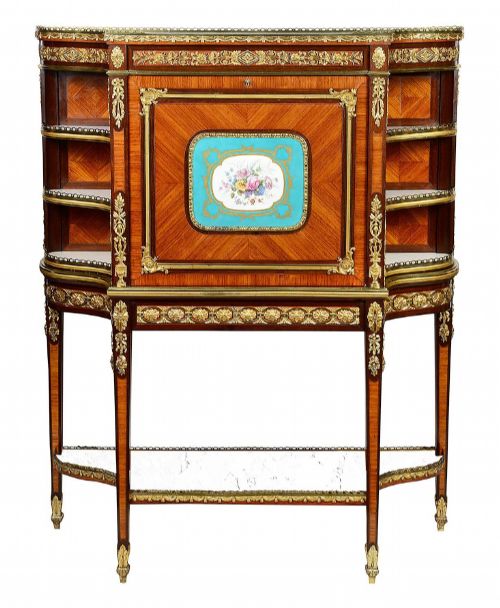
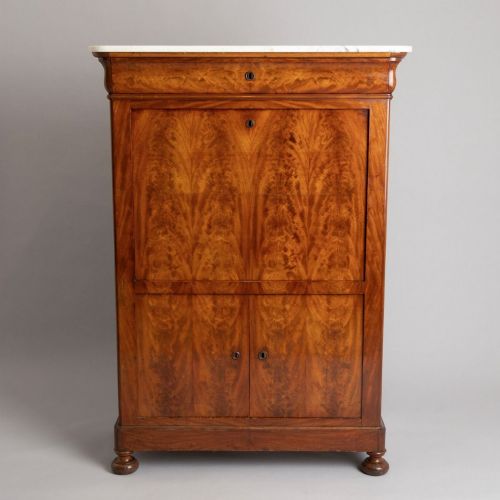
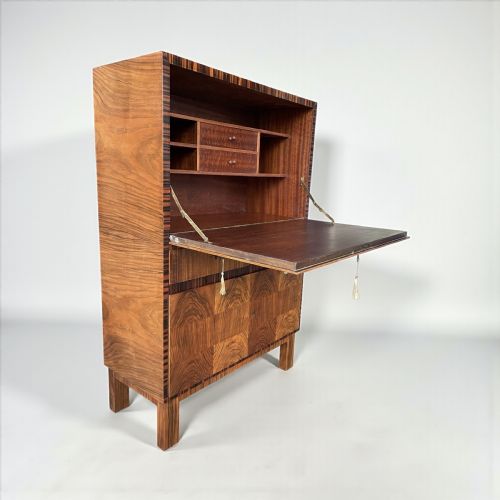
French Fall Front Bureau
A french fall front bureau offers concealed writing surfaces and refined cabinetry, originating from continental workshops to organise correspondence with discretion.
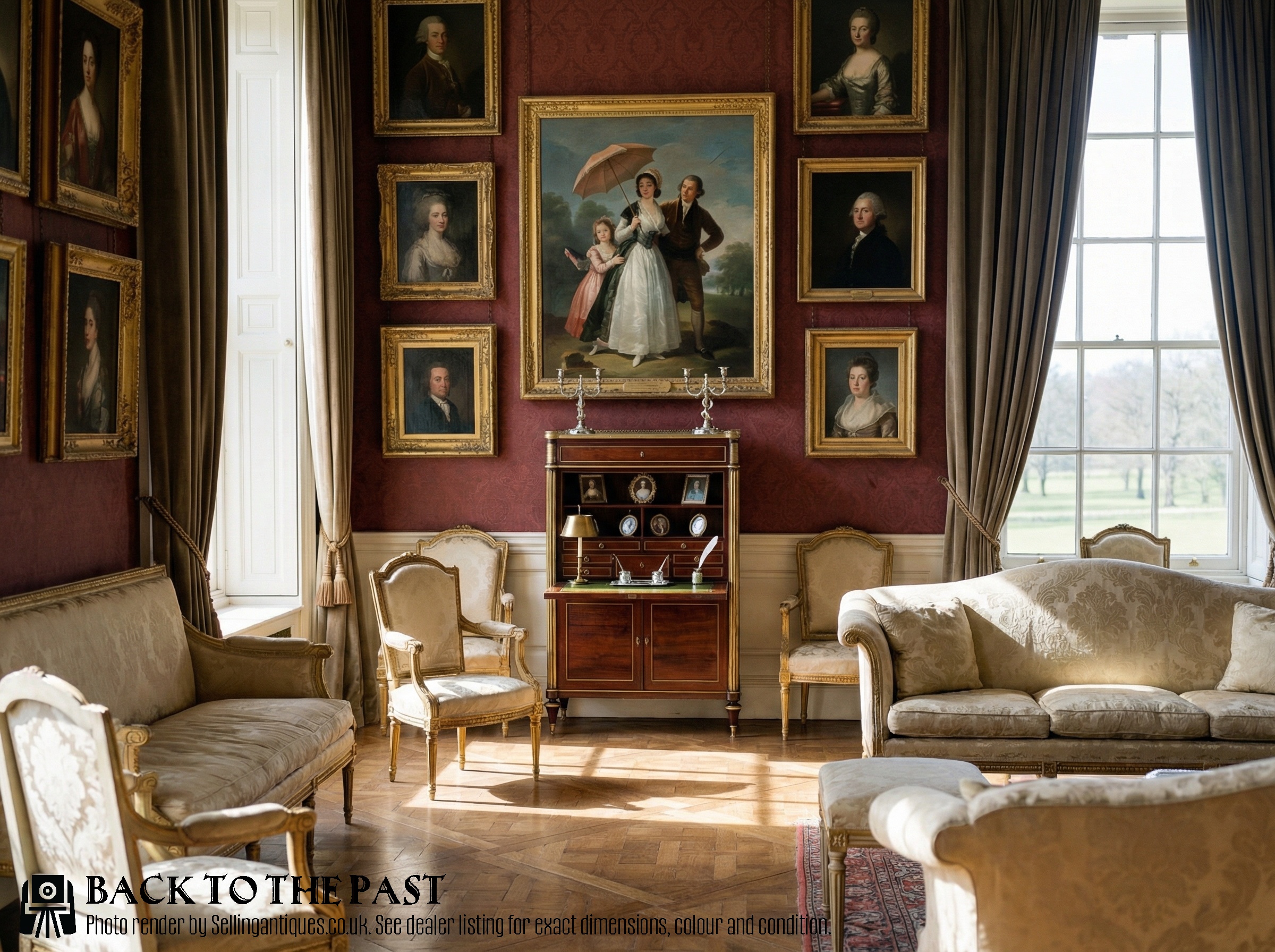
French Fall Front Bureau
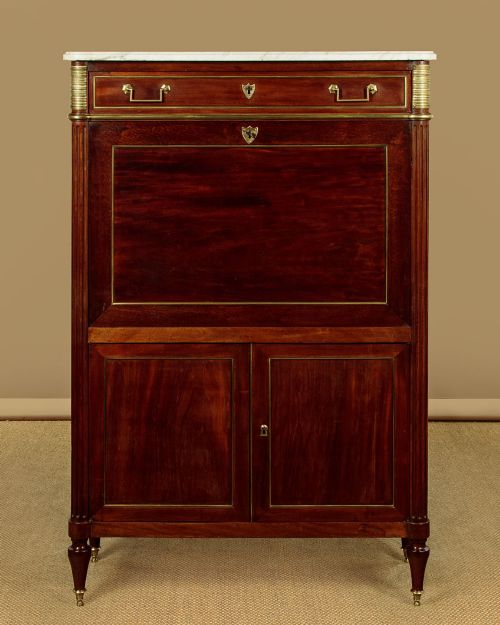
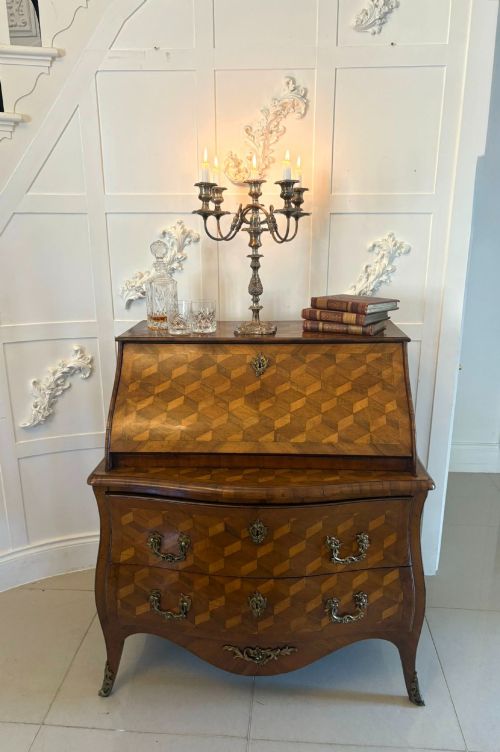
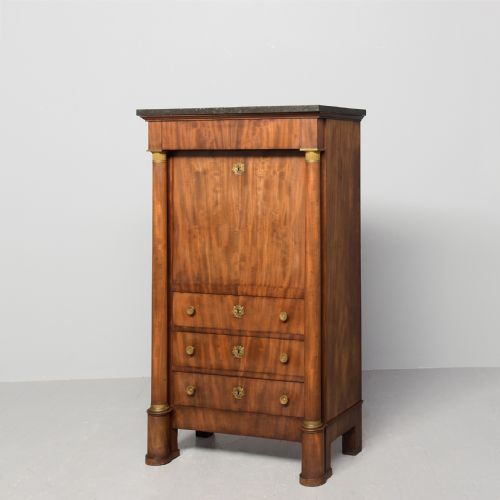
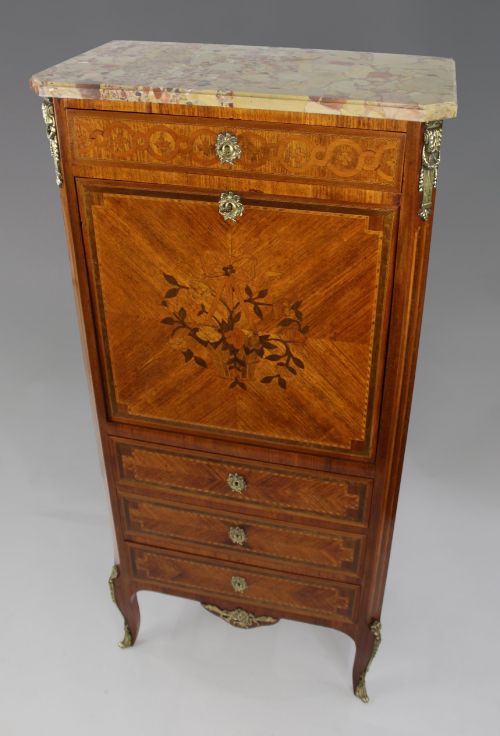
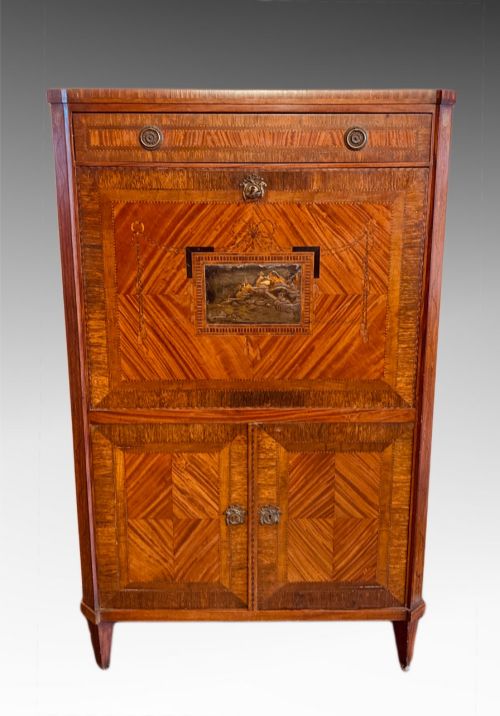
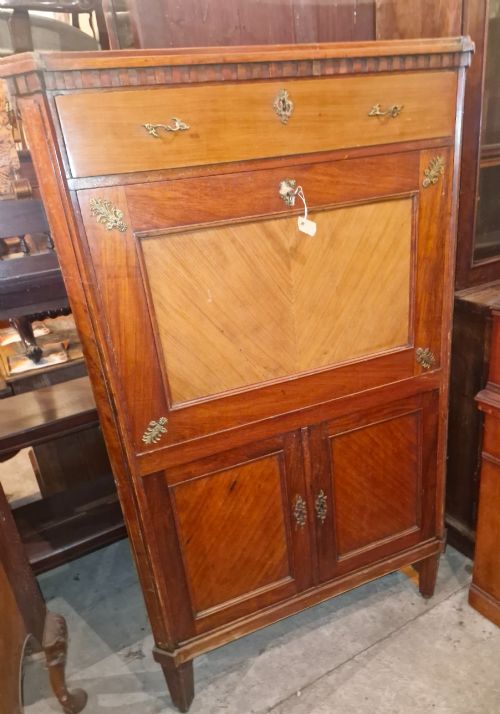
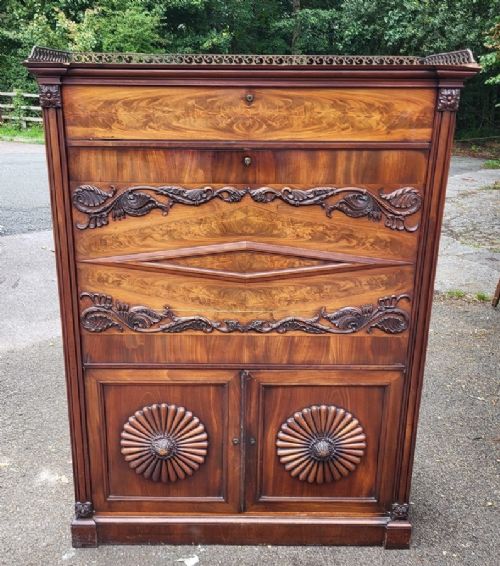
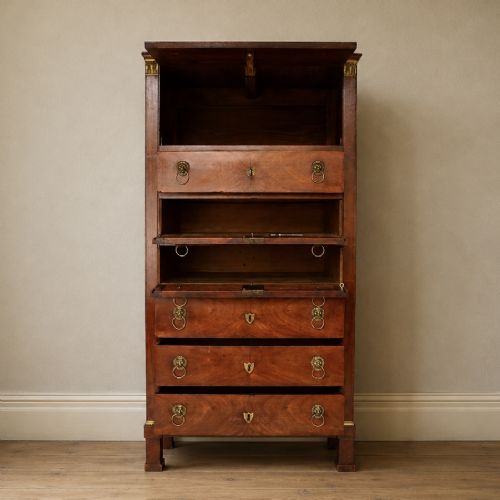
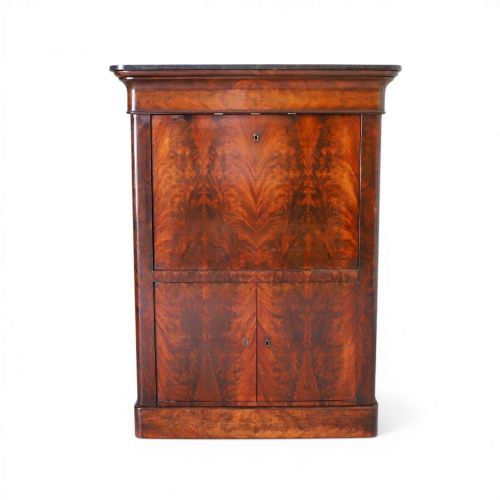
A french fall front bureau combines vertical display with a drop-down writing flap, concealing internal drawers and pigeonholes designed for correspondence. Buyers frequently encounter nineteenth-century examples alongside eighteenth-century models, finished in rich veneers and topped with marble.
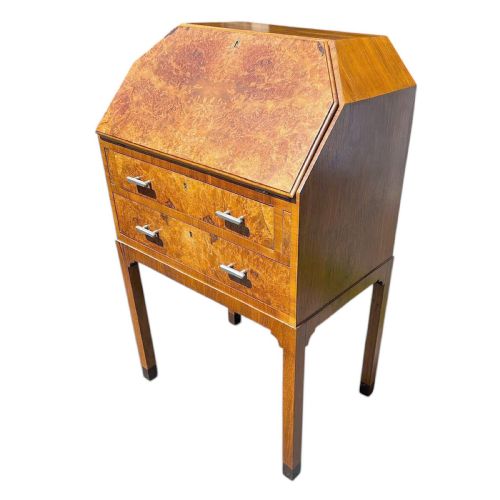
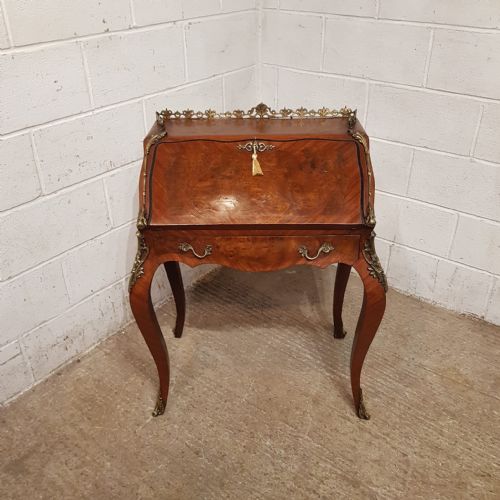
The layout typically incorporates a heavy vertical cabinet resting on a plinth or short feet, housing a fitted interior behind the hinged writing surface. Varieties span compact bureau de dame forms to monumental secretaire abattant cabinets suited for formal salons.
Materials and Construction Methods
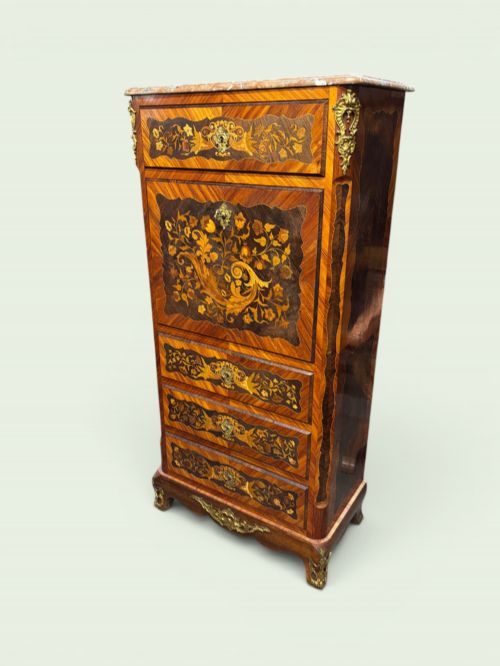
Carinthian and continental cabinetmakers constructed carcass frames in oak or pine before applying elaborate decorative veneers of mahogany, walnut, rosewood, kingwood, and satinwood. Marquetry and parquetry patterns arranged contrasting grain timbers in geometric or floral arrangements across the exterior surfaces.
Structural embellishments relied on cast or chased ormolu, gilt bronze mounts, and polished marble tops that protected the underlying timber. Secret drawers and internal compartments utilised secondary softwoods, secret latches, and dovetailed joinery.
Many writing cabinets contain hidden spring-loaded secret drawers that require locating concealed wooden latches to open.
Distinctions in Execution
The refinement of the marquetry and the crispness of the bronze ormolu mounts dictate the tier of craftsmanship, separating standard production pieces from master workshop outputs. Superior examples display seamless timber matching across the fall front panel and precise articulation within the internal pigeonholes.
Structural integrity depends on the stability of the carcass timber and the original fit of the fall front hinges under daily use. Integration of genuine marble slabs and fire-gilded bronze rather than lacquered brass indicates higher workshop standards.
Blake, London
The French Fall Front Bureau Glossary
- Secretaire abattant
- A tall, vertical writing cabinet featuring a hinged fall front writing flap. This primary form conceals internal compartments and drawers behind a uniform facade.
- Ormolu
- Gilt bronze ornamentation applied to furniture mounts, cast and chased for decorative effect. It provides metallic contrast against dark exotic veneers.
- Marquetry
- Decorative veneer patterns formed from pieces of various coloured woods laid into a ground panel. These floral or geometric designs cover the structural carcase.
- Parquetry
- Geometric patterns constructed from wood veneers arranged in regular grids or cubes. This technique often frames the main panels of writing desks.
- Bureau de dame
- A smaller, feminine writing desk or bureau intended for a lady's boudoir. These pieces frequently feature delicate proportions and marquetry decoration.
French Fall Front Bureau: Frequently Asked Questions
What is a french fall front bureau?
A french fall front bureau is a vertical writing cabinet with a hinged panel that folds down to create a writing desk. It conceals internal compartments designed for letters and stationery.
These pieces combine display capabilities with secure storage, hiding the working area when closed to maintain a tidy room appearance.
How do I date a secretaire cabinet?
Dating relies on examining the timber veneers, construction joints, mount styles, and overall architectural proportions. Eighteenth-century models often feature bombe contours and hand-cut dovetails, while nineteenth-century revivals mirror earlier monarchical styles.
Secondary woods inside drawers and the formulation of the bronze mounts offer further chronological clues for attribution.
Are marble tops original?
Many nineteenth-century writing cabinets were constructed to accommodate heavy inset marble slabs designed to protect the timber surface. These tops were fitted during original manufacture to add weight and formal presence.
Inspect the rebate beneath the stone to confirm it rests naturally within the wooden framing without later alterations.
How should I care for antique veneer?
Protect antique wood surfaces by maintaining stable room humidity away from direct sunlight and heat sources. Regular dusting with a soft cloth preserves the polish without introducing moisture.
Avoid commercial silicone sprays and consult a conservator if veneer lifting or dryness becomes apparent.