
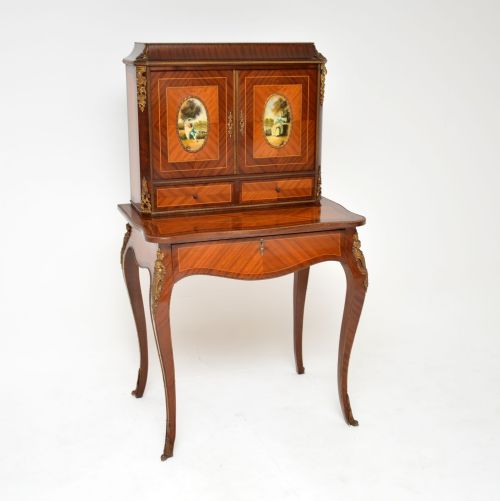

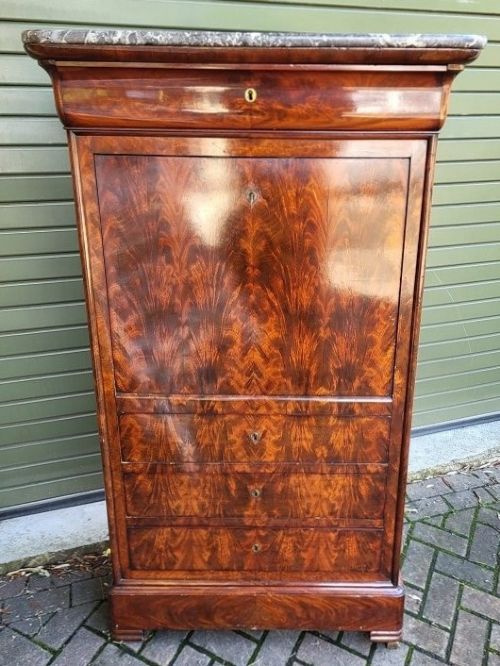


19th Century French Escritoire
A 19th century french escritoire brings refined continental writing furniture into a room, offering clever concealed compartments and elegant sloping surfaces.
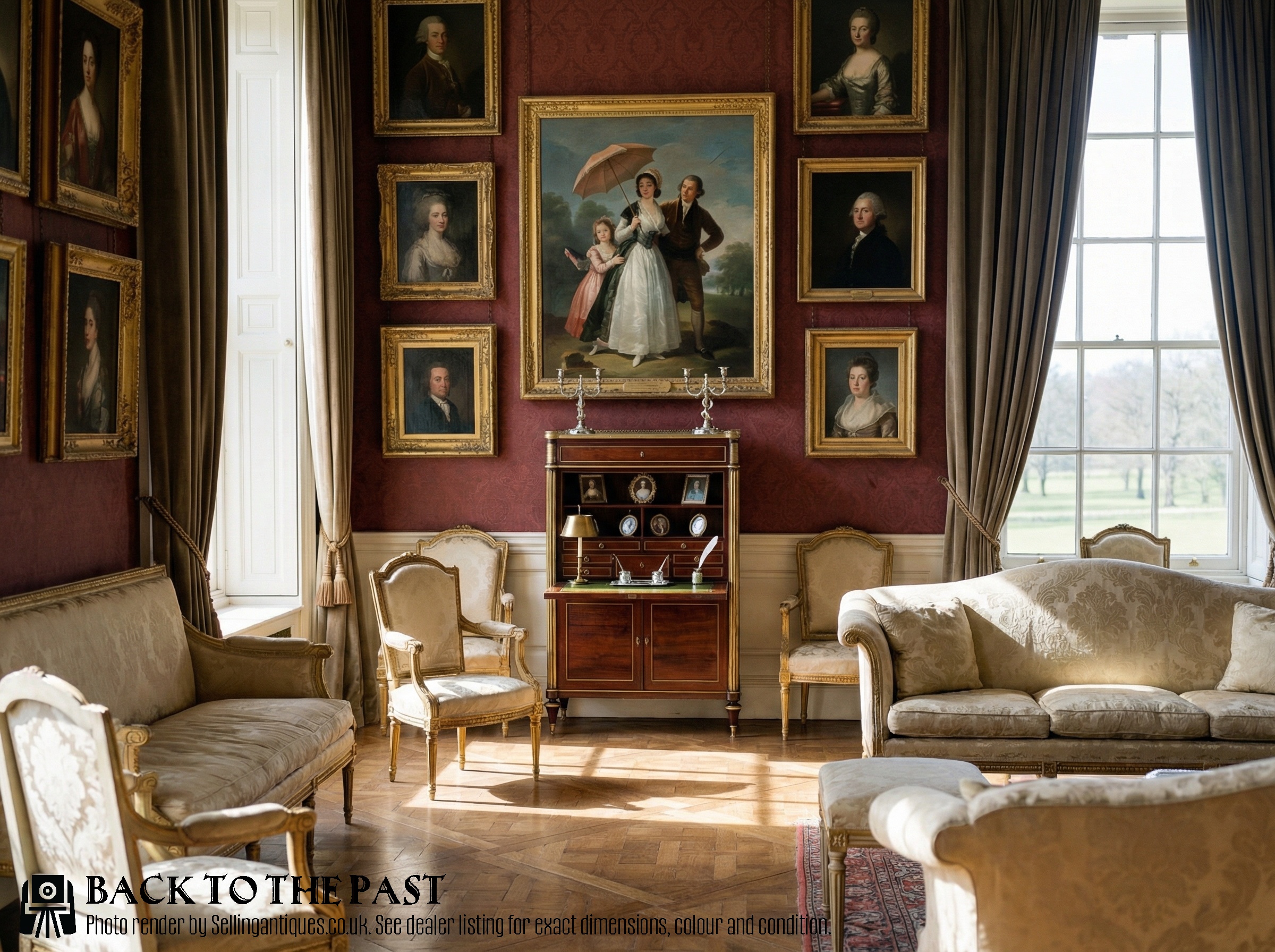
19th Century French Escritoire
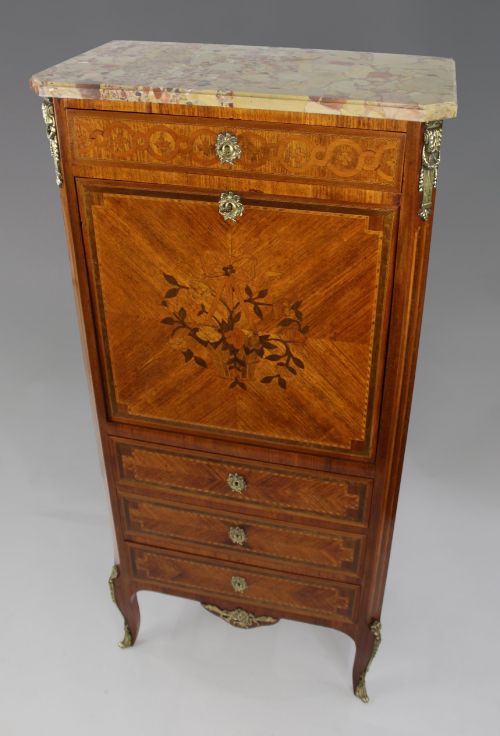
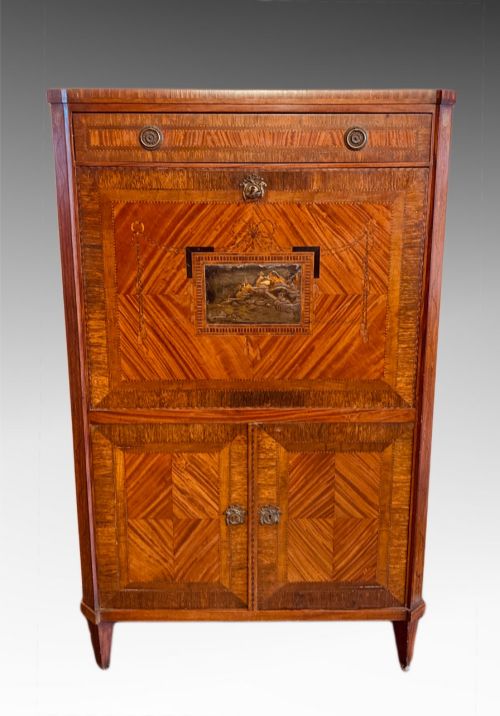
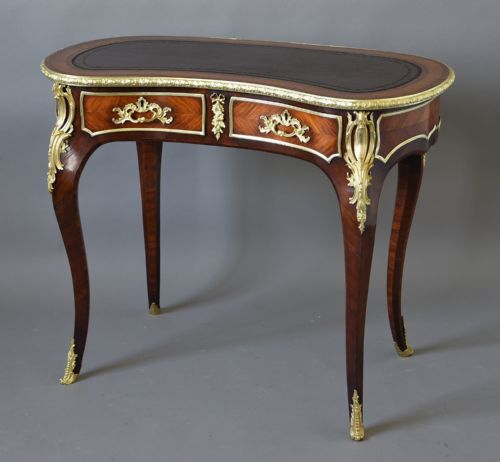
A 19th century french escritoire represents a sophisticated category of continental writing furniture, encompassing fall-front cabinets, secretaires and bonheur du jour tables designed for private correspondence and feminine writing tasks. These pieces frequently manifest through revival aesthetics such as Louis XV, French Rococo and Empire styles, carrying the distinctive architectural proportions of the period.
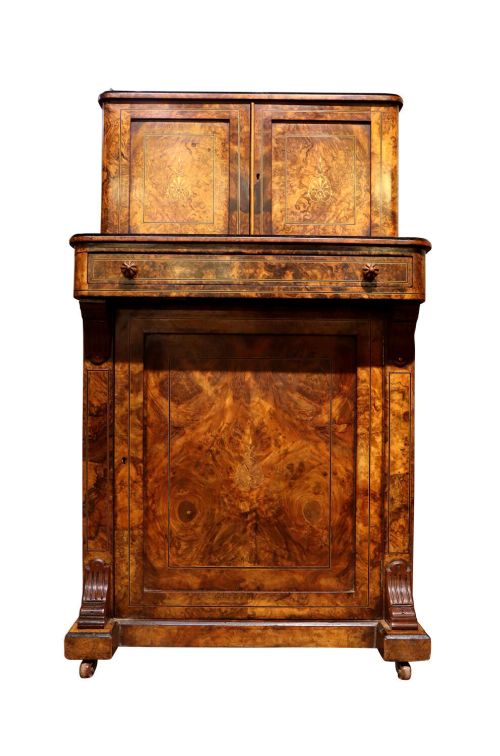
The most prevalent variations encountered on this page include marquetry-inlaid escritoires with original marble tops, burr walnut bureau de dame desks and mahogany secretaire a abattant forms. Cabinetmakers of the era combined practical storage with ornamental flair, incorporating fitted interior drawers behind folding writing flaps.
Originating predominantly from French workshops, these items utilise cabinet woods like kingwood, satinwood and rosewood alongside bronze mounts. Their presence ranges from compact occasional writing desks to larger architectural writing cabinets fitted with secret drawers.
Materials and construction methods
Cabinetmakers constructed these writing pieces using dense hardwoods and exotic veneers, laying kingwood, flame mahogany, burr walnut and satinwood over sturdy carcass timbers such as oak and fruitwood. Marquetry panels integrated contrasting grain patterns and floral motifs across the fall fronts and tabletops.
Gilt bronze and ormolu mounts fortified the corners, edges and aprons, while polished marble slabs crowned the upper surfaces of many secretaire cabinets. Brass inlay and glass elements further embellished the exteriors, accompanied by functional internal mechanisms like secret drawers.
The furniture spans French Rococo, Louis XV, Empire and Victorian revival styles from the nineteenth century.
Distinctions in quality
The degree of refinement in a 19th century french escritoire rests upon the precision of the marquetry work and the crispness of the cast ormolu mounts. Finer examples display intricate floral veneers and hand-chiseled bronze ornamentation that integrate seamlessly with the timber carcass.
Structural integrity of the fall-front hinges and the complexity of the interior fittings separate standard production from superior craftsmanship. Original marble tops and correctly functioning secret compartments elevate the standing of an individual piece.
Befort Jeune
The 19th Century French Escritoire Glossary
- Escritoire
- A writing cabinet or desk featuring a sloping flap or fall-front that opens to reveal a fitted interior with small drawers and pigeonholes. This form serves as both a functional writing surface and an enclosed storage cabinet.
- Secretaire a abattant
- An upright writing cabinet with a vertical fall-front flap that drops down to form a horizontal desk surface. It conceals an arrangement of interior compartments for letters and writing materials.
- Bonheur du jour
- A light ladies writing desk featuring a small cabinet or set of drawers superstructure on top of the main writing surface. Originating in France, it became popular for casual correspondence.
- Marquetry
- The art of applying decorative pieces of veneer to a structural structure to form intricate pictorial designs or geometric patterns. Makers utilised various coloured woods to achieve tonal depth.
- Ormolu
- Gilt bronze ornamentation applied to the mounts, feet and handles of fine furniture during the eighteenth and nineteenth centuries. The technique involves coating bronze with a mercury and gold amalgam.
- Vernis Martin
- A type of simulated Japanese lacquer developed by the Martin brothers in eighteenth-century France and emulated later in the nineteenth century. It provides a glossy, translucent painted finish on cabinet panels.
19th Century French Escritoire: Frequently Asked Questions
What is the difference between an escritoire and a bureau de dame?
An escritoire typically refers to an upright cabinet with a fall-front panel that conceals a writing surface and internal compartments. It prioritises vertical storage space combined with a fold-down desk.
A bureau de dame is generally a lighter ladies desk, often taking the form of a bonheur du jour with an open or shelved superstructure. These pieces were designed specifically for boudoir use rather than heavy administrative tasks.
How do I identify a Louis XV revival style piece?
Louis XV revival pieces display characteristic asymmetrical curves, cabriole legs and elaborate floral marquetry patterns. The silhouette avoids harsh straight lines in favour of flowing, organic contours.
Ormolu mounts on these items usually trace the scrolling outlines of the aprons and corners, reflecting the decorative exuberance of the mid eighteenth century.
Were marble tops original to these desks?
Marble tops were frequently incorporated into nineteenth-century French secretaire cabinets and escritoires to provide a durable and luxurious upper surface. White and variegated marble slabs were fitted directly into the wooden framework of the cabinet top.
Examining the seating rebate and the surrounding veneer helps confirm whether the stone slab belongs to the original construction of the desk.
How should I care for a wood and ormolu escritoire?
Maintenance requires keeping the piece away from direct sunlight and maintaining stable room humidity to protect the delicate kingwood or mahogany veneers. Gentle dusting with a dry, soft cloth preserves the polished wooden finish without stripping natural oils.
Ormolu mounts should be cleaned very sparingly with a dry cloth, avoiding harsh metal cleaners that can damage the underlying gilt surface.