

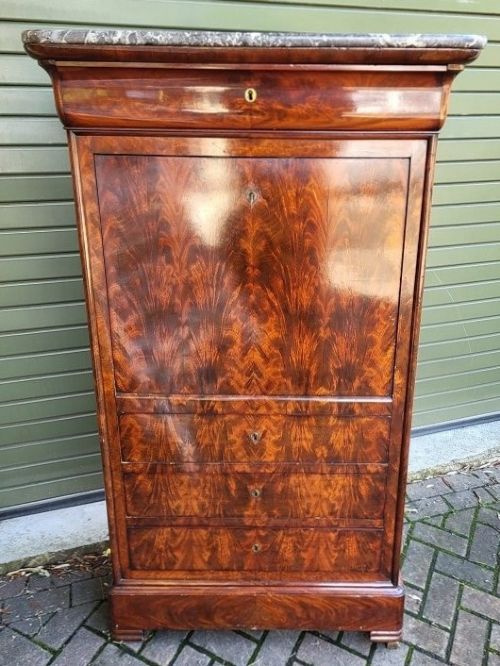


French Escritoire Cabinet
A French escritoire cabinet is a purposeful writing piece designed for correspondence, prized for folding or drop-front desks paired with concealed compartments.
French Escritoire Cabinet
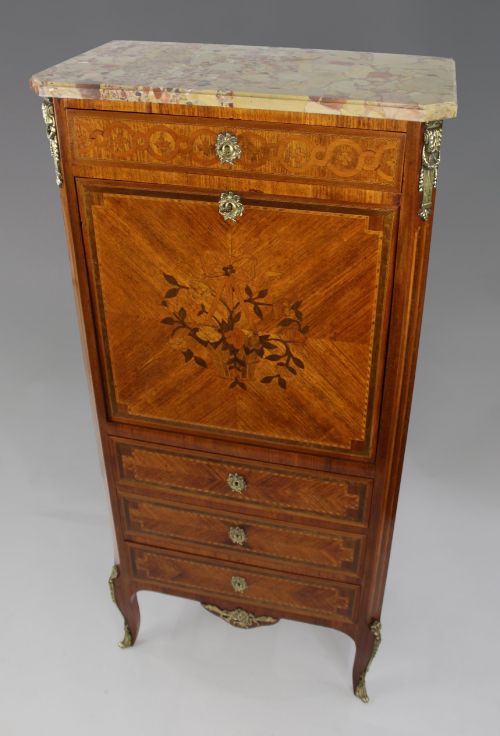
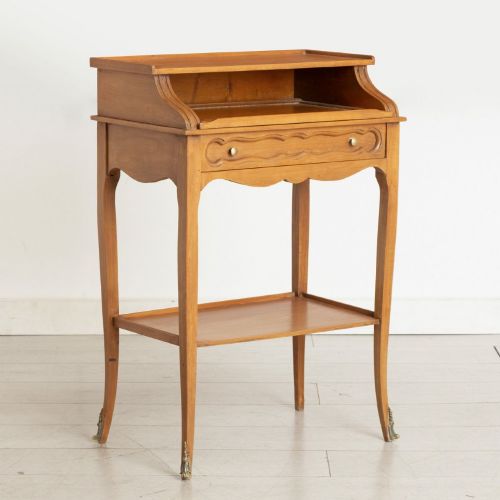
A French escritoire cabinet combines the utility of a private writing surface with concealed storage, frequently taking the form of a secretaire à abattant or a compact ladies writing table.
Most examples encountered here originate from the nineteenth century, spanning Victorian interpretations and revivals of Louis styles.
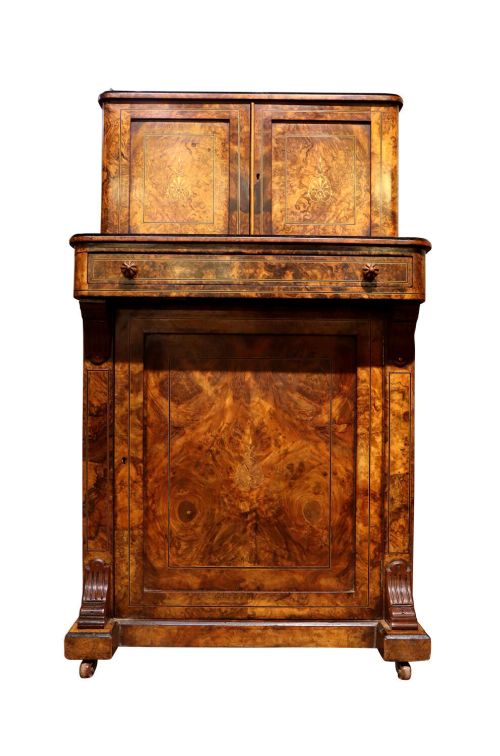
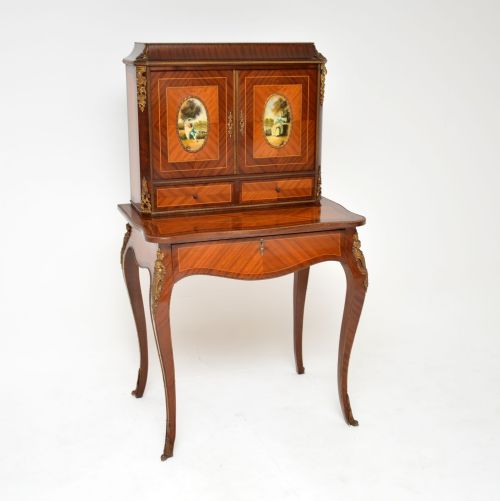
The assortment includes marquetry writing cabinets, slender mahogany desks, and walnut bureaux de dame designed for domestic chambers.
Materials and Construction
Cabinet makers utilised dense hardwoods such as mahogany, walnut, kingwood, and rosewood, often laid as veneers over sturdy carcass timbers to support intricate marquetry patterns.
Metalwork played a defining structural and decorative role, with cast ormolu mounts, brass inlays, and galleries framing surfaces of white marble.
Drop fronts and secret drawers relied on precise joinery to conceal internal compartments while maintaining the external facade of a refined cabinet.
Secret drawers hidden behind faux book spines or sliding panels kept love letters safe from curious household staff.
Quality Variations
Quality rests in the crispness of the cabinet work, from the depth of hand-cut marquetry to the precision with which brass ormolu mounts are fitted to the timber.
The choice of primary timbers and veneers sets the standard, where figured kingwood, burr walnut, or flame mahogany elevate the visual weight of the piece.
Internal execution distinguishes finer examples, visible in the careful construction of secret drawers, pigeonholes, and fitted writing slides.
Befort Jeune
The French Escritoire Cabinet Glossary
- Secretaire à abattant
- A tall cabinet featuring a hinged fall-front writing surface that conceals internal drawers and pigeonholes when closed.
- Bonheur du jour
- A light ladies writing desk, popular in the nineteenth century, usually fitted with a small cabinet or tier of shelves on top.
- Ormolu
- Gilded bronze mounts applied to furniture for decorative enrichment, characteristic of French cabinet making.
- Marquetry
- Decorative patterns formed by the precise fitting of contrasting veneer timbers onto the carcass of a cabinet.
- Vernis Martin
- A type of simulated Japanese lacquer developed in France, often found decorating panels on refined writing cabinets.
French Escritoire Cabinet: Frequently Asked Questions
What is a french escritoire cabinet?
A French escritoire cabinet is a dedicated writing piece featuring a drop front or sliding surface designed to conceal correspondence materials and small valuables.
These pieces range from tall vertical abattants to smaller boudoir tables, combining display surfaces with private storage.
How do I identify a nineteenth century piece?
Nineteenth century examples typically display revival styles such as Louis XV or French Empire, employing materials like kingwood, mahogany, and ormolu mounts.
Construction methods often reveal period-specific veneer thicknesses and hand-cut joinery within the internal drawers and writing compartments.
Where were these cabinets used?
These cabinets were primarily placed in private parlours, bedrooms, and studies for personal correspondence and the management of household accounts.
Their compact footprints allowed them to function in domestic reception rooms where a full-sized partner desk would prove too cumbersome.
How do I care for marble and wood?
Marble tops require gentle cleaning with mild soap and water to avoid dulling the polished surface or staining the porous stone.
Wood elements benefit from occasional waxing to nourish veneers like rosewood, kingwood, and walnut while protecting delicate brass ormolu mounts.