



French Enamel Gold Charm
These french enamel gold charm pieces are small, finely worked tokens combining precious metal and vibrant glasswork, prized for their intricate miniature detail.
French Enamel Gold Charm
A french enamel gold charm typically takes the form of a small pendant, medal, or novelty item designed to be worn on a bracelet or chain. These pieces span periods from the eighteenth century through to the art deco era of the 1930s.
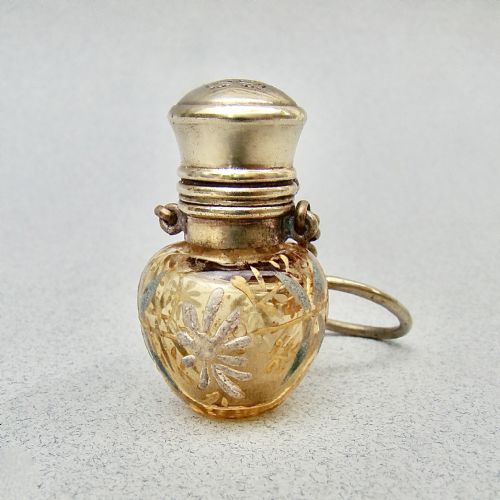
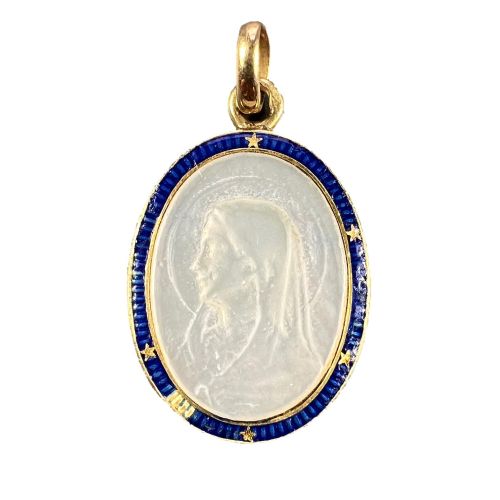
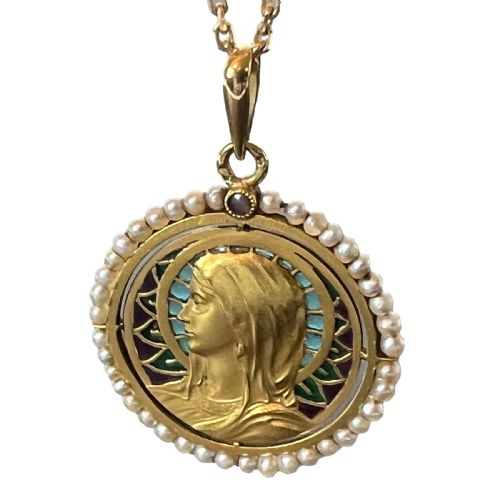
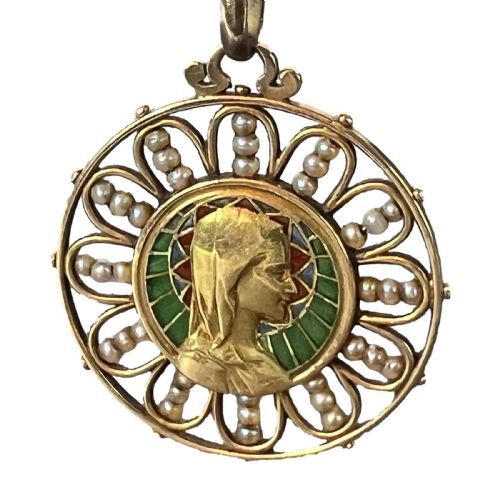
The most common examples on this page are eighteenth-century curtain tie backs alongside nineteenth and early twentieth-century charms and pendants. Religious subjects such as the Virgin Mary sit alongside secular lucky motifs like gambling cards and dice.
Materials combine 18k yellow gold with vitreous or plique-a-jour enamel, often accented with seed pearls, mother of pearl, or glass. Styles range from Victorian and art nouveau to Belle Epoque and art deco.
How they were made
Goldsmiths shaped 18k yellow gold into small frames, lockets, and figurative forms to hold the enamel work. Plique-a-jour techniques created stained-glass effects without a backing, allowing light to pass through the coloured glass.
Vitreous enamel powders were fused to the metal surface through high-temperature firing, building rich blocks of red, white, and translucent colour. Seed pearls and glass components were then set by hand into the gold mounts.
French Enamel Gold Charm Retail Price Guide 2026
Typical asking prices for french enamel gold charm among the pieces listed under this phrase on Sellingantiques today, from the lower quarter to the upper quarter. They describe what is for sale here now, not the wider market.
Listings feature items spanning from the 18th century to 1930, utilising 18k yellow gold, enamel, glass, and seed pearls.
What varies in quality
The finesse of the enamelling work marks the primary division between standard items and exceptional examples. Plique-a-jour pieces requiring precise cell-work without backing demand high technical skill from the maker.
The complexity of the subject matter, such as miniature working dice within a die or detailed religious iconography, elevates the character of the piece. The preservation of the delicate glass enamel surfaces without loss or repair also determines the standing of each charm.
The French Enamel Gold Charm Glossary
- Plique-a-jour
- An enamelling technique where the enamel is applied without a backing metal, creating a translucent, stained-glass effect that lets light pass directly through the coloured cells.
- Vitreous enamel
- A material made by fusing powdered glass to a metallic substrate at high temperatures, producing a durable and glossy coloured surface.
- Seed pearl
- A very small, naturally occurring pearl often used in Victorian and art nouveau jewellery as a delicate border or accent.
- Chatelaine
- A decorative belt hook worn with suspended accessories such as scent bottles, keys, or sewing tools.
French Enamel Gold Charm: Frequently Asked Questions
How were these charms worn?
These items were generally suspended from heavy link bracelets or fine gold chains worn around the neck or wrist. Some larger examples functioned as independent pendant medals.
Owners also attached them to chatelaines or ribbons depending on the fashion of the specific decade.
What materials are used?
The primary structural metal is 18k yellow gold, paired with vitreous and plique-a-jour enamel for the coloured decorative elements. Additional adornments frequently include seed pearls, mother of pearl, and coloured glass.
Earlier utility items also incorporate gilded metal alongside traditional enamel and glass.
How do I date a piece?
Stylistic indicators provide the clearest guide to age, with eighteenth-century items showing utilitarian forms like curtain tie backs, while nineteenth-century pieces often feature Moser glass and chatelaine components.
Twentieth-century examples transition through art nouveau naturalism into geometric art deco designs like origami birds and dice.
Are these charms fragile?
The enamel surfaces require careful handling to prevent chipping or cracking against hard surfaces. Plique-a-jour sections are particularly delicate due to the absence of a backing metal.
Normal daily wear is suitable provided the wearer avoids impacts and harsh chemicals.