



French Empire Vases
French empire vases bring classical symmetry and heavy metalwork into a room, offering the grand presence of nineteenth-century design.
French Empire Vases
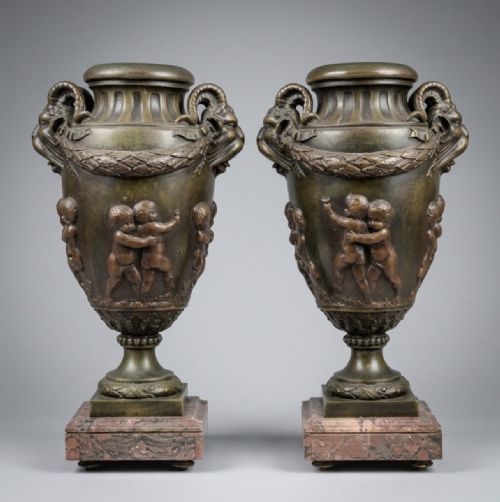
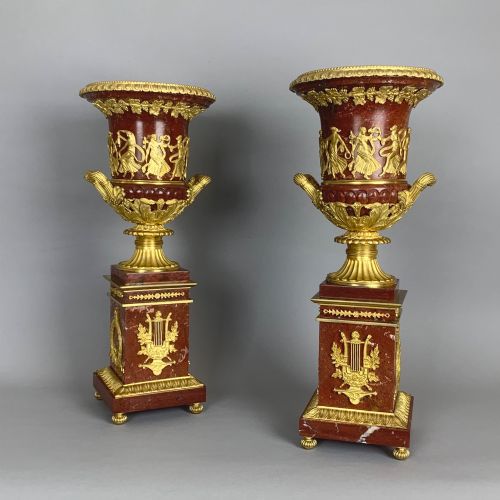
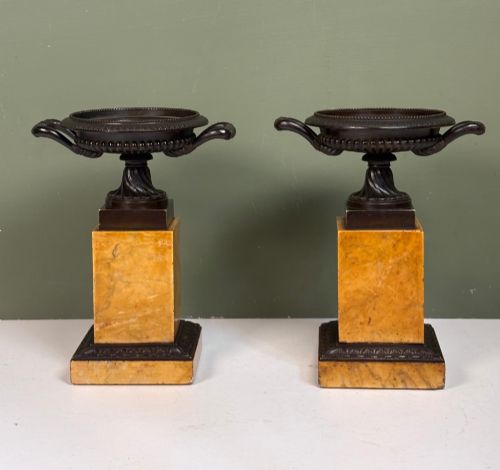
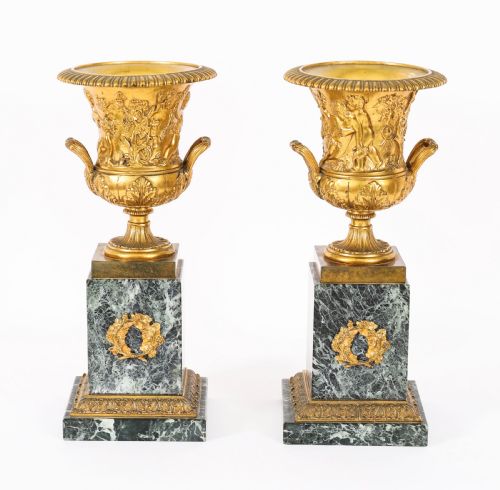
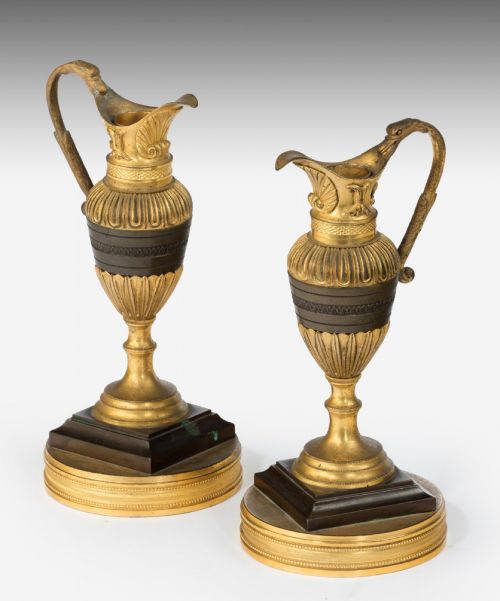
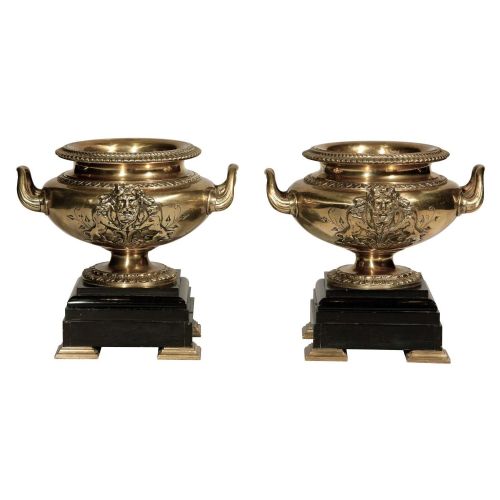
When you search for french empire vases, you encounter monumental decorative vessels and urns rooted in nineteenth century neoclassical design. The forms draw heavily on ancient Greek and Roman shapes, including campana urns, amphorae, and tazzas mounted on stone plinths.
On this page, the most common examples are pairs of matched urns combining cast metal with marble or porcelain. These pieces typically date from the nineteenth century, spanning periods from the early empire years through later nineteenth century revivals.
How they were made
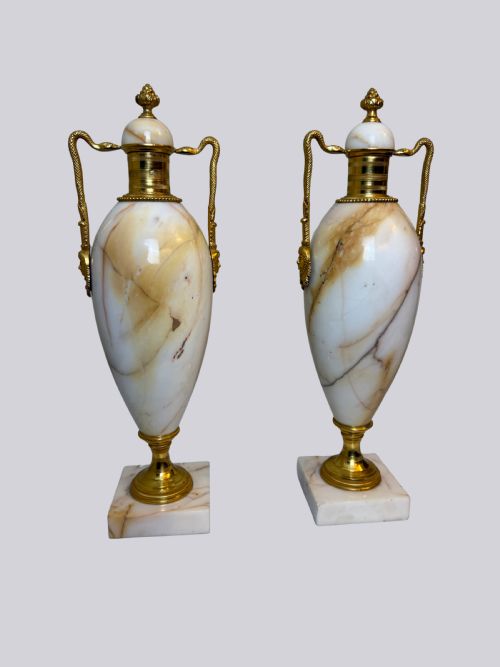
The construction relies on combining cast metals such as bronze, ormolu, and bronzed spelter with natural stone bases like marble, white onyx, and alabaster. Gilt bronze mounts and intricate handles are cast and then applied to turned marble plinths or ceramic bodies.
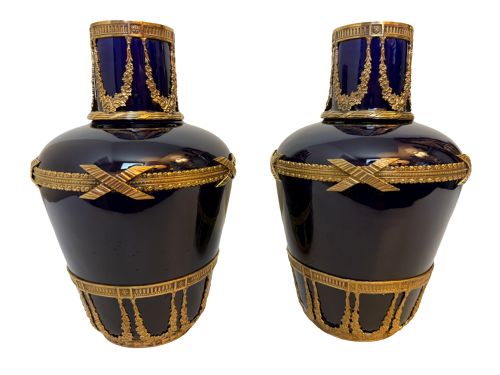
Ceramic examples utilise Paris porcelain and Sèvres bodies, often decorated with hand painted scenes and detailed gilding. Glass and crystal versions appear alongside metal and stone, incorporating enamel work and raised leaf designs.
Object forms span decorative urns, amphorae, tazzas, and occasionally converted table lamps utilising nineteenth century porcelain bodies.
What varies in quality
Quality rests in the crispness of the metal chasing and the depth of the fire gilding on the ormolu mounts. Finer pieces display sharp, clean lines in the cast bronze details and heavy, uncompromised stone bases.
In porcelain and glass examples, the standard of the hand painted scenes and the precision of the gilt work dictate the tier of the piece. Matched pairs with intact original mountings and unblemished marble command greater visual weight.
The French Empire Vases Glossary
- Ormolu
- Gilded bronze produced by applying a mercury and gold amalgam to a bronze base and heating it. This technique creates a distinctive warm, mat golden surface.
- Campana
- A bell shaped classical vessel form with a flaring rim and a pedestal foot. These shapes mimic ancient bronze and terracotta garden vases.
- Cassolette
- A decorative vase or urn fitted with a reversible lid that functions either as a solid cover or a burner. They frequently incorporate marble and gilt bronze mounts.
- Tazza
- A shallow saucer shaped vessel raised on a stem and foot. They are typically rendered in bronze or marble for display purposes.
- Grand Tour
- Travel through continental Europe undertaken by nineteenth century gentry to collect classical antiquities and decorative art. Pieces from this context often incorporate Italian marbles and French bronze mounts.
French Empire Vases: Frequently Asked Questions
How are these vases cleaned?
Dusting with a dry soft cloth is generally sufficient for maintaining metal and stone surfaces. Avoid liquid cleaners and chemical polishes that can strip fragile gilt bronze or damage porous marble.
Water should be kept away from antique porcelain and gilt surfaces, particularly where hand painted scenes or delicate enamel work exist. Professional conservation is advised for deep cleaning or repairing loose mounts.
Were they used for flowers?
Most nineteenth century examples served primarily as decorative objects or architectural garnitures on mantelpieces and sideboards. Their heavy metal mounts and stone bases made them ill suited for daily holding of water and stems.
Some porcelain and glass variants could hold arrangements, but monumental bronze and marble urns functioned strictly as sculptural statements reflecting classical taste.
How do I identify the period?
Dating relies on examining the weight and composition of the bronze, the type of marble used in the plinth, and the style of the hand painted decoration. Early nineteenth century pieces tend to show stricter neoclassical restraint and heavier fire gilt bronze.
Later nineteenth century revivals often incorporate softer spelter metals or distinct regional porcelain bodies like old Paris wares. Comparing the casting quality to documented examples helps narrow the decade of production.
Do they always come in pairs?
Many survive as matched pairs because they were originally created to sit symmetrically on either side of a clock or mirror on a mantelpiece. Single vases also appear, often representing items that were once part of a larger garniture set.
Pairs naturally carry higher decorative symmetry for formal interior display, while solo pieces function well as accent objects on smaller tables.