




French Empire Tazzas
French empire tazzas are classical decorative pedestals that bring sculptural weight and rich material contrast to a room.
French Empire Tazzas
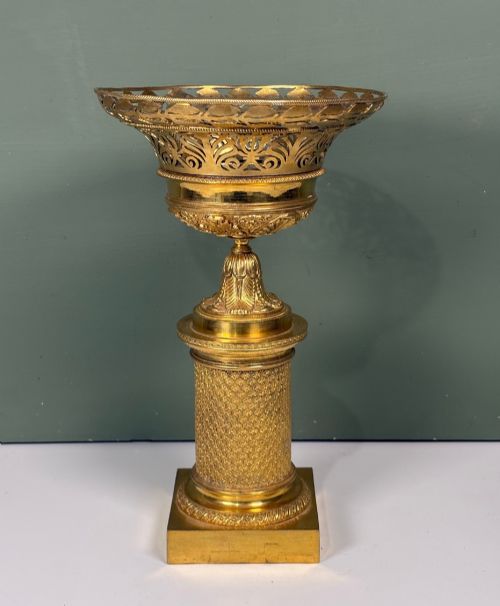
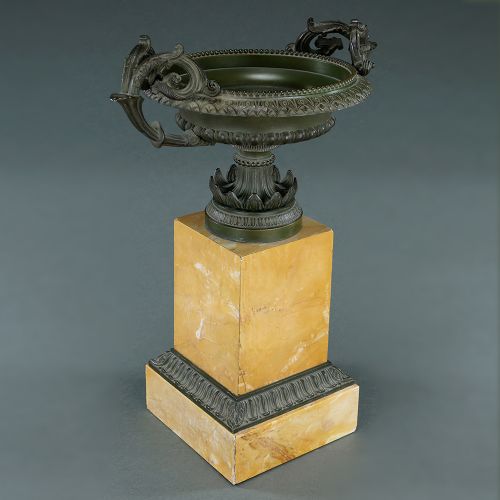
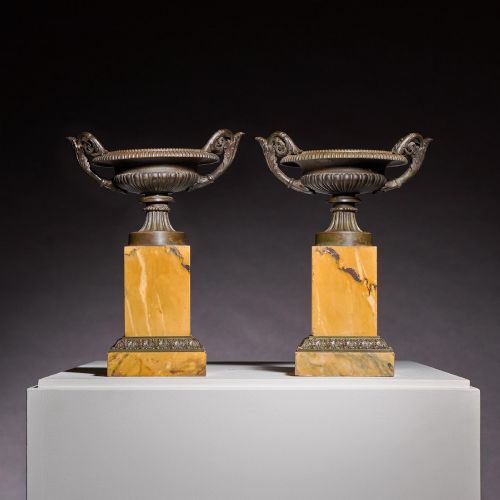
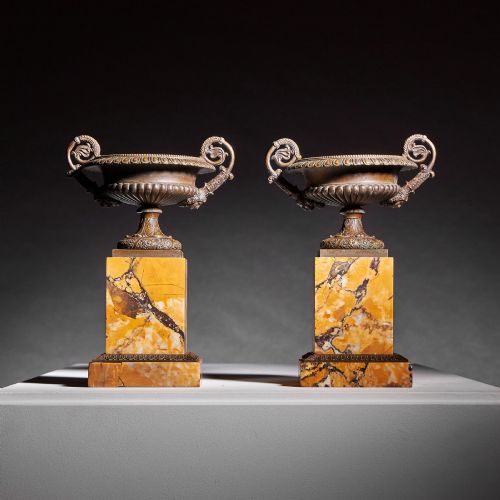
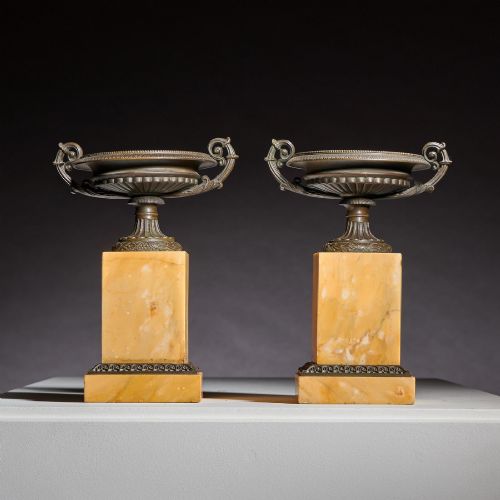
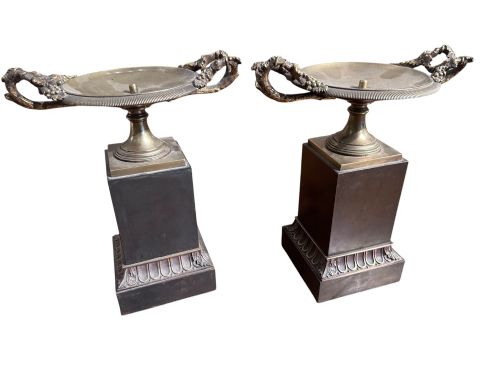
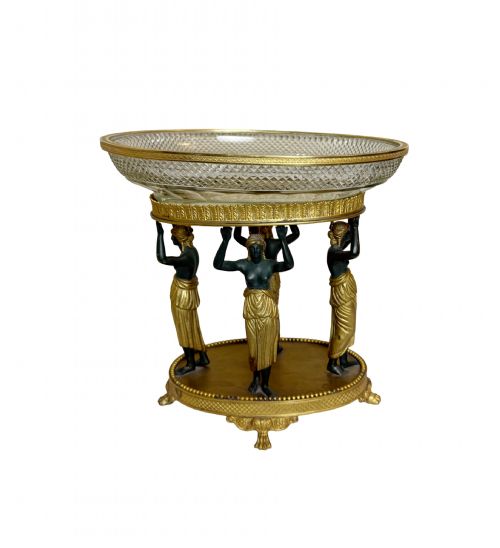
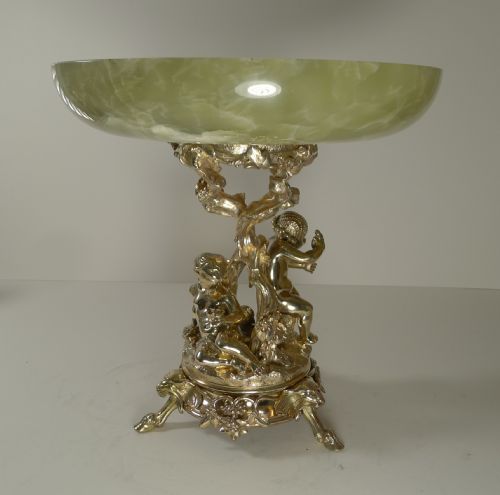
French empire tazzas stand as classical shallow vessels elevated on pedestals, designed originally to serve as centrepieces and decorative objects in nineteenth-century interiors. When you search for french empire tazzas, you encounter pieces that merge classical architectural form with ornamental metalwork.
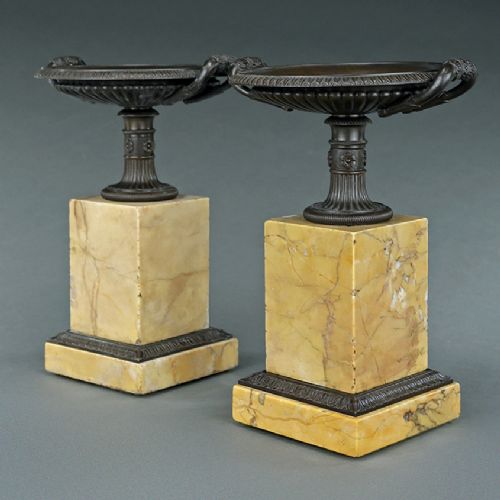
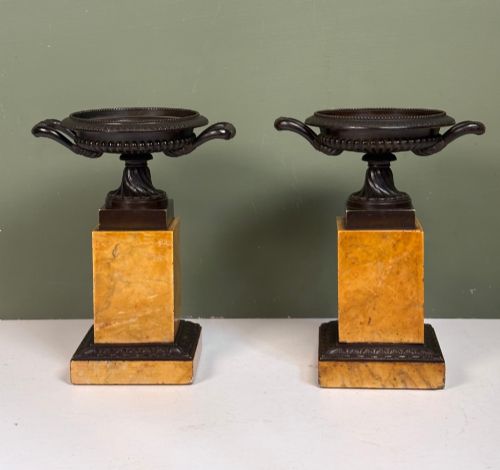
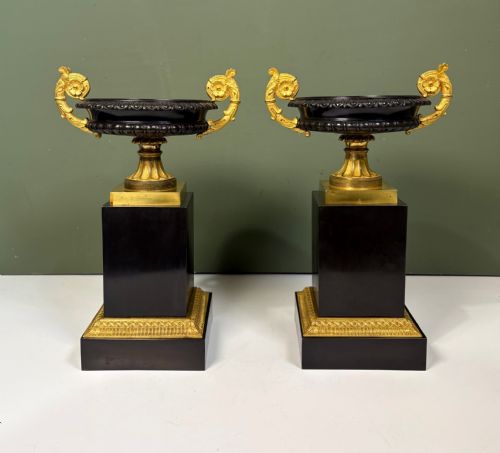
The selections on this page span the nineteenth century, including Regency interpretations, 1850s examples, and items from the 1880s and 1890s. They appear frequently as pairs, adopting the dual-vessel symmetry favoured by neoclassical interior design.
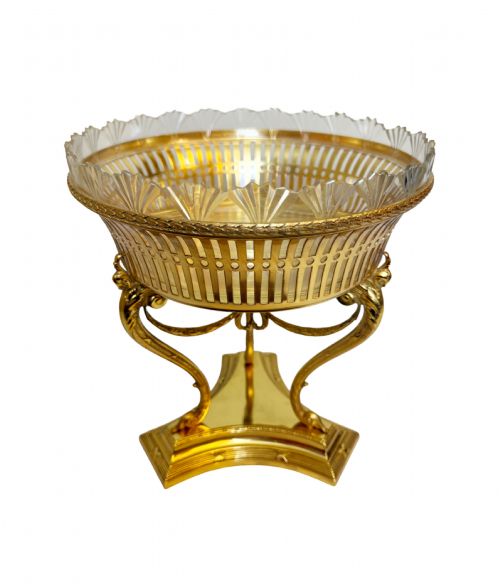
Forms cross over with decorative bowls, vases, and urns, sometimes integrating glass inserts or cut crystal bowls. Their origins tie closely to the Grand Tour tradition, bringing classical antiquity motifs into nineteenth-century drawing rooms.
What varies in quality
The refinement of the bronze casting determines the upper tier of quality, visible in the sharpness of chased details and the depth of the hand-applied patination. Superior examples exhibit crisply rendered classical foliage and figures rather than soft, mass-produced contours.
Material selection separates standard decorative objects from exceptional works, particularly the density and figuring of the marble bases and the weight of the gilt bronze mounts. Integrated details such as Limoges enamel plaques or crystal centrepieces elevate the complexity of the manufacture.
French Empire Tazzas Retail Price Guide 2026
Typical asking prices for french empire tazzas among the pieces listed under this phrase on Sellingantiques today, from the lower quarter to the upper quarter. They describe what is for sale here now, not the wider market.
Listings feature items spanning the nineteenth century, incorporating materials such as Siena marble, cut crystal, and patinated bronze.
Christofle Paris
The French Empire Tazzas Glossary
- Ormolu
- Gilded bronze, where a layer of gold amalgam is applied to a bronze base and fired. It provides a warm, durable metallic finish characteristic of the period.
- Grand Tour
- A cultural journey of Europe undertaken by wealthy young men in the eighteenth and nineteenth centuries. It generated a strong demand for classical antiquities and souvenir bronzes.
- Patinated bronze
- Bronze treated with chemical solutions to produce a darkened surface colour. This technique accentuates the highlights of gilded mounts placed beside it.
- Tazza
- A shallow bowl mounted on a stem and foot, used originally for serving food or displaying items. In nineteenth-century interiors, it functioned purely as an ornamental centrepiece.
French Empire Tazzas: Frequently Asked Questions
What were french empire tazzas used for?
These decorative pedestals served primarily as ornamental centrepieces on dining tables, sideboards, or mantelpieces during the nineteenth century. They displayed fruit, sweetmeats, or simply stood alone as sculptural expressions of classical taste.
Over time, their function shifted entirely to decorative display, reflecting the owners' appreciation for antiquity and refined interior decoration.
How do you style french empire tazzas at home?
Place a matched pair on a large sideboard, a central library table, or a classical mantelpiece to establish symmetrical weight in a room. Their polished marble and gilt surfaces interact well with natural light from windows.
Keep the surrounding surfaces uncluttered to let the sculptural silhouette and material contrast stand out without visual competition.
How do I identify a grand tour tazza?
Grand tour tazzas typically incorporate imported Italian marbles like Siena or rouge alongside patinated and gilded bronzes. They reflect souvenirs brought back by travellers visiting classical archaeological sites in Italy.
The craftsmanship often mimics ancient architectural proportions, drawing directly from Roman and Greek precedents.
What is the difference between ormolu and gilt bronze?
Ormolu specifically refers to the historical French process of applying gold amalgam to bronze and heating it to vaporise the mercury, leaving a bonded gold layer. Gilt bronze is a broader term that can encompass modern electroplating as well as traditional mercury gilding.
Both techniques produce a brilliant golden finish designed to catch candle or gas light in nineteenth-century interiors.