


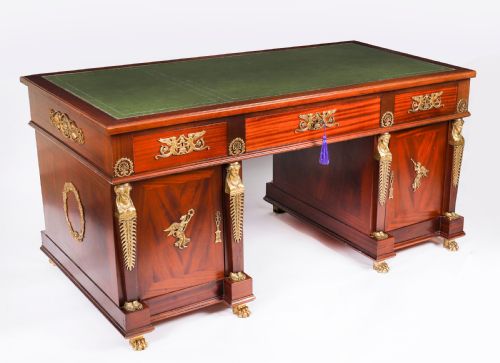


French Empire Style Pedestals
French empire style pedestals unite classical form with heavy gilt mounts, bringing architectural weight and rich timber to a room.
French Empire Style Pedestals
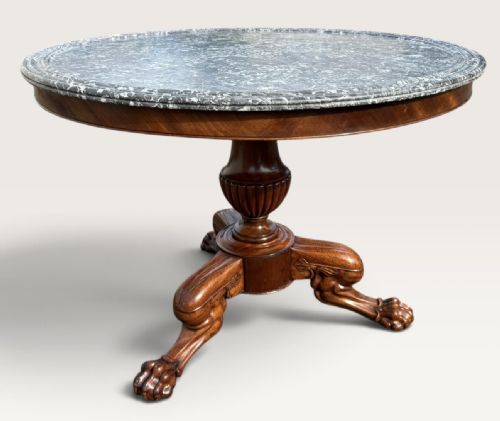
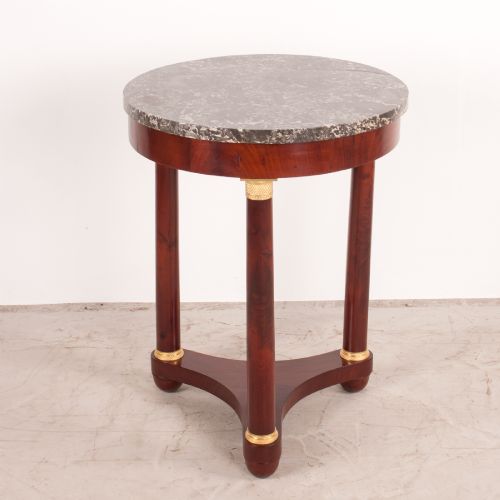
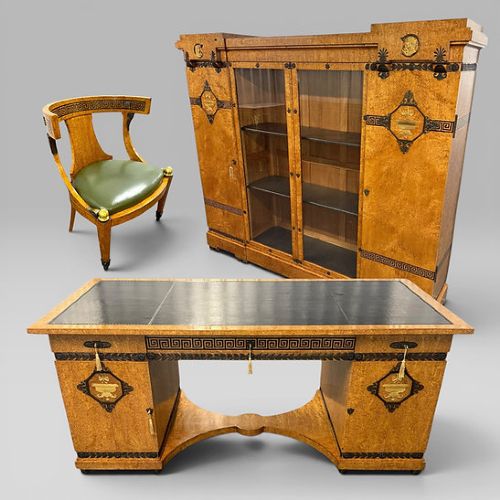
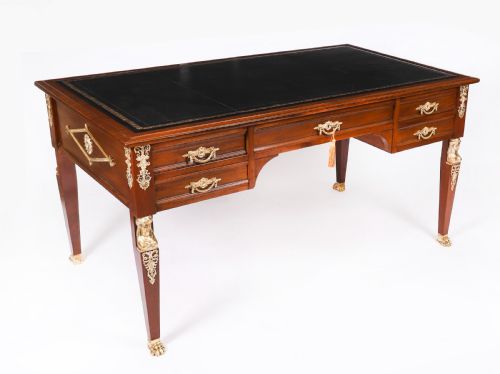
When you search for french empire style pedestals, you find items spanning the nineteenth century alongside later revival pieces from the early twentieth century. The selection ranges from dedicated pedestals and torchères to round gueridon centre tables, marble-topped side tables, and monumental desks.
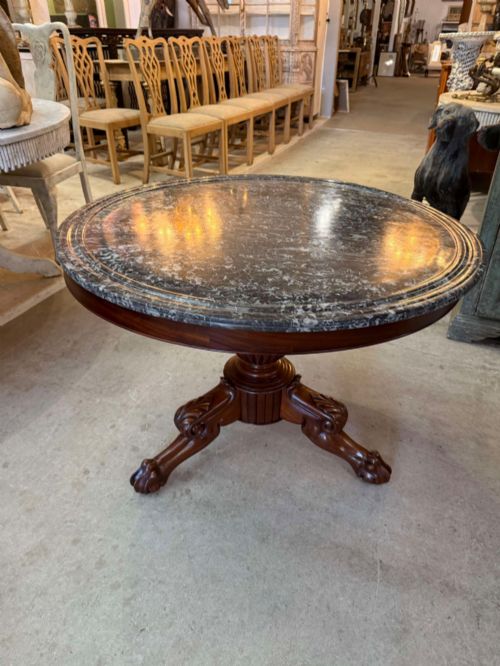
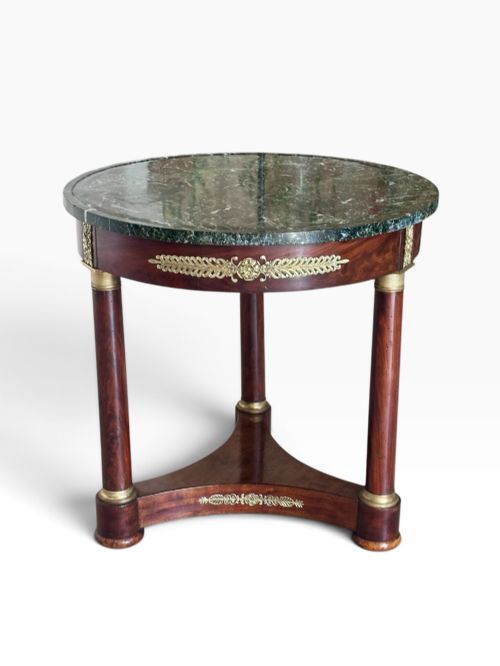
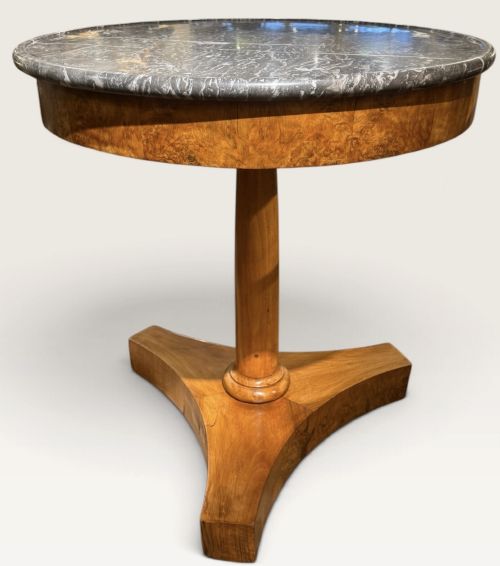
The most frequent forms on this page combine mahogany or hardwood structures with inset marble tops, circular platforms, and classical column supports. These pieces draw on French Neoclassical, Directoire, and Regency design idioms, often incorporating tripod bases or central pillar columns.
Origins trace directly to continental workshops and later revival makers producing decorative furniture with distinct classical motifs. Buyers select these forms to anchor a room with antique symmetry, functional surface space, and historic presence.
Materials and construction
Makers utilised dense timbers such as mahogany and walnut for the primary carcases, providing a dark, heavy foundation for the decorative elements. Marble slabs formed heavy, polished tops on tables and gueridons, resting directly on timber frames.
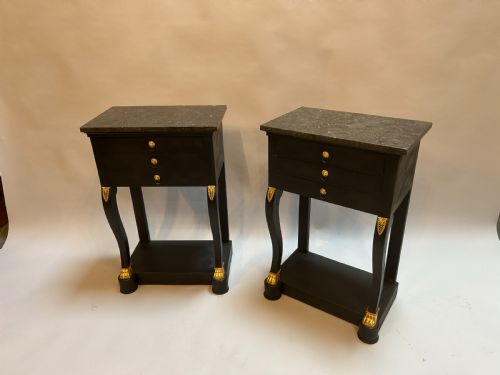
Cast bronze and ormolu mounts supplied the characteristic metallic highlight, fastened to the timber with screws or pins to frame corners, aprons, and pillar bases. Brass, leather, toleware, and porcelain also appear across the lighting and desk categories.
Joinery relied on traditional cabinet-making methods appropriate to round tables and rectangular desks, integrating turned columns and carved details like rams' heads and swan motifs into the structural framework.
French Empire Style Pedestals Retail Price Guide 2026
Typical asking prices for french empire style pedestals among the pieces listed under this phrase on Sellingantiques today, from the lower quarter to the upper quarter. They describe what is for sale here now, not the wider market.
Listings feature mahogany, marble, bronze, and ormolu across pieces dated from the eighteenth to the twentieth century.
Distinctions in execution and finish
The precision of the cast ormolu and bronze mounts sets the finer examples apart from simpler production. Crisp chasing on the metalwork and heavy, fire-gilt surfaces denote superior workshops compared to lighter, unchased brass alternatives.
Timber selection and marble thickness dictate the structural integrity and visual weight of each piece. Figured mahogany veneers and thick, intact slabs of white or black marble signify careful material choice.
The integration of sculptural elements, such as carved swans, rams' heads, or classical columns, reveals the hand of a skilled maker who maintained proportions across complex geometric forms.
Mercier Frères
The French Empire Style Pedestals Glossary
- Gueridon
- A small French table, typically circular with a central pillar or tripod base. This form serves as a centre table or display surface.
- Ormolu
- Gilded bronze, produced by applying a gold amalgam to cast bronze and heating it to drive off the mercury. This technique creates a durable, luminous metallic finish.
- Torchere
- A tall, slender stand designed to support a lamp, urn, or vase. These pieces elevate decorative objects within a room.
- Bureau Plat
- A flat-topped freestanding writing desk, usually fitted with drawers in the frieze. These desks often feature leather inserts and bronze mounts.
- Tazza
- A shallow saucer-like ornamental cup or dish mounted on a stem and foot. They appear in bronze, marble, and porcelain.
French Empire Style Pedestals: Frequently Asked Questions
What is a gueridon table?
A gueridon is a round French table supported by a central pillar or tripod legs, functioning as a centre table or display stand.
These pieces often feature marble tops and rich mahogany timbers, making them central decorative elements in a room.
How do I identify French Empire style?
This style draws heavily on classical Greek and Roman motifs, featuring symmetrical forms, dark mahogany, and prominent metallic mounts.
Look for architectural elements like columns, gilt bronze details, and symbols such as swans, amphorae, and rams' heads.
Where were these pieces used?
They served as formal display surfaces, writing desks, and lighting stands in nineteenth-century drawing rooms, offices, and grand hallways.
Pedestals and torchères held urns or lamps, while gueridons provided central placement for decorative objects.
How do I date a piece?
Dating relies on timber characteristics, mount quality, and construction techniques, distinguishing early nineteenth-century originals from later twentieth-century revivals.
Nineteenth-century pieces typically show hand-finished bronze chasing and dense mahogany, while revival items may exhibit twentieth-century joinery.