


French Empire Style Gueridon
A french empire style gueridon brings classical symmetry and striking mounts to a room, offering a functional surface rooted in nineteenth-century design.
French Empire Style Gueridon
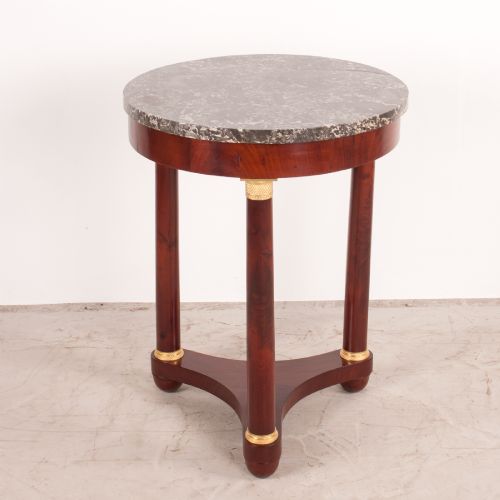
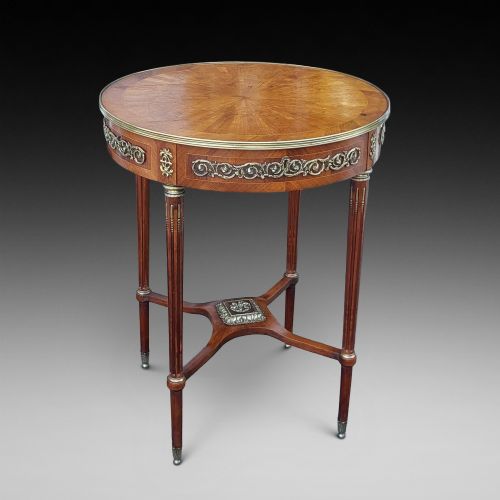
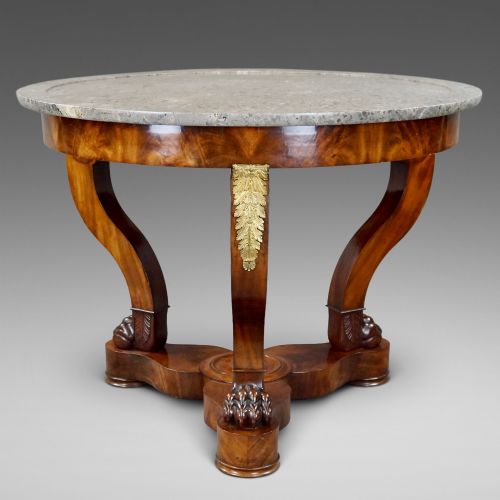
When you search for a french empire style gueridon, you encounter round pedestal tables designed primarily as centre tables or occasional surfaces. The forms span the nineteenth century through later revivals, maintaining a circular silhouette supported by a central column or pillar.
Mahogany and walnut provide the structural timber for the majority of these pieces, frequently paired with heavy inset marble tops. Alongside standard centre tables, variations include two-tier designs, bedside tables, and coffee table adaptations.
The aesthetic draws heavily on classical vocabulary, appearing in nineteenth-century originals as well as later empire revival iterations. These tables function effectively as standalone display surfaces in hallways or principal reception rooms.
What Varies in Quality
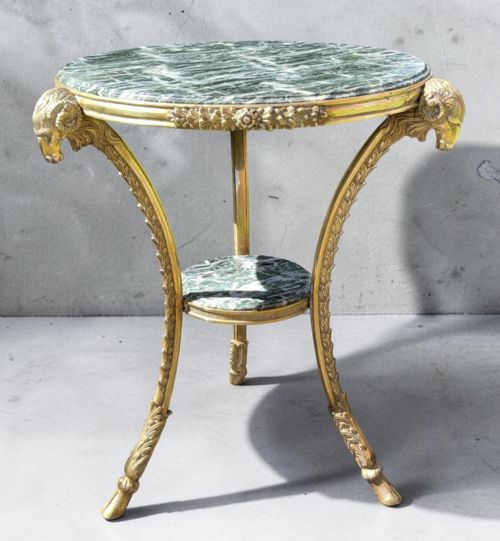
The refinement of the cast metal mounts dictates much of the visual distinction, with finely chased ormolu contrasting against simpler cast brass elements. Crispness in the carving of wooden details such as swan necks or rams heads separates standard production from superior examples.
Selection of timber grain and the quality of the marble slab further distinguish pieces, alongside the stability and weight of the central pedestal construction. Heavier, well-balanced pedestals ensure the table remains secure beneath a thick marble top.
The inventory includes occasional tables, bedside cabinets, and two-tier stands alongside traditional centre tables.
The French Empire Style Gueridon Glossary
- Gueridon
- A small round table on a central pillar, originating in seventeenth-century France and evolving into the classical nineteenth-century centre table.
- Ormolu
- Gilt bronze mounts applied to furniture, finished with mercury gilding on earlier pieces or electroplating on later revivals.
- Centre Table
- A freestanding table designed to be viewed from all sides, placed in the middle of a room rather than against a wall.
- Marble Top
- A solid stone surface inset into the wooden rim of the table, offering a cool, durable finish resistant to daily wear.
- Parcel-Gilt
- Partially gilded woodwork where gold leaf highlights specific carved details against a painted or polished ground.
French Empire Style Gueridon: Frequently Asked Questions
What is a french empire style gueridon?
A french empire style gueridon is a round pedestal table originating from nineteenth-century France or subsequent revival periods. These pieces typically feature a central wooden column and a heavy marble top.
They serve primarily as centre tables or occasional surfaces in formal rooms. The design incorporates classical motifs and metal mounts.
Where do you place a gueridon?
These tables traditionally sit in the middle of a room as centre pieces where visitors walk around them. They function well as display surfaces for lamps, bronzes, or vases.
Smaller versions suit corners or beside seating areas as occasional tables. Their round form prevents sharp corners in tight spaces.
How do I identify empire revival pieces?
Revival pieces often date from the late nineteenth or early twentieth century, echoing earlier Napoleonic designs. They utilise similar mahogany and marble materials but may show different construction methods underneath.
Examine the patination of the timber and the style of the brass mounts. Earlier nineteenth-century examples display greater hand-finishing in the carving and casting.
What woods were used for gueridons?
Mahogany forms the primary timber for the majority of these tables, frequently polished to a deep dark tone. Cabinetmakers also employed kingwood, walnut, coromandel, and burr elm.
Some examples feature painted or parcel-gilt wooden surfaces. These timbers provide the solid structural core beneath the marble tops.