




Fluted Leg Centre Table
A fluted leg centre table anchors a room with classic proportion and detail, drawing the eye through refined vertical carving.
Fluted Leg Centre Table
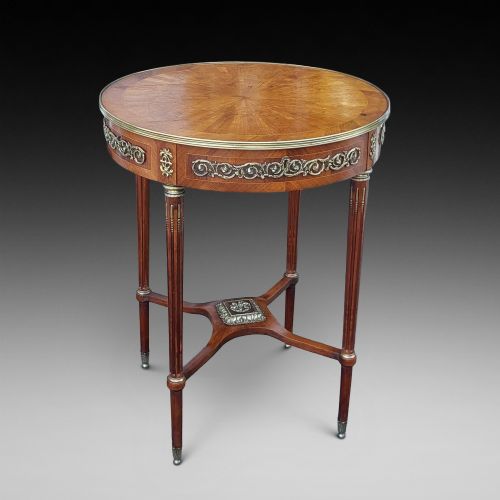
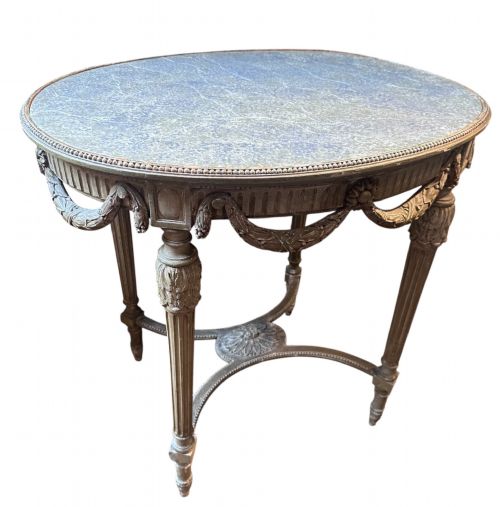
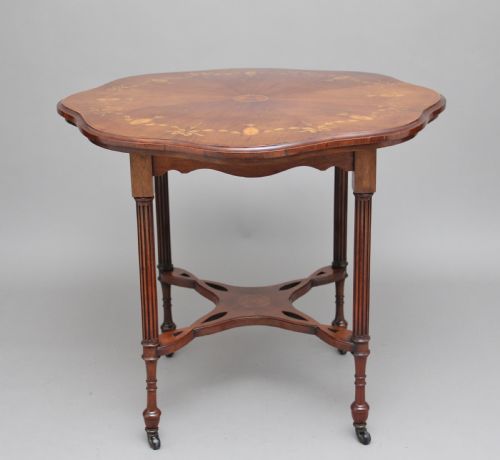
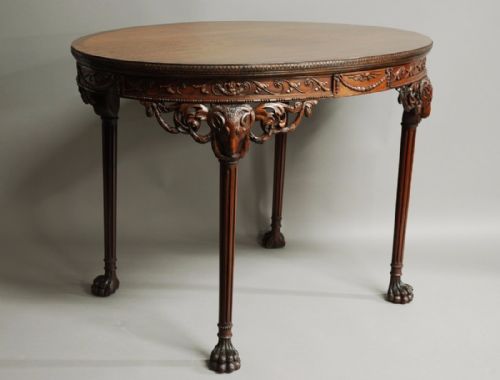
The fluted leg centre table appears in various forms across the nineteenth and early twentieth centuries, functioning as an occasional piece, a side table, or a coffee table. Most examples stem from the Victorian and Louis XVI Revival periods, showcasing distinct neoclassical influences.
These tables typically stand freestanding in the middle of a room, finished on all sides rather than pushed against a wall. The evidence shows prominent use of mahogany, rosewood, and kingwood, frequently paired with stone tops or intricate marquetry.
Makers drew heavily from French Empire, English country house, and Venetian aesthetics to shape these items. From octagonal oak pieces to round gueridons, the form serves both decorative and functional purposes in traditional interiors.
Materials and construction
Cabinetmakers utilised dense hardwoods such as mahogany and rosewood as the structural foundation, often applying detailed marquetry inlay across the surface tops. Timber selection dictated the weight and durability of each piece.
Many examples incorporate decorative metalwork, including ormolu mounts, brass inlays, and gilt bronze accents fixed to the timber frame. Marble tops, particularly Italian marble, add substantial weight and a smooth tactile contrast to the wooden bases.
Carving the characteristic vertical flutes into the legs required steady hand tools to achieve uniform depth and spacing. Joinery relied on traditional methods to support the heavy stone slabs and elaborate top surfaces.
Buttoned leather upholstery appears on low stools here, proving that even eighteenth-century comfort occasionally required a buttoned cushion.
Assessing craftsmanship and finish
Quality rests heavily on the crispness of the carved fluting and the precision of the wood inlay or marquetry. Softer lines in the carved channels or mismatched veneer patterns indicate less meticulous workshop production.
The integration of secondary materials defines the upper tier of these pieces, specifically the weight and chasing of ormolu mounts versus simpler brass work. Fitted marble tops that sit flush without movement demonstrate superior stone masonry.
A Beurdeley·Gillows
The Fluted Leg Centre Table Glossary
- Fluting
- Vertical parallel grooves carved into a column or furniture leg. This classical decorative technique elongates the visual line of the support.
- Ormolu
- Gilded bronze applied to furniture mounts and decorative hardware. It provides a bright metallic contrast against dark hardwoods like mahogany.
- Marquetry
- Decorative patterns formed by fitting small pieces of veneer into a wooden surface. Craftsmen used various coloured woods to create pictorial designs.
- Gueridon
- A small freestanding table originating in seventeenth-century France. The term later applied broadly to round occasional tables.
Fluted Leg Centre Table: Frequently Asked Questions
Where should I place a centre table?
These tables work best positioned away from walls where people can walk entirely around them. They function well in the middle of a large drawing room or entrance hall.
Ensure there is enough surrounding floor space to pull out chairs or comfortably reach the surface from any side.
How do I clean a marble table top?
Wipe the surface regularly with a soft, damp cloth using plain water or a mild, neutral soap. Avoid acidic cleaners like vinegar or lemon juice, which etch the stone.
Dry the marble thoroughly afterwards to prevent water spots and maintain the polished finish.
Can these tables support heavy lamps?
Most solid wood and marble-topped examples easily support standard table lamps, books, and decorative objects. The sturdy construction of nineteenth-century frames ensures good weight distribution.
Take care with very heavy bronze ornaments on smaller occasional tables to protect the underlying timber joints.
How do I identify a Louis XVI style table?
Look for straight tapered legs featuring vertical fluting, geometric rectangular shapes, and classical architectural motifs. This style marks a shift away from earlier curved rococo excesses.
Ormolu mounts and marble tops frequently accompany these neoclassical proportions.