


French Empire Mahogany Chest
A french empire mahogany chest brings architectural gravity and rich timber figure into a room.
French Empire Mahogany Chest
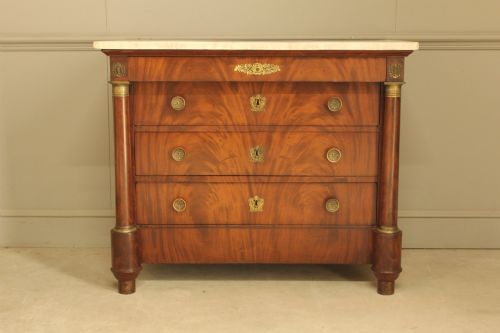
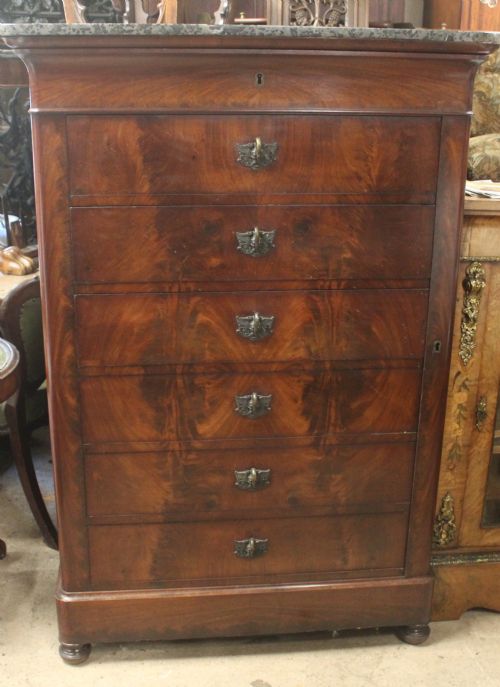
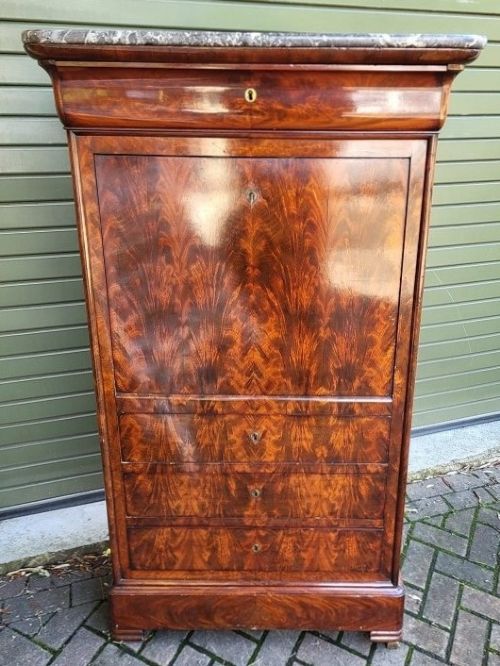
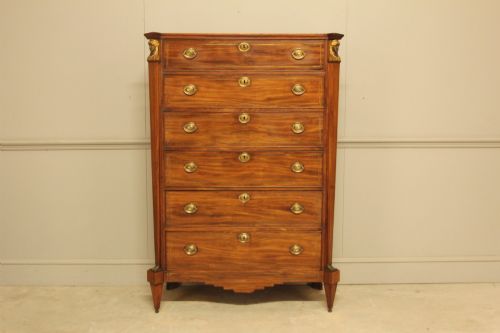
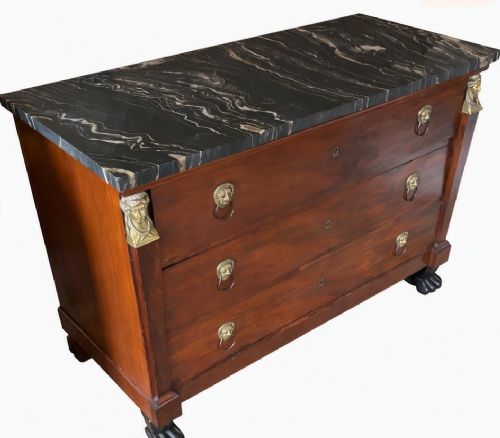
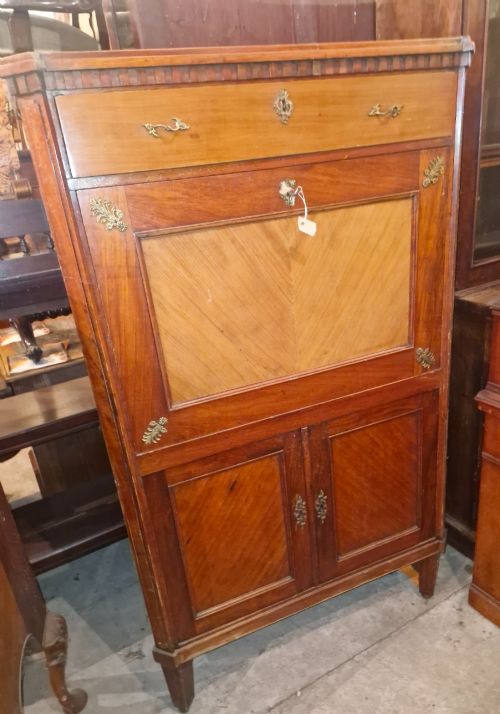
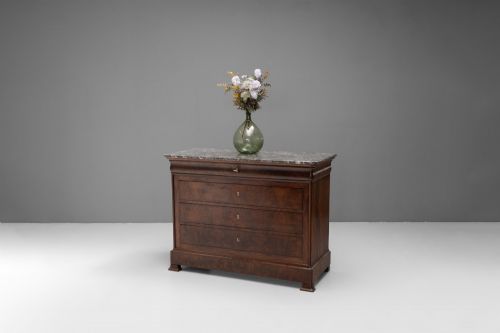
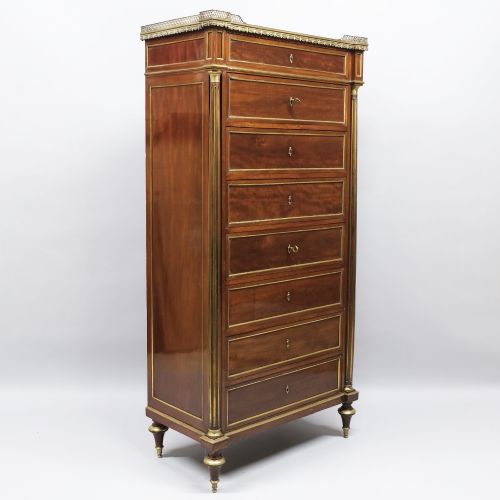
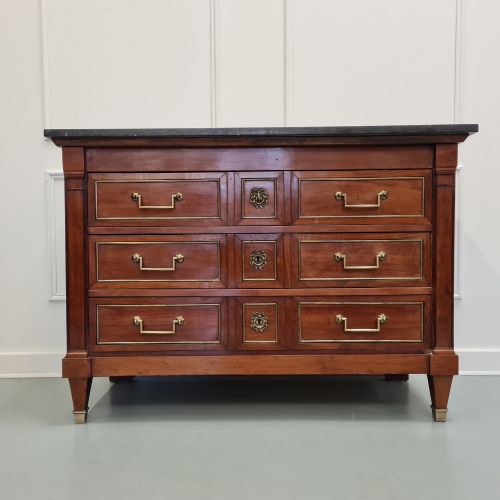
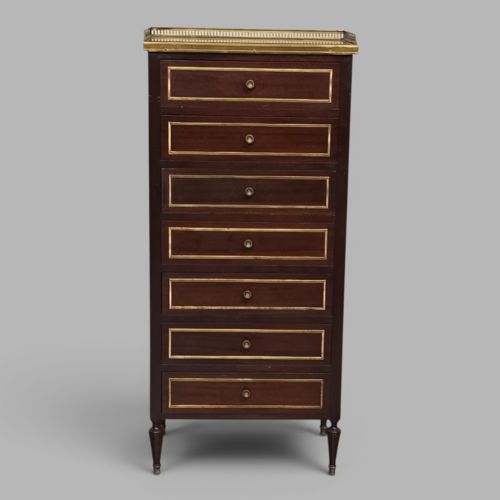
When searching for a french empire mahogany chest, collectors encounter heavy architectural case furniture rooted in the nineteenth century. These pieces include commodes, tall semainiers, bedside cabinets, and secretaire desks featuring the structured forms of the period.
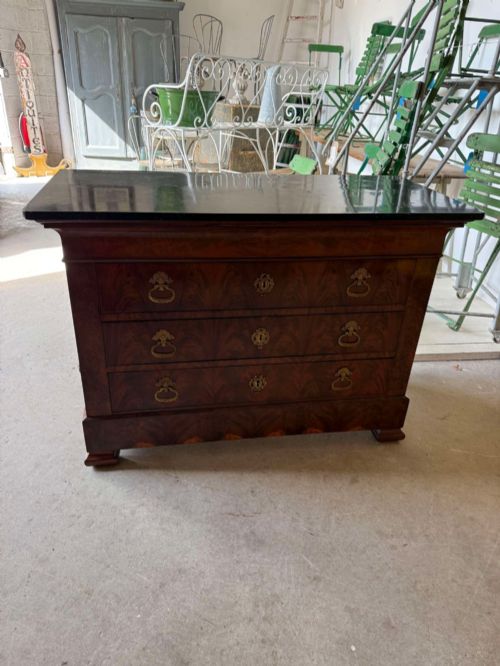
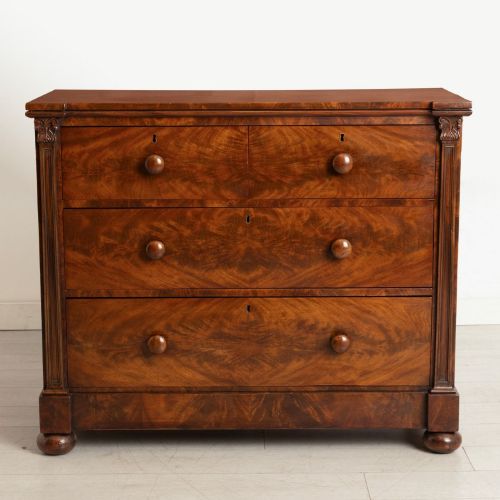
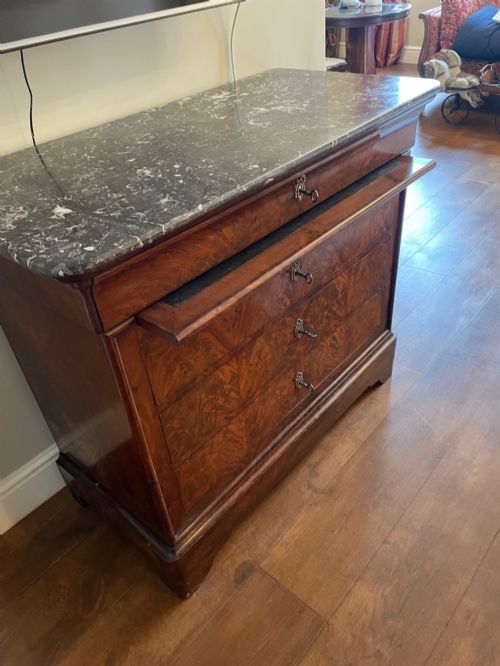
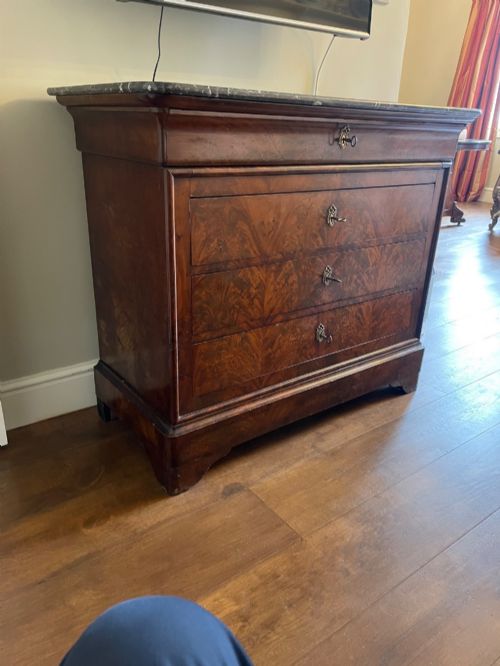
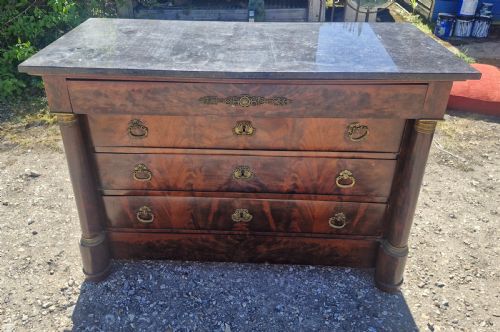
The most common examples on this page are marble top commodes and drawer chests in solid mahogany or flame mahogany veneer. Makers of the period balanced severe linear proportions with rich timber figuring across the facade.
Originating predominantly from France across the nineteenth century, these pieces range from early pieces bearing gilt metal mounts to later revival works. Their primary function remains large-scale storage framed by classical restraint.
What varies in quality
The choice of timber figure dictates the visual impact of the facade, with carefully matched flame mahogany veneers separating finer examples from plain constructions. The depth of the timber grain and the crispness of the grain symmetry set the standard.
Quality also rests in the weight and chasing of the ormolu mounts, where hand-finished cast bronze details contrast sharply with simpler gilt metal fittings. The integration of marble tops, particularly fossil varieties, adds further distinction to the build.
French Empire Mahogany Chest Retail Price Guide 2026
Typical asking prices for french empire mahogany chest among the pieces listed under this phrase on Sellingantiques today, from the lower quarter to the upper quarter. They describe what is for sale here now, not the wider market.
Pharmacy records occasionally surface within the tall secretaire chests, hinting at professional origins behind the grand domestic facade.
The French Empire Mahogany Chest Glossary
- Commode
- A low chest of drawers, typically featuring multiple deep drawers beneath a marble top. These form the core of French nineteenth-century case furniture.
- Ormolu
- Gilded bronze used for decorative mounts on furniture. It provides bright metallic contrast against dark mahogany surfaces.
- Flame mahogany veneer
- A sliced timber veneer showing a distinctive flickering flame pattern. Cabinet makers used this to create symmetrical patterns across drawer fronts.
- Semainier
- A tall, narrow chest traditionally containing seven drawers, one for each day of the week. This form maximises vertical storage space.
- Secretaire
- A cabinet incorporating a drop-front writing surface concealing internal compartments. These combine storage with a compact desk function.
French Empire Mahogany Chest: Frequently Asked Questions
How do I date a French Empire chest?
Dating relies on examining construction methods, timber choice, and the style of the metal mounts. Early pieces often feature heavier solid timbers and fire-gilt ormolu.
Later revival works from the late nineteenth century tend to utilise machine-stamped hardware and thinner veneers over alternative secondary woods.
What is a marble top commode used for?
These pieces served primarily as bedroom or grand hallway storage for clothing and household linens. The heavy stone surface provided a durable, cooling counter.
Today they function as prominent sideboards or serving surfaces in living spaces and dining rooms.
Are these chests made of solid mahogany?
Most examples utilise structural carcases of secondary timbers faced with thick mahogany or flame mahogany veneers. Solid mahogany appears more frequently on structural columns and mouldings.
Veneering allowed cabinet makers to display dramatic grain patterns without warping the main frame.
How do I care for mahogany and ormolu?
Protect timber surfaces by maintaining stable room humidity and avoiding direct sunlight that fades the red tones. Dust regularly with a dry cloth.
Keep ormolu mounts free from abrasive cleaners to preserve the original metallic finish.