


French Empire Bronze Lamp
A French Empire bronze lamp brings neoclassical symmetry and rich gilding to a room, offering the bold classical authority of nineteenth-century interiors.
French Empire Bronze Lamp
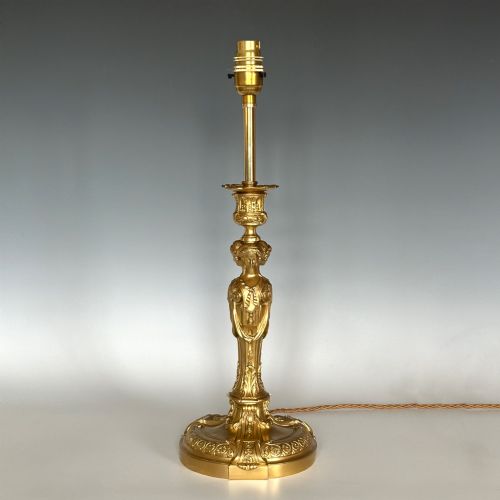
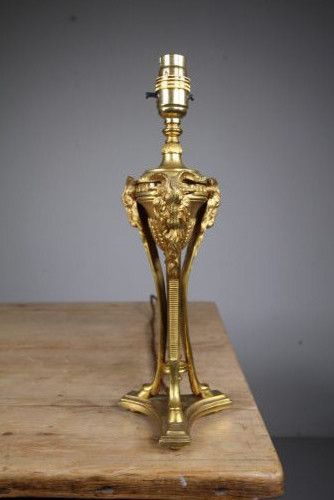
When you search for a french empire bronze lamp, you enter a sphere of classical column bases, figural torchères and urn-shaped designs rooted in nineteenth-century French and Regency aesthetics. The items appearing here range from robust table lamps and converted candlesticks to monumental figural pieces mounted on marble plinths.
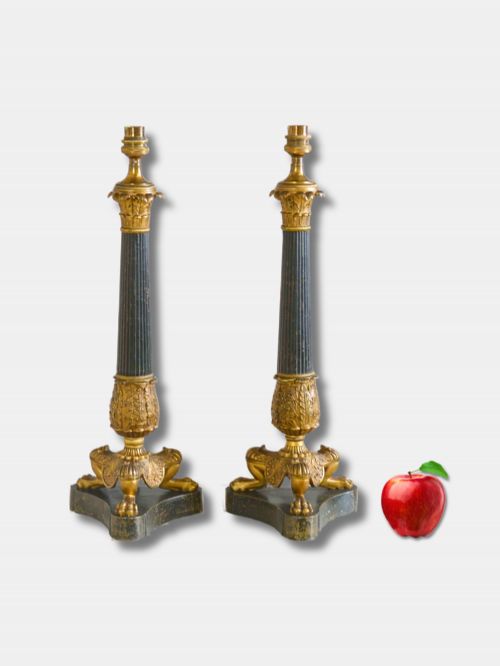
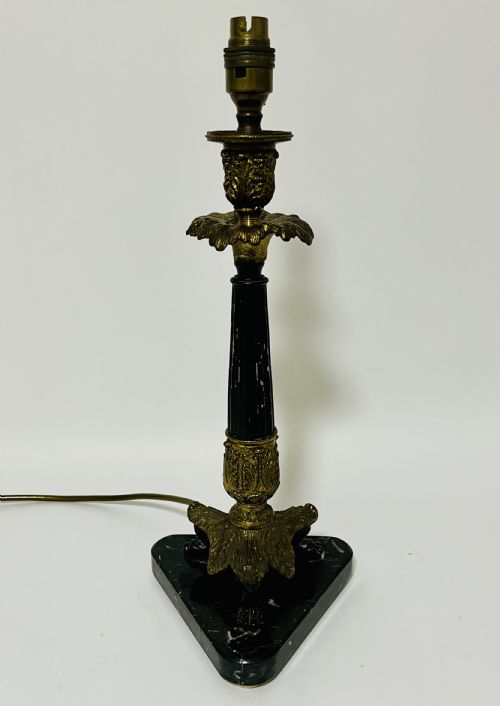
You are most likely to meet mid-nineteenth-century table lamps and lamp bases combining patinated bronze with gilded ormolu mounts. Many pieces reflect Neoclassical, Louis XVI and later nineteenth-century revivals, often incorporating marble bases, lions paw feet and classical motifs.
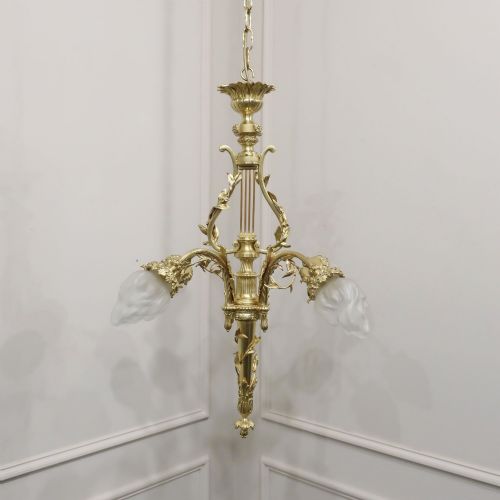
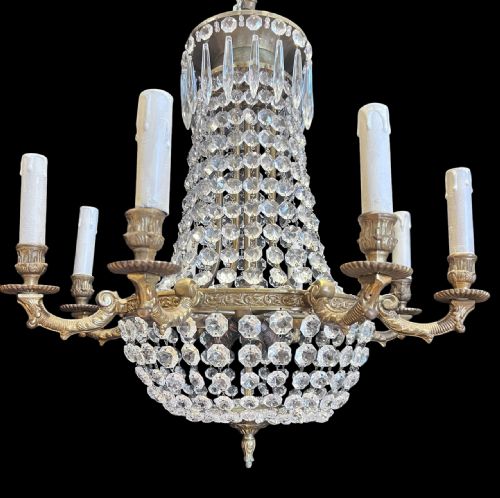
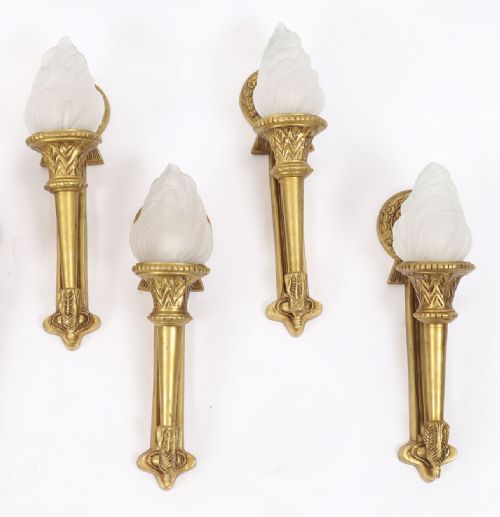
The selection extends beyond single lamps to include pairs of column lamps, figural cherub designs, and occasionally related lighting such as chandeliers and wall lights. Each form demonstrates the enduring appeal of heavy cast metals and classical architectural proportions in domestic illumination.
Materials and construction
The primary metals used in these pieces are bronze and brass, often finished with fire-gilding known as ormolu or treated to create a dark patinated bronze surface. Metalworkers cast these elements in sections before hand-chasing the surface details to achieve crisp lines on acanthus leaves, fluted columns and figural drapery.
Marble frequently serves as a weighty plinth or base, grounding the metalwork and providing a contrasting pale or mottled texture beneath bronze and gilt surfaces. Where fabric shades or glass elements appear, they complement the rigid geometry of the cast metal body.
Assembly relies on threaded rods, pins and screws hidden within the core of columns and urns to secure the metal and stone components together. This modular construction allowed makers to combine patinated bronze bodies with polished ormolu mounts and stone plinths with mechanical precision.
The listings span the nineteenth century alongside later revivals from the 1920s and 1930s, utilising bronze, ormolu, marble, fabric and glass.
Assessing quality
The finish of the metal defines the upper tier of the range, particularly the preservation of genuine mercury gilding or rich ormolu that catches light without appearing flat or brassy. Strong contrast between dark patinated bronze and bright gilt elements indicates superior workshop execution.
Material integration also separates standard items from exceptional ones, such as the use of substantial, finely polished marble plinths fitted flush to heavy metal mounts. The weight, stability and proportional harmony of the overall assembly reveal the skill invested by the original maker.
François-Christophe-Armand Toussaint·Jean-Démosthène Dugourc
The French Empire Bronze Lamp Glossary
- Ormolu
- Gilt bronze created by applying a mixture of gold and mercury to a bronze object and heating it until the mercury vaporised. This historic technique produced a durable, deep golden finish seen on high-status nineteenth-century metalwork.
- Patinated bronze
- Bronze that has been chemically treated or aged to produce a dark, uniform surface colour. It provides a subdued contrast against bright ormolu mounts.
- Gueridon
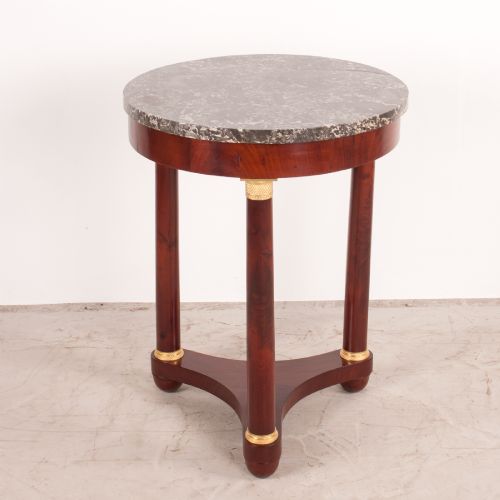
- A small, circular French occasional table supported by a central pillar or legs. These often share the neoclassical bronze and mahogany vocabulary of the period lamps.
- Tole peinte
- Painted tinplate or sheet metal used for decorative objects and lamp components. It introduces colourful painted surfaces to lighting designs.
- Bouillotte lamp
- An adjustable metal lamp featuring a central shade directing light downward over a small dish base. They were traditionally used for card games and reading.
French Empire Bronze Lamp: Frequently Asked Questions
How do I wire an antique lamp?
Most antique lamps require modern rewiring to meet current safety standards, which involves running contemporary flex through the internal channel of the bronze or column body. A qualified electrician can replace perished internal wiring without altering the external antique fabric.
Because many nineteenth-century pieces were originally candlesticks or oil lamps later converted, professional conversion preserves the structural integrity of the metal mounts and threaded joins.
How do I clean bronze and ormolu?
Dusting gently with a dry, soft brush or microfibre cloth is the safest way to maintain patinated bronze and ormolu surfaces. Avoid commercial metal polishes, which can strip historic gilding and damage delicate patination.
If the metal requires deeper cleaning, consult a specialist conservator who understands nineteenth-century gilding techniques. Moisture should be kept away from any integrated marble plinths or electrical fittings.
Are these lamps always sold in pairs?
While many nineteenth-century lighting pieces were manufactured as matched pairs for symmetry on sideboards or mantelpieces, numerous examples survive as single table lamps. Pairs command particular attention from interior designers seeking balanced illumination for large spaces.
Listings specify whether an item is offered individually or as a pair, allowing buyers to choose according to their spatial requirements.
What is the difference between Empire and Regency styles?
Empire style emerged from Napoleonic France, drawing heavily on Roman, Greek and Egyptian motifs such as sphinxes, laurel wreaths and military trophies. Regency style developed concurrently in England, sharing a similar neoclassical foundation but often incorporating lighter woods and distinct local cabinet-making traditions.
Both styles utilise heavy bronze casting, ormolu mounts and classical column forms, making them visually compatible in traditional interiors.