


French Empire Accent Table
A french empire accent table brings commanding neoclassical presence to a room, uniting rich timbers with gleaming cast mounts.
French Empire Accent Table
When you search for a french empire accent table, you look for a compact surface that carries the formal architectural lines of nineteenth-century design. The pieces appearing here span side tables, occasional tables, centre tables, and gueridons rooted in the nineteenth century and associated eras like Napoleon III and Regency.
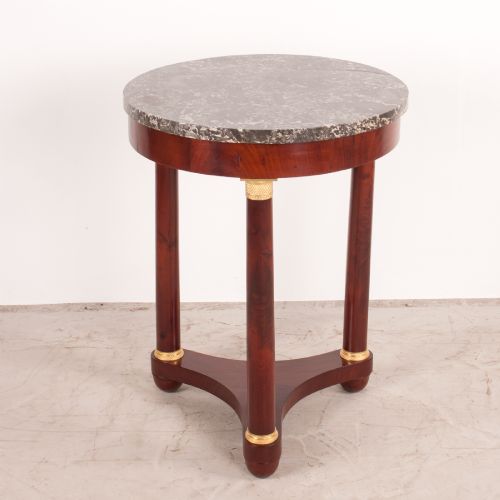
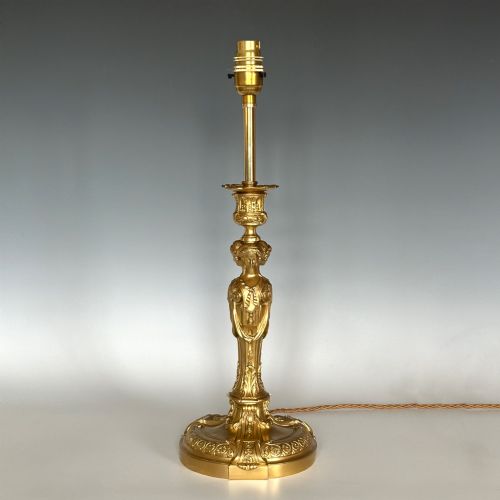
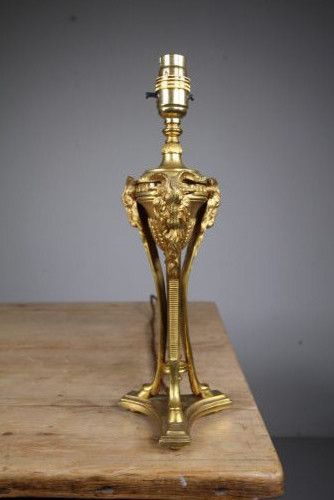
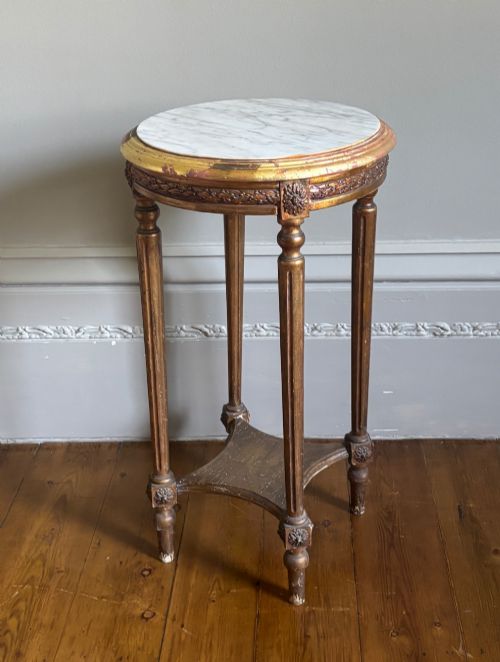
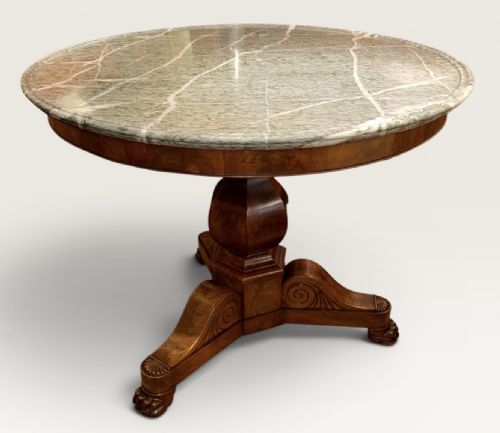
The quintessential form met on this page is the circular gueridon, frequently supported by a central pillar or tripod base and topped with inset marble. These tables function as functional pedestals for display, often accompanied by related lighting such as ormolu table lamps and bronze lamps sharing the same neoclassical vocabulary.
Materials and construction methods
Cabinetmakers built these tables using dense timbers such as mahogany, rosewood, ebony, and walnut, frequently selecting figured veneers for circular tops. Solid frames provided the necessary structural weight to support heavy stone elements.
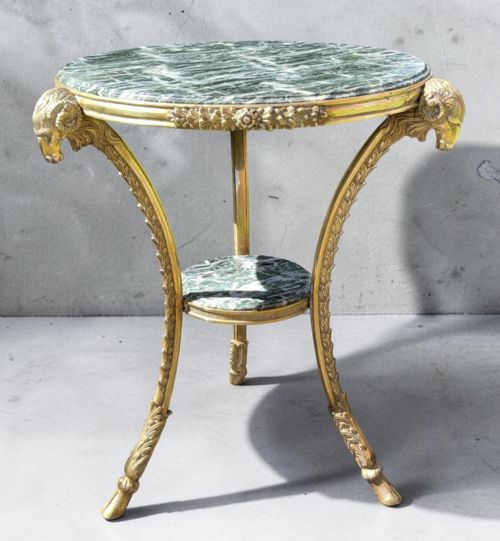
Surface ornament relies heavily on cast metals, specifically ormolu, gilt bronze, brass, and patinated bronze, shaped into rams heads, swans, and classical figures. Marble tops, both white and dark varieties, sit inset within timber or gilded frames, while occasional pieces incorporate painted finishes, parcel-gilding, marquetry inlay, and cane work.
Judging quality and execution
The distinction between ordinary and superior examples lies in the crispness of the metal cast mounts and the selection of timber veneers. Finer tables display sharply chased ormolu and bronze details, whereas simpler versions rely on unchased brass or basic giltwood.
Proportion and material integration also dictate worth, as seen in the flawless fit of a heavy marble top into a mahogany or gilt frame. The presence of sophisticated figuration, such as finely modelled animal heads or detailed marquetry, separates standard production from exceptional pieces.
The French Empire Accent Table Glossary
- Guéridon
- A small circular table on a central pillar or tripod base. This form dominates the selection of nineteenth-century French tables.
- Ormolu
- Gilt bronze created by applying a mercury and gold amalgam to cast bronze. It provides a bright, durable golden finish on mounts and decorative details.
- Marble
- A hard crystalline metamorphic rock used for inset table tops. It offers a cool, smooth surface resistant to daily wear.
- Marquetry
- Inlay work using thin pieces of wood veneer to form decorative patterns on furniture surfaces. It appears on select table tops to add geometric or pictorial interest.
- Parcel-gilt
- Partially gilded woodwork where gold leaf highlights specific carved details against a painted or polished ground.
French Empire Accent Table: Frequently Asked Questions
What is a gueridon table?
A gueridon is a traditional French round table supported by a central column or multiple legs. They were originally designed to hold candlesticks or small decorative items.
Today, these tables serve as versatile accent pieces for holding lamps or displaying objects in living spaces.
How do I style an empire table?
Place a circular empire table in a hallway as a striking centrepiece or beside a sofa as an occasional surface. Their strong architectural lines complement both traditional and modern interiors.
Keep styling minimal on the surface to allow the mahogany grain and ormolu mounts to remain visible.
What distinguishes Napoleon III style?
Napoleon III design revives historical French aesthetics, drawing heavily on Louis XVI and Empire vocabulary. It embraces eclectic materials including exotic woods, giltwood, and bronze.
Pieces from this period often display dark polished surfaces paired with bright metallic mounts.
Are marble tops original?
Marble tops on nineteenth-century French tables were integrated into the primary design to provide a durable, cool surface. They rest directly within the wooden or gilt frame.
Examining the underside and edges helps confirm the stone matches the age and construction of the base.