




French Ebonised Mirror
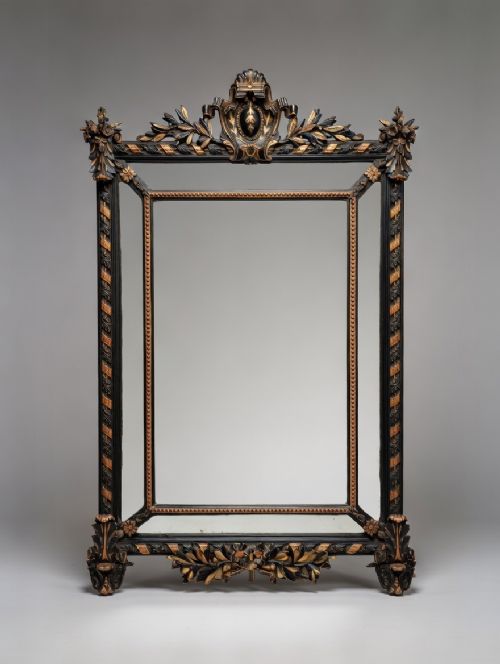
A French ebonised mirror brings a dark, dramatic edge to a room, catching the light in heavily moulded frames.
French Ebonised Mirror
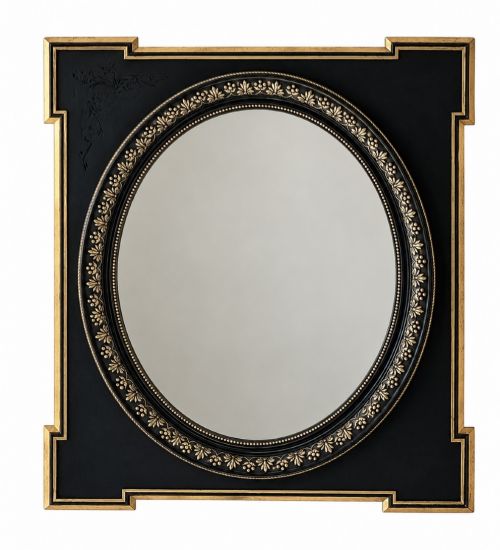
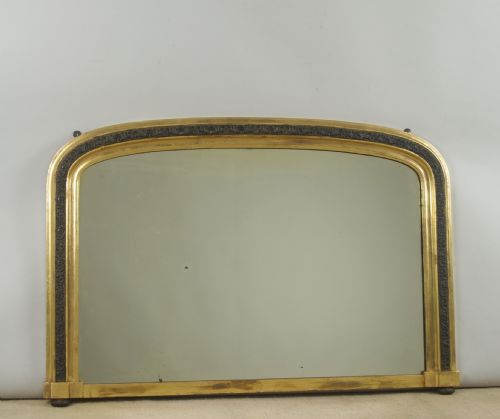
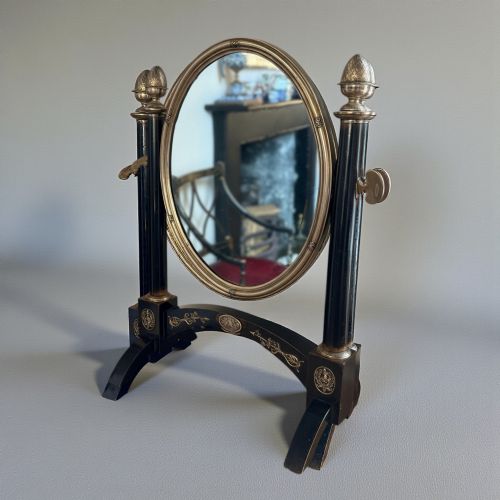
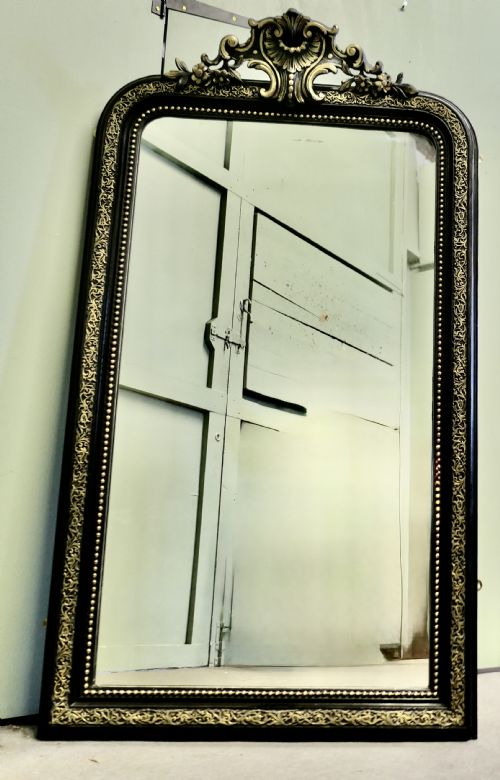
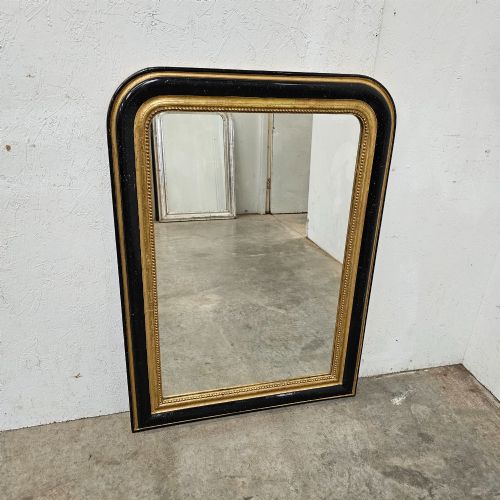
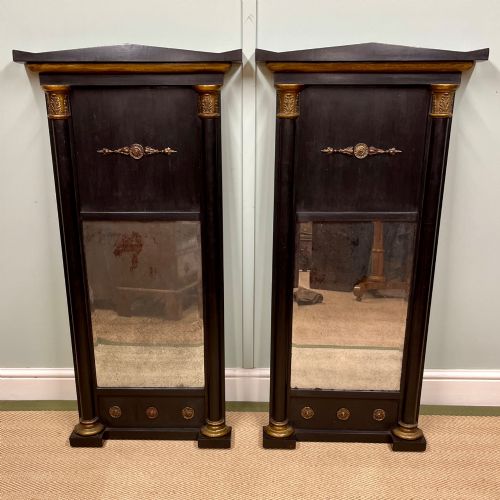
A French ebonised mirror combines deep blackened wood with reflective glass, frequently accented with parcel-gilt details or brass mounts. These pieces range from compact dressing table mirrors to grand overmantel and pier mirrors designed for principal reception rooms.
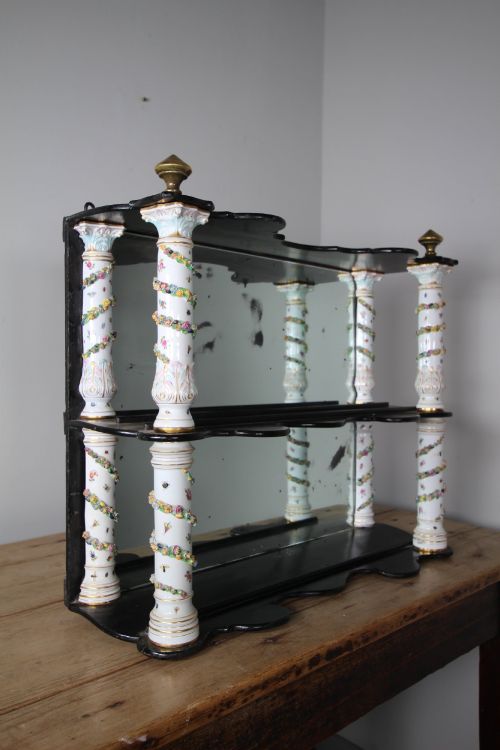
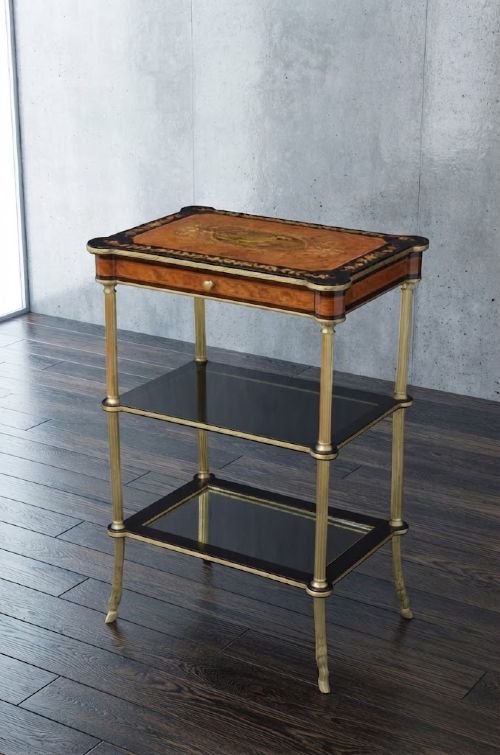
The selection here draws primarily upon nineteenth-century examples, spanning periods from the Regency era through to Victorian revivals and Napoleon III designs. Alongside standard wall mirrors, the evidence also captures related forms such as cushion frames and inset side tables with mirrored tiers.
How they were made
Frames are constructed from solid timber, often treated to imitate ebony through staining or ebonising processes before receiving a polished finish. Artisans then applied gesso and gold leaf to highlight carved mouldings, floral motifs, and geometric borders.
Mirror glass of the period was set within heavy wooden rebates, sometimes featuring bevelled edges or segmented plates depending on the overarching style, whether French Rococo Revival or Empire.
French Ebonised Mirror Retail Price Guide 2026
Typical asking prices for french ebonised mirror among the pieces listed under this phrase on Sellingantiques today, from the lower quarter to the upper quarter. They describe what is for sale here now, not the wider market.
What varies in quality
Quality rests in the crispness of the hand-carved gesso details and the depth of the ebonised finish against the parcel-gilt or silvered highlights. Superior examples maintain intact original gilding and heavy timber frames that hold their structural integrity over time.
The integrity of the mirror glass itself distinguishes finer items, noting whether the plate shows authentic age without distracting degradation or clumsy modern replacements.
The French Ebonised Mirror Glossary
- Ebonised
- Wood treated with stain, dye, or paint to imitate the dark, dense appearance of genuine ebony. This finish became particularly popular during the nineteenth century for furniture and decorative frames.
- Parcel-gilt
- A decorative technique where only specific portions of an object, such as raised carvings or mouldings, are highlighted with gold leaf. It creates a striking contrast against a dark ebonised background.
- Gesso
- A plaster-like mixture applied to wood frames to provide a smooth surface for gilding and carving. Traditional recipes combine chalk, gypsum, and pigment with a glue binder.
- Overmantel mirror
- A large mirror specifically designed to hang above a fireplace mantelpiece. These pieces often feature wide proportions to reflect the width of the hearth below.
- Cushion mirror
- A frame profile featuring a rounded, convex slope that pushes outward toward the edge. This distinctive moulding adds visual weight and depth to wall-hanging pieces.
French Ebonised Mirror: Frequently Asked Questions
Where should I hang an overmantel mirror?
These large mirrors are traditionally positioned directly above a fireplace mantelpiece to anchor the room and reflect light from windows across the space.
Ensure the wall fixings match the substantial weight of nineteenth-century wooden frames before mounting them securely at eye level.
How do I identify a Napoleon III mirror?
Napoleon III pieces often feature bold ebonised surfaces combined with gilt highlights, drawing on eclectic historical revivals typical of the mid-nineteenth century.
Look for deep mouldings, symmetrical or architectural frames, and substantial wood construction characteristic of the period.
Are these mirrors suitable for small rooms?
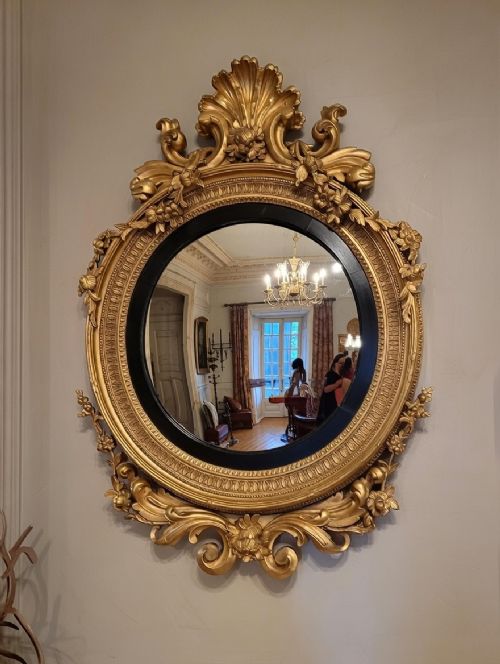
Compact wall mirrors and oval formats fit well into smaller spaces, bringing depth and illumination without overwhelming the wall.
Choose simpler cushion frames or slender upright designs to maintain balance in a tighter interior setting.
How do I care for ebonised wood?
Dust the frame regularly with a soft, dry cloth to prevent particulate buildup on the dark polished surfaces and delicate gilt highlights.
Avoid chemical polishes or excessive moisture, which can damage the traditional ebonised finish and disrupt the underlying gesso.