

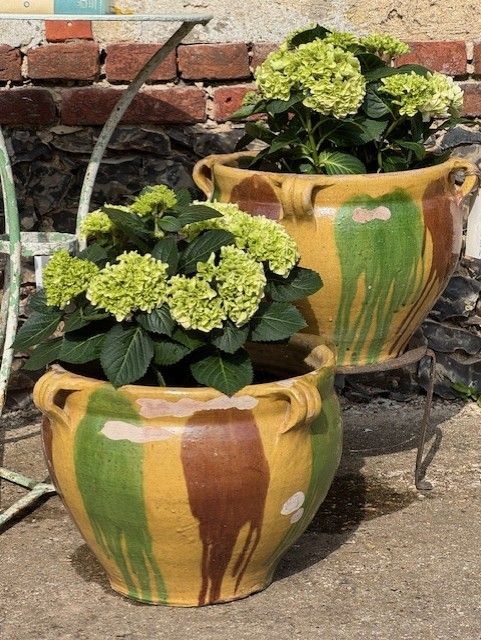


French Earthenware Pot
These French earthenware pot examples are utilitarian vessels crafted for storage and display, offering rustic warmth and historical character to any interior.
French Earthenware Pot
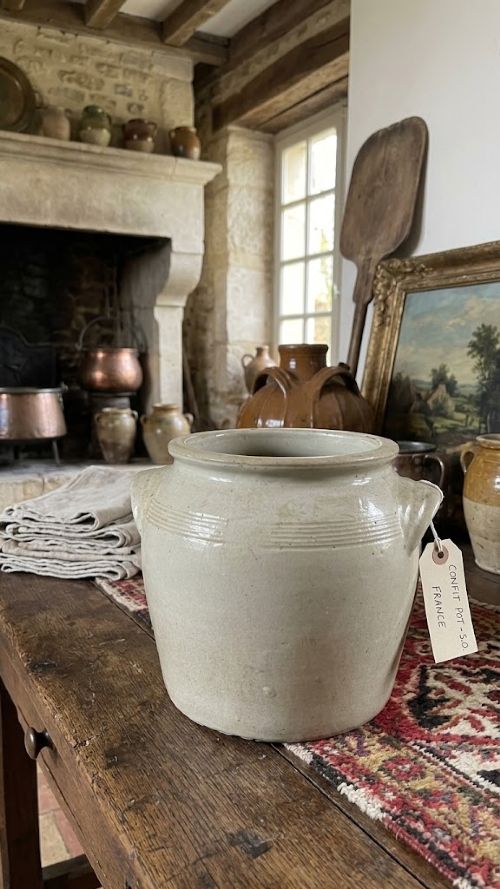
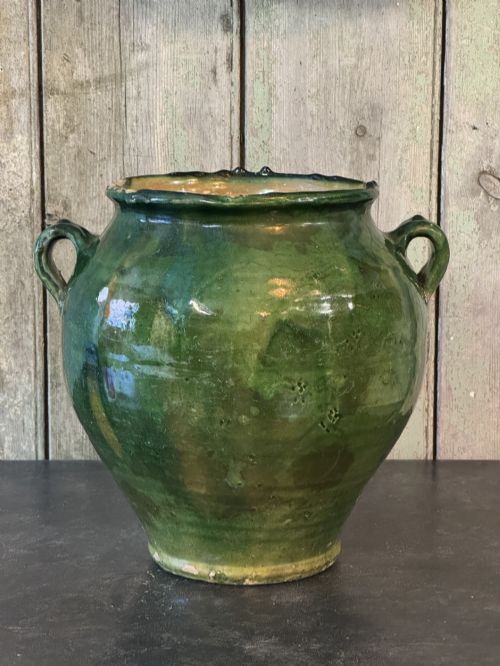
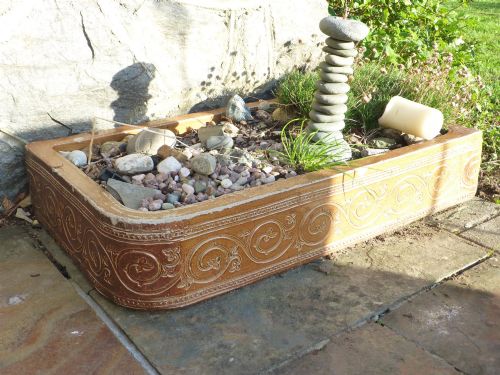
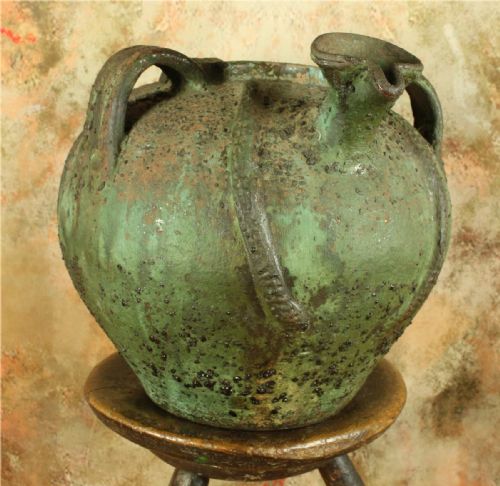
A french earthenware pot encompasses a variety of rustic utilitarian forms originating from French provincial and country traditions, spanning multiple centuries from the eighteenth onwards. Buyers encounter diverse regional vessels including green confit pots, three-handled olive jugs, walnut oil jars, and garden planters.
The selection ranges from early tin-glazed Nevers faience and apothecary jars to nineteenth-century terracotta bowls and twentieth-century drip-glazed Castelnaudary planters. Forms vary from simple utilitarian garden pots to decorative amphora vessels and powder box bowls reflecting Art Deco tastes.
Materials and construction
Potters utilised native terracotta and clay, shaping vessels by hand or on simple wheels to create thick-walled utilitarian objects designed for practical agricultural or domestic storage. Surfaces received lead, tin, or salt glazes to ensure liquid retention, often displaying characteristic drips, pooled pigments, and natural firing variations.
Many items incorporate functional elements such as multiple handles for hauling oils and preserves, whilst others rely on painted surface decoration or raw porous terracotta finishes suited for garden use.
French Earthenware Pot Retail Price Guide 2026
Typical asking prices for french earthenware pot among the pieces listed under this phrase on Sellingantiques today, from the lower quarter to the upper quarter. They describe what is for sale here now, not the wider market.
Some nineteenth-century confit pots bear accidental thumbprints left in the wet glaze by potters who hurried to load them into the kiln.
Markers of quality
Quality in these pieces depends upon the integrity of the glaze application, the balance of the thrown or hand-modelled form, and the survival of original surface pigment. Early examples demonstrate finer tin-glazing techniques and deliberate painted detailing, whereas robust utilitarian pots rely on the rich depth of green or salt glazes.
Condition plays a central role, distinguishing pieces with honest signs of period use from those retaining intact handles, stable glazes, and well-preserved decorative surfaces.
Guichard Carriès
The French Earthenware Pot Glossary
- Confit pot
- A traditional French pot utilised for storing and preserving meats, typically featuring a glazed upper section and unglazed lower body. These vessels often include one or two side handles.
- Tin glaze
- An opaque white glaze produced by adding tin oxide to lead glaze, providing a smooth surface for painted ceramic decoration. This technique is prominent on eighteenth-century pieces.
- Terracotta
- Fired but unglazed or transparently glazed clay of a brownish-red colour, widely utilised for garden planters and agricultural storage jars.
- Salt-glazed stoneware
- Pottery fired at high temperatures with salt introduced into the kiln, producing a durable, slightly textured surface resembling orange peel.
- Faience
- European tin-glazed earthenware, particularly associated with French and Italian regional workshops producing decorative tableware and apothecary containers.
French Earthenware Pot: Frequently Asked Questions
What were French earthenware pots originally used for?
These vessels served practical functions in rural French households and agriculture, primarily storing provisions such as confit meats, olive oil, and walnuts. Apothecaries and domestic kitchens utilised smaller jars and pots for dry goods and medicinal preparations.
Over time, many utilitarian storage containers transitioned into decorative garden planters and interior display items, valued for their historical connection to French provincial life.
How do I care for a antique terracotta pot?
Porous terracotta and earthenware require gentle cleaning with mild soap and water, avoiding harsh chemical detergents that can penetrate the unglazed clay body. Displaying them indoors protects the aged surfaces from frost damage and weathering.
If placed in a garden setting, pots should be elevated during winter months to prevent trapped moisture from cracking the historical ceramic material.
How can I distinguish eighteenth-century pieces from nineteenth-century ones?
Eighteenth-century examples frequently exhibit tin glazing, refined hand-painted decoration, or specific form types such as apothecary jars and Nevers faience. The clay bodies and glaze formulations reflect earlier regional kiln traditions.
Nineteenth-century and later pieces often showcase simpler lead glazes, robust green finishes, or heavier terracotta construction intended for agricultural and utilitarian storage.
Can these pots be used for planting outdoors?
Many sturdy terracotta olive jars and garden troughs suit outdoor planting, provided they are sheltered or brought indoors during freezing winter conditions. Porous earthenware absorbs moisture, which can expand and compromise the historic ceramic structure if exposed to severe frost.
Using a plastic nursery liner inside the pot helps protect the interior walls from damp soil and mineral deposits.