




French Desk Tidy
A French desk tidy brings order to letters and ink, combining refined metalwork and stone to anchor a writing table.
French Desk Tidy
A French desk tidy gathers the small instruments of correspondence, holding inkwells, pens, and paper in unified vessels. These accessories range from compact letter racks and trinket dishes to substantial desk stands and inkstands.
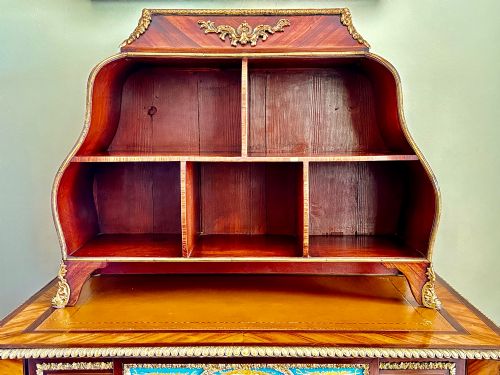
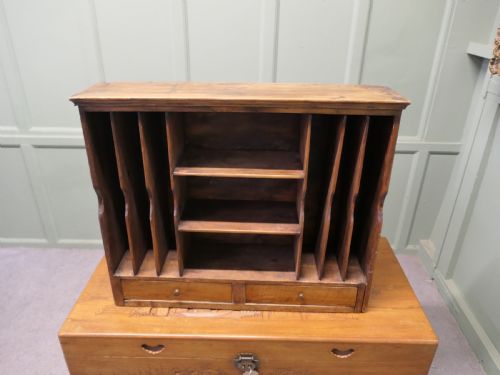
The pieces appearing on this page span several centuries, with the nineteenth century heavily represented through bronze, marble, and ormolu. Collectors encounter items structured for specific tasks, including desktop cartonnieres and filing shelves.
Designs follow historicist revivals and organic movements, drawing on Louis XV, Empire, and Art Nouveau aesthetics. Each object reflects the formal requirements of period writing spaces.
Materials and Construction
Foundry work dominates these pieces, utilising cast brass, ormolu, and gilt bronze to create sculptural frames and mounts. Artisans combined these metals with carved marble, onyx, and glass ink inserts.
Cabinetmakers constructed wooden carcases from mahogany and rosewood, frequently incorporating tortoiseshell and inlaid brass in the Boulle manner. Surface ornamentation also includes champlevé enamel and silver plating.
Listings feature items spanning the eighteenth century to nineteen-fifty, executed in bronze, glass, marble, and tortoiseshell.
Distinctions in Execution
Quality rests upon the crispness of the metal casting and the depth of the chased finish. Superior pieces show precise detailing in floral mounts and figural elements rather than smoothed or generalised surfaces.
The selection of materials marks the division between standard items and exceptional works. Heavy marbles, genuine tortoiseshell, and substantial bronze foundations separate refined pieces from lighter brass alternatives.
Lefebvre of Belgium·Jules Dalou·Maria Pergay·Maurice Dufrene
The French Desk Tidy Glossary
- Ormolu
- Gilt bronze mounted on decorative objects, created by applying a mercury and gold amalgam to bronze. This technique produced the bright golden surface seen on many nineteenth-century mounts.
- Encrier
- A French term for an inkstand or inkwell desk set. These receptacles usually incorporate one or more glass ink inserts within a decorative tray.
- Cartonnier
- A desktop filing cabinet or tiered stationery organiser. They held papers and documents securely within a library or study setting.
- Boulle
- A form of marquetry using brass and tortoiseshell inlaid together in elaborate patterns. It is named after the master cabinetmaker André-Charles Boulle.
- Champlevé
- An enamelling technique where troughs are dug into a metal surface and filled with vitreous enamel before firing. The metal partitions remain visible between the coloured areas.
French Desk Tidy: Frequently Asked Questions
What is a french desk tidy?
A french desk tidy is a collective term for nineteenth-century and twentieth-century desktop accessories designed to hold writing instruments, ink, and letters.
These objects include inkstands, stationery caddies, and letter racks made from materials such as bronze, marble, and brass.
How were inkstands used?
Inkstands served as the central station for correspondence on a gentleman or lady's writing desk. They held the liquid ink securely in glass inserts while providing rests for feather quills or metal pens.
Additional compartments kept blotting paper, wax seals, and letters organised during daily administration.
How do I date a desk stand?
Dating relies upon the prevailing artistic style and material combinations present in the piece. Pieces showing heavy neoclassical or empire motifs often date to the early nineteenth century, while flowing organic lines point towards the nineteen hundreds.
Material choices like champlevé enamel or specific wood veneers further help narrow the era of production.
How do I care for marble and bronze?
Bronze and ormolu require gentle dusting with a soft brush to prevent dirt accumulation in recessed chased details. Chemical polishes should be avoided as they strip historical patination.
Marble bases benefit from occasional wiping with a damp cloth and mild soap, followed by immediate drying to protect the polished stone.