


French Demilune Console Table
These French demilune console table pieces bring architectural grace and curved elegance to a hallway or salon.
French Demilune Console Table
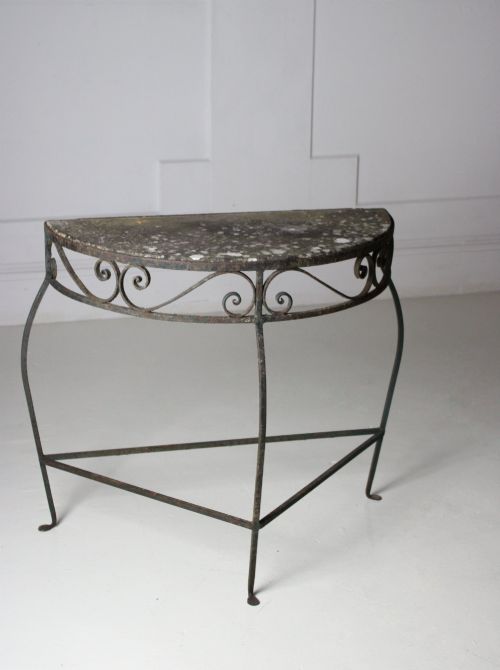
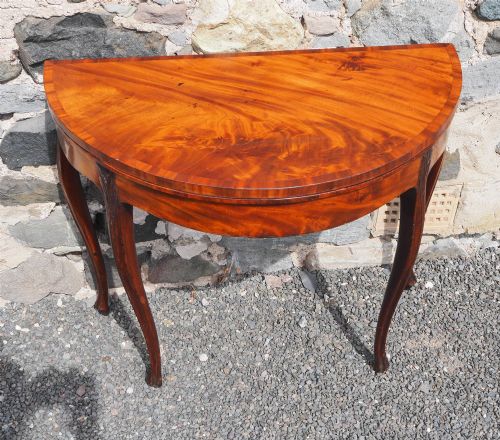
A french demilune console table sits flat against a wall with a half-moon top, designed originally for narrow spaces and decorative displays. The forms on this page span the eighteenth, nineteenth and early twentieth centuries, drawing on regional rustic traditions and formal court styles alike.
Most examples you encounter here rely on traditional console table and card table formats, often featuring the characteristic curved top. They appear in styles ranging from French country and rustic to neoclassical and Louis XVI.
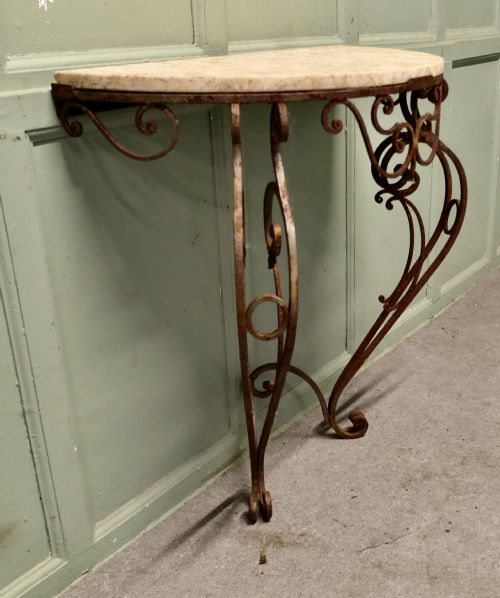
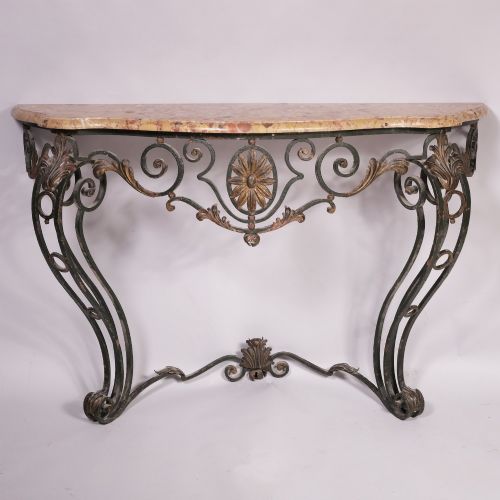
Origins stretch from rural workshops to sophisticated urban ateliers, yielding pieces finished in paint, gilding, or polished timber. Whether you seek an eighteenth-century walnut specimen or an Edwardian wrought iron version, each piece retains the distinctive half-moon footprint.
What varies in quality
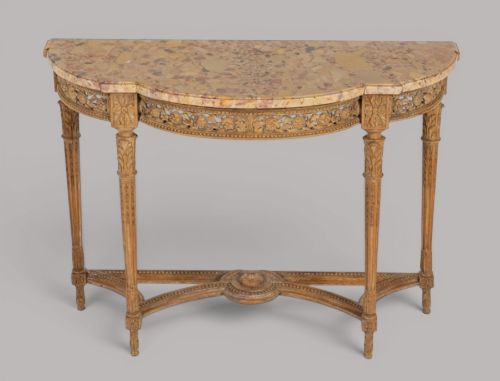
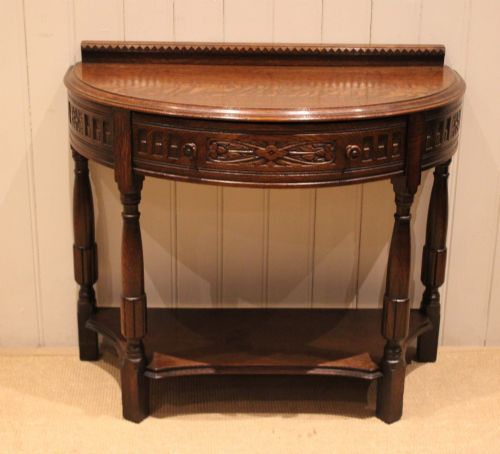
The sophistication of the carved wood details and the crispness of the giltwood or gesso work dictate the visual hierarchy of these tables. Finer examples display deeply sculpted foliage and balanced proportions, whereas simpler rustic items prioritise functional utility over ornamentation.
Material selection creates a clear distinction across the range, with thick marble slabs and choice hardwoods marking out the more ambitious pieces. The integration of parquetry inlay and well-executed painted surfaces further elevates a piece above standard domestic joinery.
Listings span the eighteenth century to nineteen-thirty, combining walnut, mahogany, wrought iron, and marble materials.
The French Demilune Console Table Glossary
- Demilune
- A half-moon shape used for tabletops and cabinet fronts. This curved profile allows the furniture to fit snugly against a wall while projecting a decorative semicircular surface.
- Console table
- A table supported by wall brackets or console legs rather than four independent vertical supports. They were traditionally designed to stand against a wall in formal rooms.
- Giltwood
- Timber coated with gold leaf or metal powder applied over a prepared gesso ground. This technique creates a brilliant reflective surface on decorative furniture frames.
- Parquetry
- Geometric wood mosaic work used for decorating floors and tabletops. Artisans fit small pieces of contrasting timbers together to form intricate patterns.
- Gesso
- A plaster-like mixture applied to wood surfaces as a base for paint or gilding. It provides a smooth ground that can be carved or moulded once dry.
French Demilune Console Table: Frequently Asked Questions
Where should I place a demilune console table?
These tables suit entrance halls, narrow corridors, and reception rooms where floor space is limited. Their flat rear edge sits flush against the wall while the curved front softens the geometry of the room.
They function well beneath mirrors or artwork, providing a surface for lamps, vases, or small decorative objects without obstructing pathways.
How do I identify a Louis XVI style table?
Louis XVI style pieces typically feature straight tapered legs, neoclassical geometric symmetry, and restrained carved details such as fluting or ribbons. The forms look back to classical antiquity rather than the flowing curves of earlier rococo designs.
Look for architectural clarity, rectangular or semicircular proportions, and motifs derived from ancient Greek and Roman architecture.
Are marble tops on these tables original?
Many nineteenth and early twentieth-century console tables were designed specifically to carry heavy marble slabs, which provided a durable and cool surface for display. The stone is usually fitted directly into a rebated wooden frame or rests upon the timber support.
Inspect the underside of the top and the supporting rails to see how the stone integrates with the joinery and whether the edge profiles match the period of the base.