





French Decorative Clock
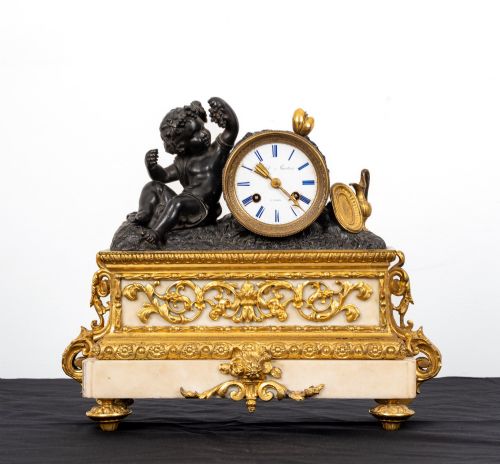
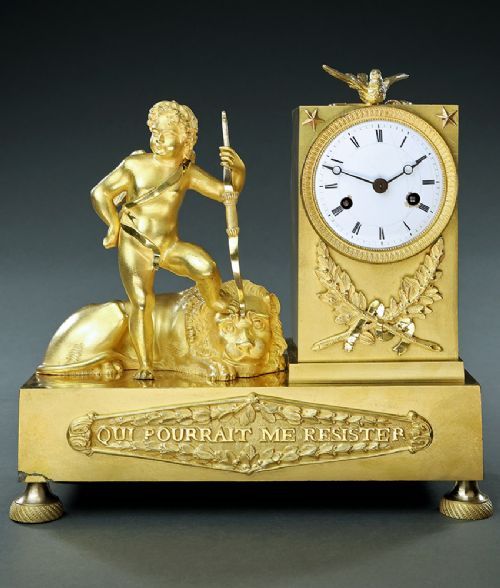
These pieces unite precision timekeeping with sculptural presence, offering a French decorative clock to anchor a mantelpiece or desk.
French Decorative Clock
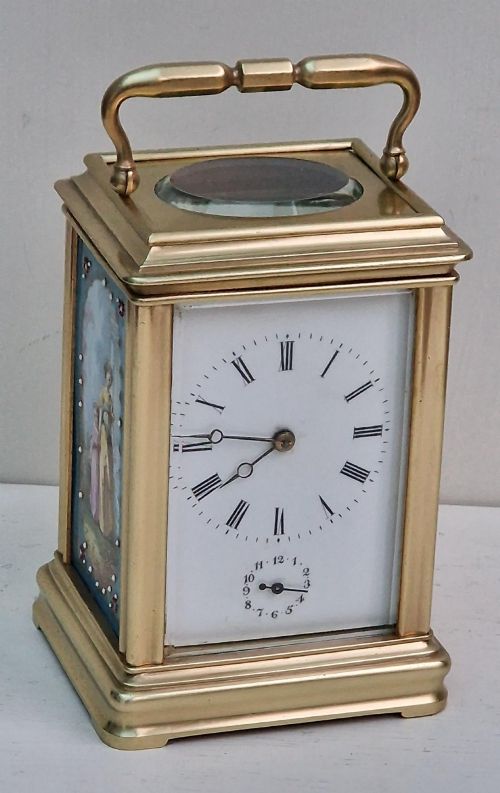
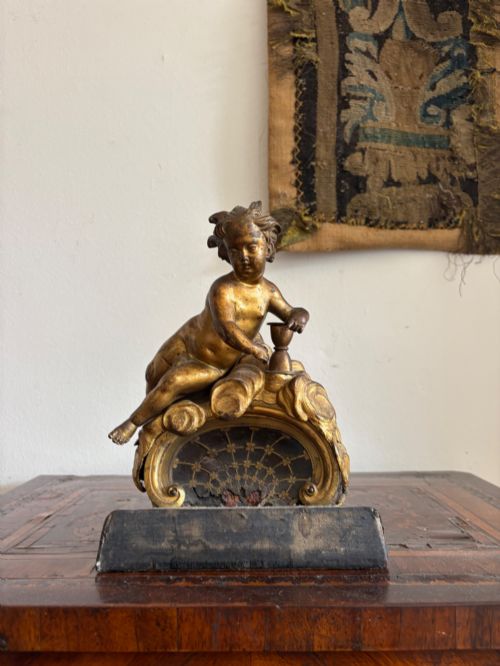
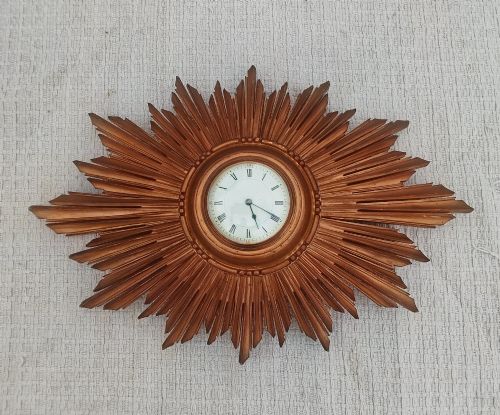
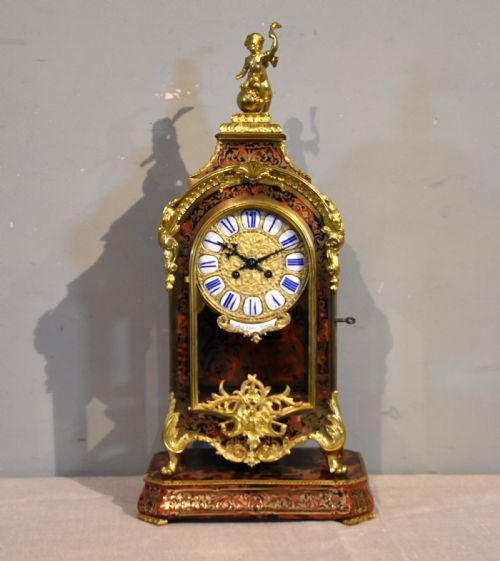
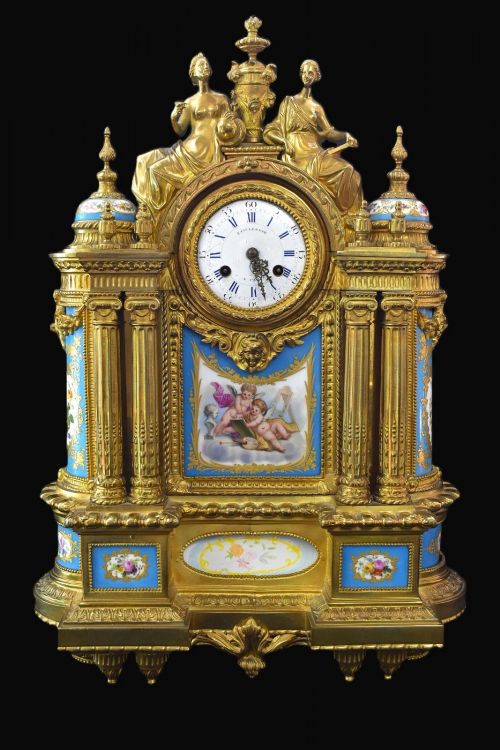
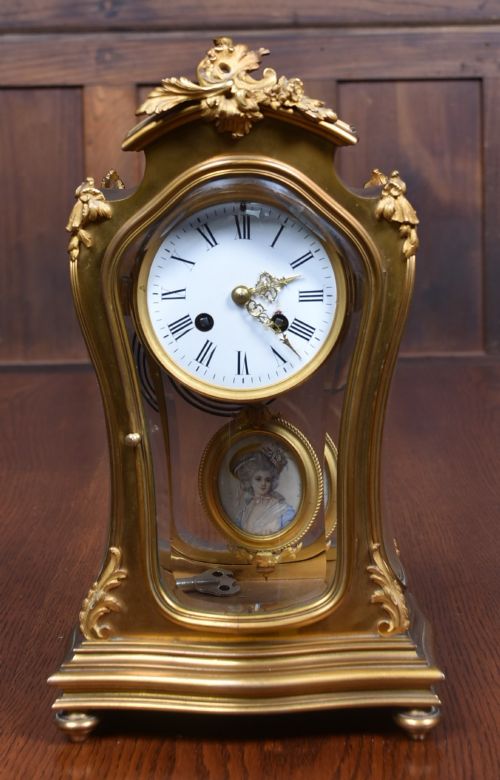
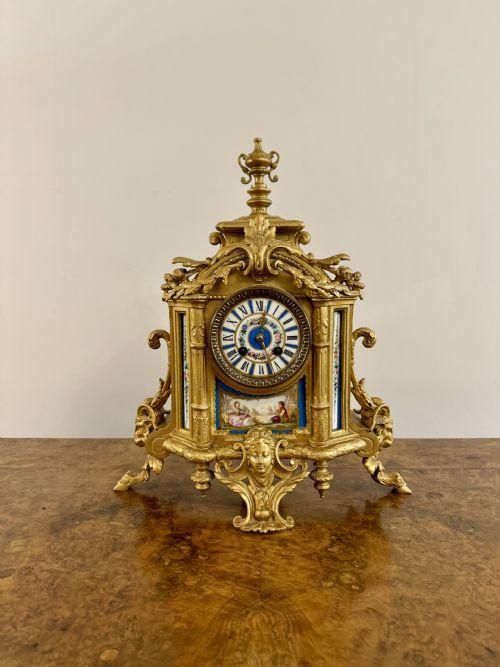
A french decorative clock brings together ornate metalwork, ceramics, and cabinetry to serve as a functional centrepiece within a room. Collectors encounter these objects across mantel clocks, carriage clocks, and wall-hung variations spanning the nineteenth century and early twentieth century.
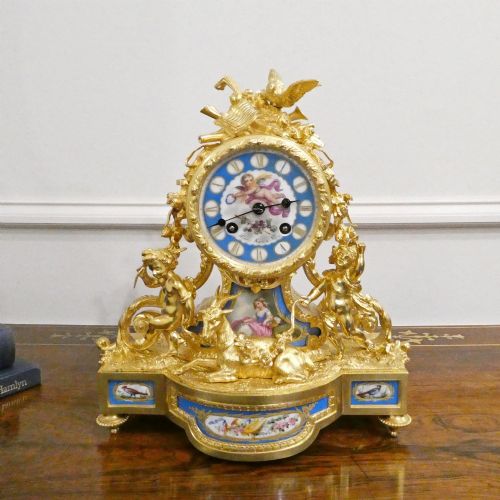
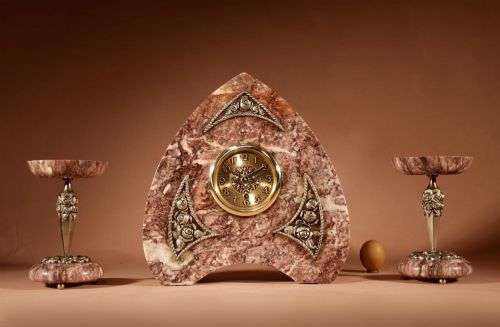
The assortment on this page draws heavily from Victorian tastes, Louis XVI revival designs, and Rococo styling. Examples range from travelling carriage clocks housed in brass cases to grand architectural marble or ormolu mantel clocks flanked by garnitures.
Makers and makers' marks often appear on dials or movements, connecting individual pieces to established workshops and retailers of the period. Buyers select these timepieces for their sculptural merit as much as for their horological function.
Materials and construction methods
Gilt bronze, ormolu, and solid brass form the structural frameworks and decorative mounts of many pieces. Founders cast these metal components before chasing and gilding the surfaces to achieve rich contrast.
Porcelain panels, often associated with Sevres or Meissen aesthetics, frequently complement the metalwork through hand-painted enamel scenes and floral motifs. Marble, glass, and giltwood further define the housings of mantel and wall timepieces.
Listings span the nineteenth century through the 1930s, featuring materials such as Sevres porcelain, rouge marble, champleve enamel, and gilt bronze.
Assessing quality and execution
Quality rests in the crispness of the bronze chasing and the depth of the mercury gilding on ormolu surfaces. Superior examples display sharply defined scrollwork, figures, and architectural details rather than soft, cast-over mouldings.
The integration of materials dictates distinction, seen where porcelain plaques or enamel miniatures are painted with fine precision and securely fitted to the brass chassis. Signed movements by notable makers elevate an object's standing.
Completeness contributes significantly to a piece's integrity, particularly when original matching garnitures, keys, travel cases, or wall brackets accompany the clock.
Henry Marc·Siffel and Cartier·Etienne Lenoir·Le Roy Paris·Duverdrey and Bloquel·Tiffany·Wetterstrands·Japy Freres·E Portelance
The French Decorative Clock Glossary
- Ormolu
- Gilded bronze produced by applying a mercury and gold amalgam to cast bronze and firing it. This technique yields a deep, enduring golden finish characteristic of fine nineteenth-century French metalwork.
- Garniture
- A set of matching decorative objects, typically a clock paired with two side urns, vases, or candelabra. Such sets were designed to sit symmetrically on a mantelpiece.
- Champleve
- An enamelling technique where troughs are dug into a metal surface and filled with vitreous enamel before firing. It frequently decorates the brass frames of carriage clocks.
- Repeater
- A mechanical complication in a clock that chimes the hours and quarters when a button or lever is pressed. This feature allowed owners to tell the time in the dark.
- Boulle
- A style of marquetry using brass and tortoiseshell inlay developed in France. It appears on select wooden clock cases and brackets.
French Decorative Clock: Frequently Asked Questions
How do I wind a French mantel clock?
Most mechanical French clocks require a dedicated winding key inserted into the dial holes to tension the mainsprings. Care must be taken not to over-wind the movement.
Spring-driven clocks generally run for a week on a full wind, while pendulum-regulated models may require minor beat adjustments after moving.
What is the difference between a carriage clock and a mantel clock?
Carriage clocks were designed as portable timepieces for travellers, housed in brass and glass cases with folding handles. They are typically smaller and weight-driven by a platform escapement.
Mantel clocks are larger, heavier stationary objects made from marble, porcelain, or gilt bronze, intended to remain fixed upon a fireplace shelf.
How can I identify the period of a French clock?
Stylistic cues such as heavy Rococo scrollwork, Empire neoclassical trophies, or clean Art Deco geometric lines offer the first indication of date. Movement signatures and registration marks often narrow down the decade of manufacture.
Materials also point to eras, with Sevres-style porcelain panels frequently appearing on mid-to-late nineteenth-century pieces.
Do these clocks chime the time?
Many French mantel and carriage clocks include striking mechanisms that sound the hours and half-hours on bells or gongs. Some feature repeater functions that sound the last hour on demand.
Timepieces marked as 'timepieces' rather than 'clocks' strictly record the time without striking functions.
How should I care for an antique clock case?
Gilt bronze and ormolu surfaces require gentle dusting with a soft brush rather than chemical polishes, which can strip the historical gilding. Marble and glass elements can be cleaned with a damp, lint-free cloth.
Keeping the clock away from direct sunlight and damp environments preserves the delicate enamels and wooden veneers.