



French Damask Armchairs
French damask armchairs bring formal nineteenth and eighteenth-century seating into modern rooms through carved timber frames and patterned textile upholstery.
French Damask Armchairs
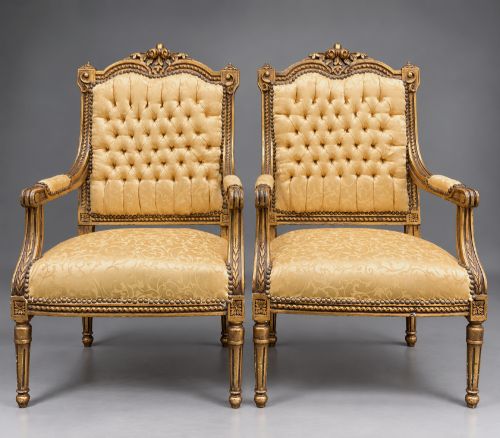
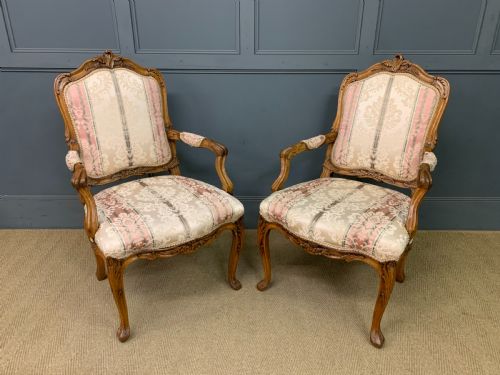
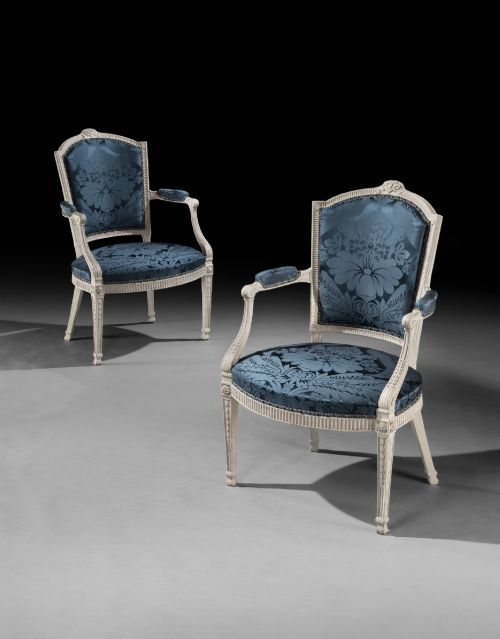
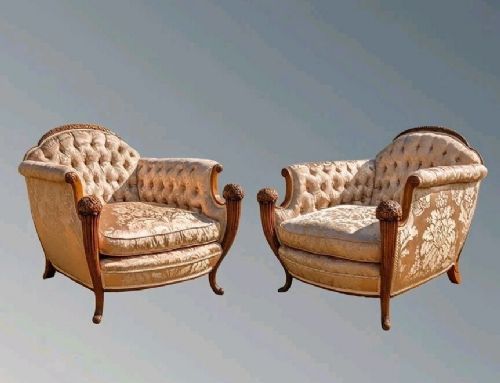
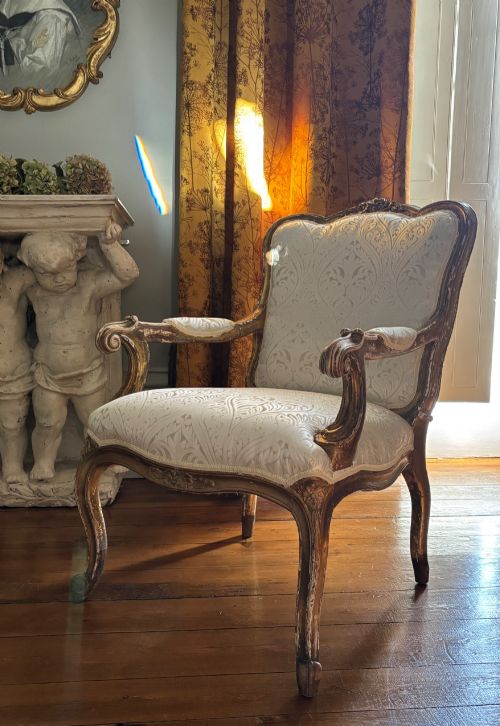
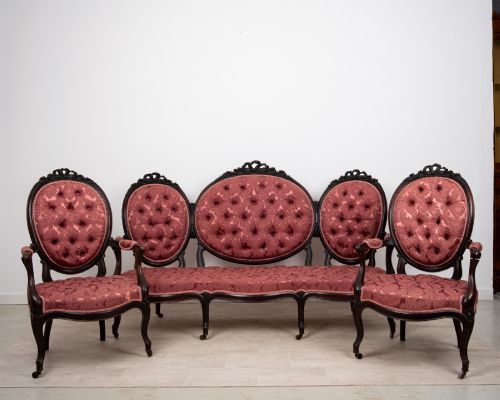
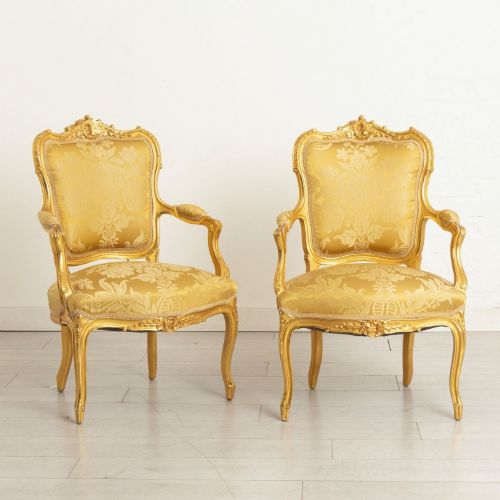
French damask armchairs encompass classic seating forms designed for formal salons and living spaces, drawing on a rich heritage of continental craftsmanship. Buyers encounter open-arm fauteuils, enclosed bergères, and complete salon suites upholstered in patterned textiles.
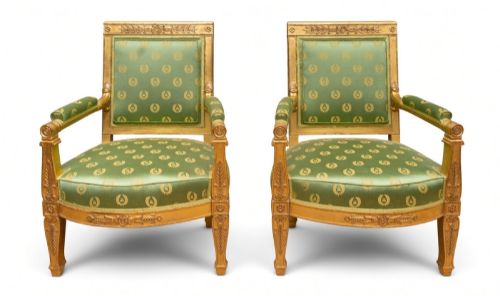
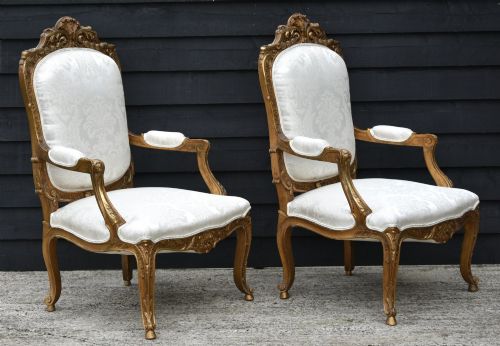
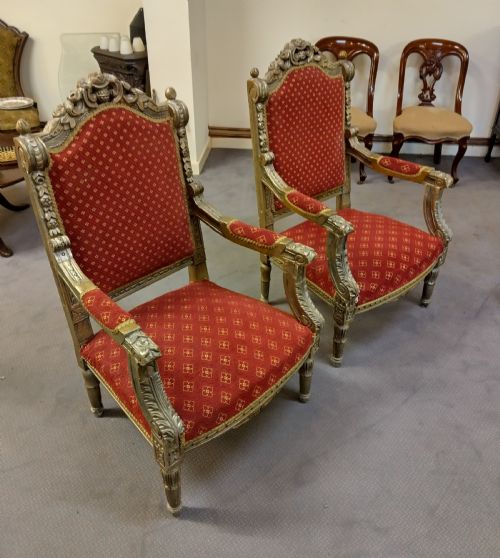
The pieces on this page span the eighteenth and nineteenth centuries alongside later revival periods, reflecting evolving tastes in interior decoration. Walnut and giltwood frames predominate, paired with silk damask or standard damask fabric upholstery.
What Varies in Quality
Quality rests primarily in the crispness and depth of the frame carving, distinguishing hand-carved definition from softer moulded details. The choice of primary timber and the execution of the gilt finish also dictate the tier of the piece.
The integrity of the structural joinery and the selection of textile upholstery, particularly authentic silk damask versus standard fabric, influence the overall standing of an armchair.
Several armchairs come accompanied by matching footstools designed for proper nineteenth-century relaxation.
Jacob-Desmalter·Blaise Maucuy
The French Damask Armchairs Glossary
- Damask fabric
- A reversible figured fabric woven on a jacquard loom with patterns flat against the ground. This textile provides the characteristic sheen and floral or geometric motifs seen on these chairs.
- Fauteuil
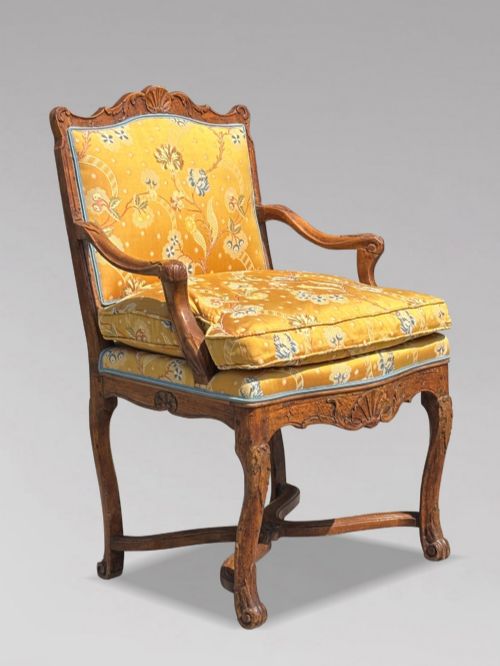
- An open-arm chair with upholstered back and seat, featuring exposed wooden armrests. Originating in France, this form typifies eighteenth-century seating design.
- Bergère
- An enclosed armchair featuring upholstered sides filled with padding or cane. It offers a deeper and more enclosed seat than the standard open-arm chair.
- Giltwood
- Timber treated with a thin layer of gold leaf or gilt finish applied over a prepared gesso surface. This treatment creates the reflective metallic appearance seen on formal revival pieces.
- Louis XVI Style
- A neoclassical design movement characterised by straight tapered legs, geometric symmetry, and classical ornamentation. Pieces from this period favor rectangular backs and restrained curves.
French Damask Armchairs: Frequently Asked Questions
What is a French damask armchair?
These pieces are traditional wooden seats featuring carved frames from walnut, mahogany, or giltwood, upholstered in woven patterned textiles. They include open-arm fauteuils and enclosed bergères designed for formal interiors.
Originating across various historic French periods and later revivals, they combine decorative woodwork with durable fabric coverings. Their forms range from intimate salon seating to larger library chairs.
How do I identify the period of an armchair?
Dating relies on stylistic cues in the woodwork, such as the curved cabriole legs of eighteenth-century pieces versus the straight tapered supports of neoclassical styles. Wood types and construction methods also indicate the era of manufacture.
Revival pieces often imitate earlier eighteenth-century aesthetics while utilising nineteenth or twentieth-century joinery techniques and hardware. Examining the underside and framing reveals the age of the timber.
Where were these chairs used historically?
Historically, these armchairs occupied formal reception rooms, private salons, and drawing rooms within chateaux and townhouses. They provided comfortable yet formal seating for conversation and entertaining.
Suite configurations often included matching sofas and elbow chairs to create a uniform decorative scheme. Individual armchairs served as accent seating in studies and bedrooms.
How do I care for silk damask upholstery?
Silk damask requires gentle maintenance to preserve the woven pattern and delicate fibres. Regular light vacuuming with a soft brush attachment prevents dust accumulation within the weave.
Direct sunlight should be avoided to prevent fading of the textile colours over time. Professional cleaning is recommended for addressing stubborn marks without damaging the fabric.