
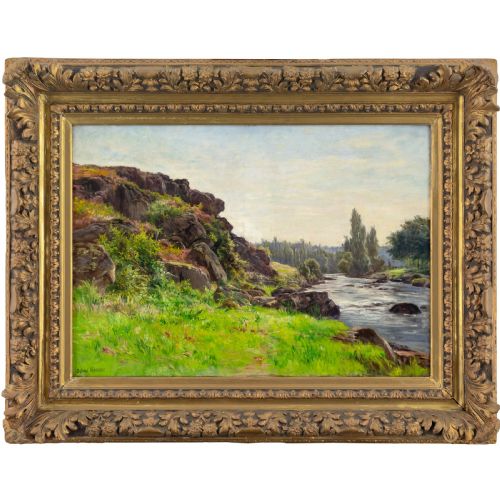
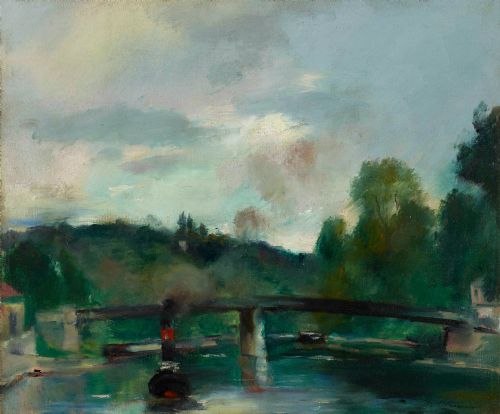
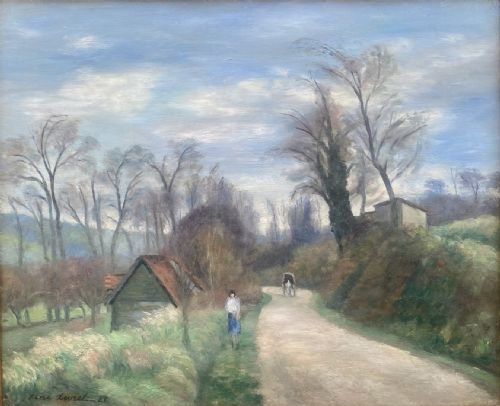
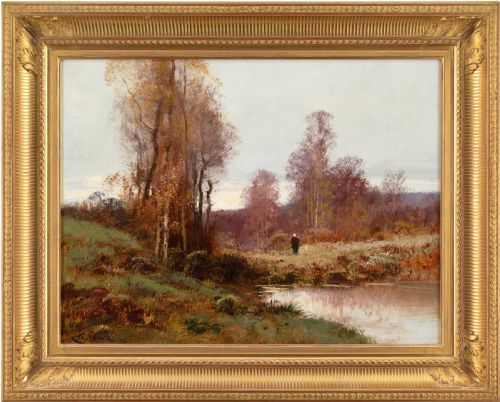




French Countryside Impressionist Painting
A french countryside impressionist painting captures light and atmosphere across rural scenes, bringing the warmth of rural France directly into a room.
French Countryside Impressionist Painting
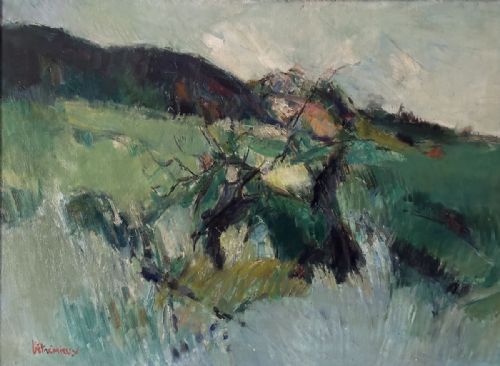
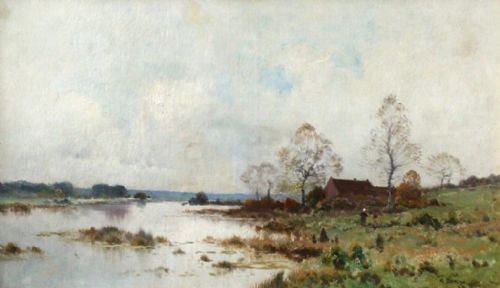
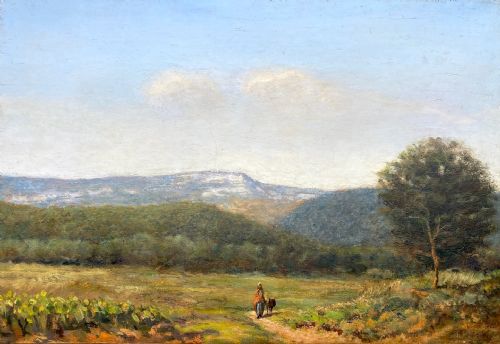
A french countryside impressionist painting depicts rural scenes, rivers, orchards, and rolling hills across regions from Normandy to Provence. These artworks capture the changing light and atmosphere of the French landscape through loose brushwork and vibrant colour palettes.
The pieces available on this page span from the late nineteenth century through the mid twentieth century. Works from this selection showcase rural vistas, farm buildings, and coastal paths rendered by various regional and international artists.
Materials and Techniques
Artists painted primarily with oil paint on canvas stretched over wooden frames, though panel supports and board also appear in the archive. Gesso served as a traditional ground layer to prepare surfaces before the application of oil pigments.
Makers applied oil paint using diverse brush techniques, ranging from rapid, broken strokes characteristic of impressionism to the bolder, expressive applications seen in post-impressionism and fauvism. Gilt frames often complement these works, enhancing the visual depth of the painted scenes.
Materials documented across the listings include oil paint, canvas, wood panels, gesso grounds, and gilt frames.
Distinctions in Quality
Quality rests upon the confidence of the brushwork and the artist's ability to render natural light and atmospheric depth. Superior examples demonstrate a secure command of tone and composition that brings vitality to the rural subject matter.
The handling of pigment and the preservation of the canvas surface dictate the overall integrity of the piece. Stronger works maintain vibrant colour harmonies and stable paint layers without distracting intervention.
Gabriel Mathieu·Henri Ottmann·Rene Levrel·Charles Clair·André Prévot-Valéri·Mario Pinetti·Pierre Emmanuel Eugene Damoye·Jeffrey Pratt·Henri Therme·Martin Lamotte·Charles Edmund Rene His
The French Countryside Impressionist Painting Glossary
- Impressionism
- A nineteenth-century art movement characterised by relatively small, thin, yet visible brush strokes and an emphasis on accurate depiction of light. This style prioritises open compositions and ordinary subject matter.
- Post-Impressionism
- A predominantly French art movement that developed from impressionism, extending its limitations while rejecting its constraints. Artists painted with vivid colours and distinct geometric forms.
- Fauvism
- A style of early twentieth-century modern art emphasising painterly qualities and strong colour over the representational values retained by impressionists. Canvases display wild, expressive brushwork.
- Gesso
- A paint mixture consisting of a binder mixed with chalk, gypsum, or pigment used in artwork as a preparation for various surfaces. It creates a smooth and absorbent base for oil paint.
- Canvas
- Closely woven fabric used as a surface for oil painting, typically stretched taut over a wooden frame. It provides a flexible yet durable support for heavy applications of pigment.
French Countryside Impressionist Painting: Frequently Asked Questions
What periods do these paintings cover?
The works span from the late nineteenth century through the mid twentieth century, encompassing periods of impressionism, post-impressionism, and fauvism.
Dates recorded across the selection range from the 1870s to the 1960s, reflecting changing artistic movements in French landscape painting.
How do I identify a post-impressionist landscape?
Post-impressionist works often feature bolder brushwork, expressive colour choices, and structured compositions that move beyond pure optical realism.
These pieces emphasise personal interpretation of the French countryside through intensified hues and deliberate forms.
What canvas sizes are common?
Paintings vary from intimate panels suitable for smaller spaces to large canvases designed to anchor a room.
Dimensions depend on the specific artist and period, with many works presented in substantial formats.
How should I frame these oil paintings?
Many works are housed in traditional frames, such as gilt mouldings that complement the palette of the period.
Choosing a frame requires considering the era of the painting and the depth of the canvas.