



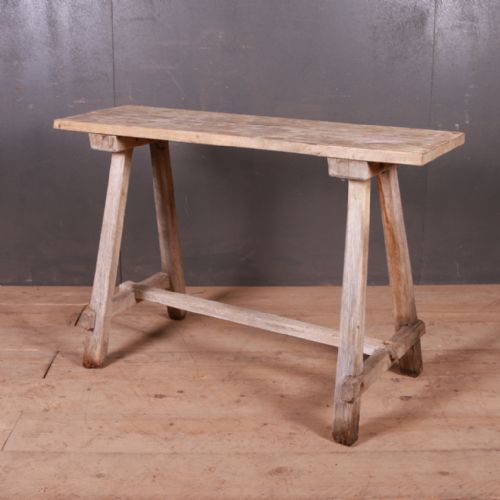

French Country Trestle Bench
These french country trestle bench pieces are practical rural seating and tables built to last generations, offering honest utility and simple lines for modern interiors.
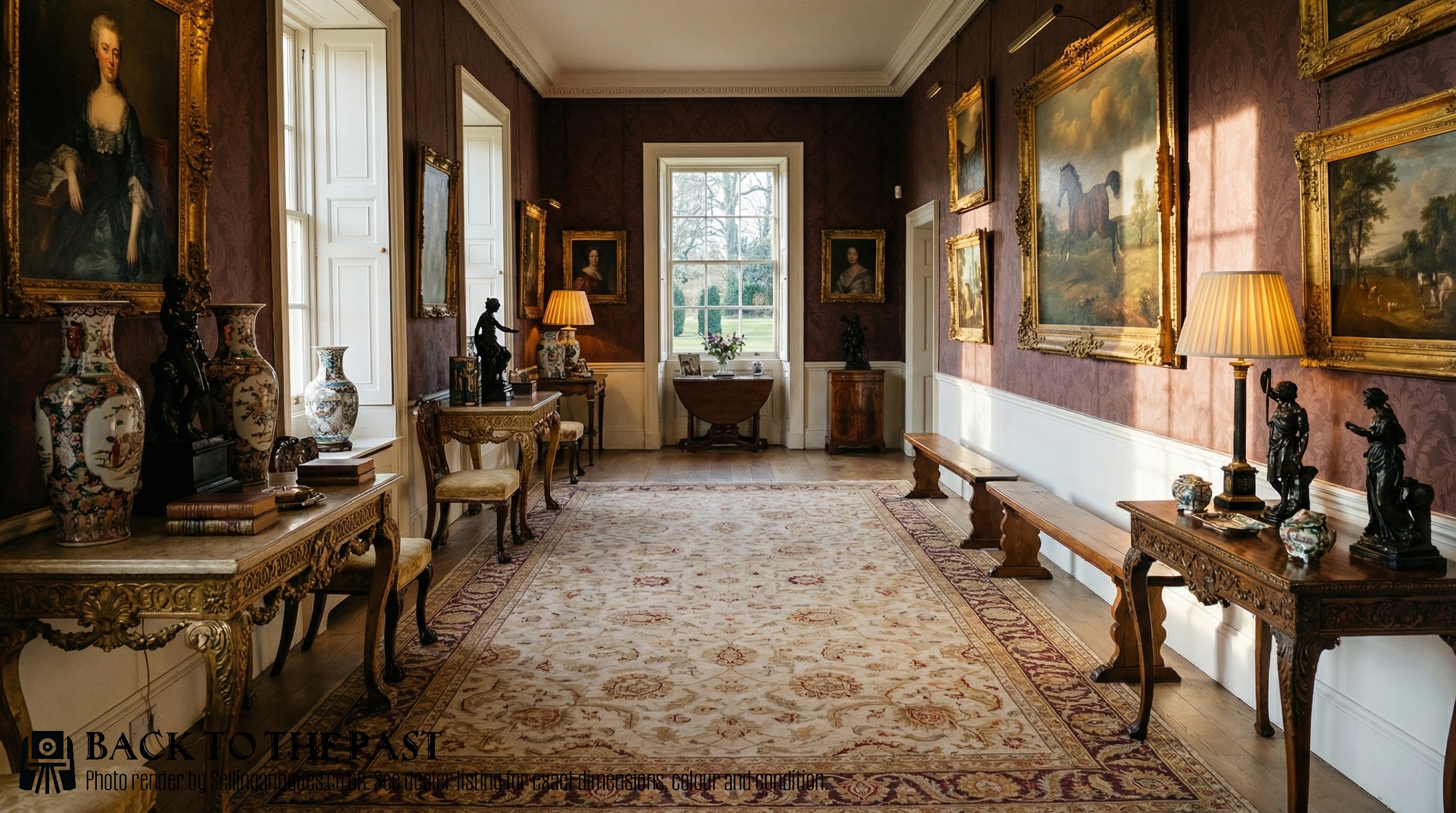
French Country Trestle Bench
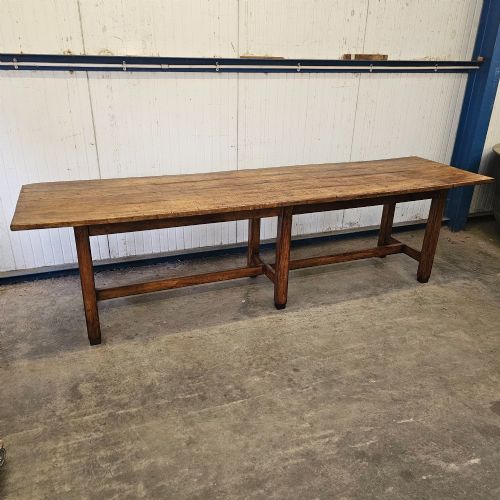
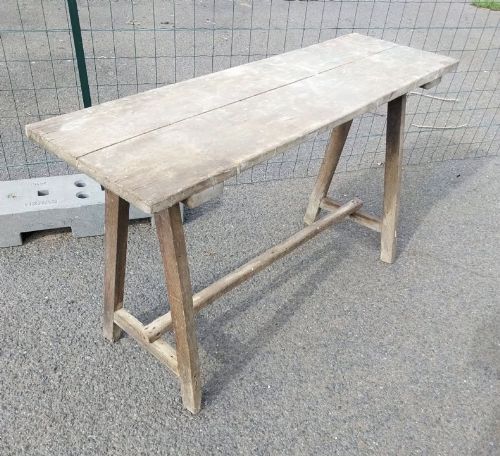
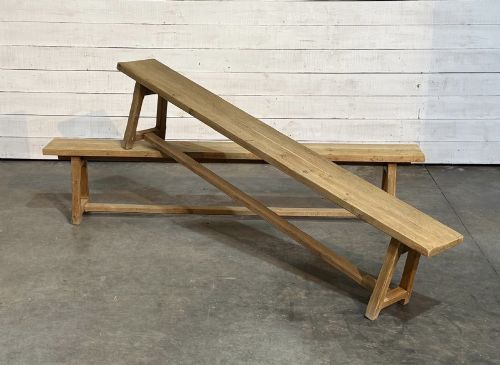
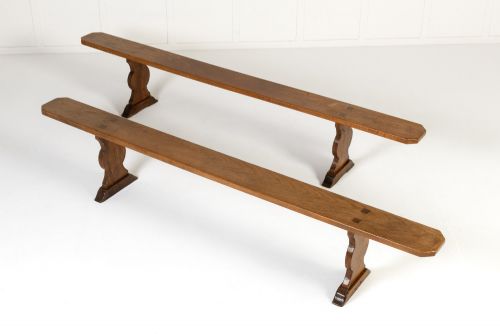
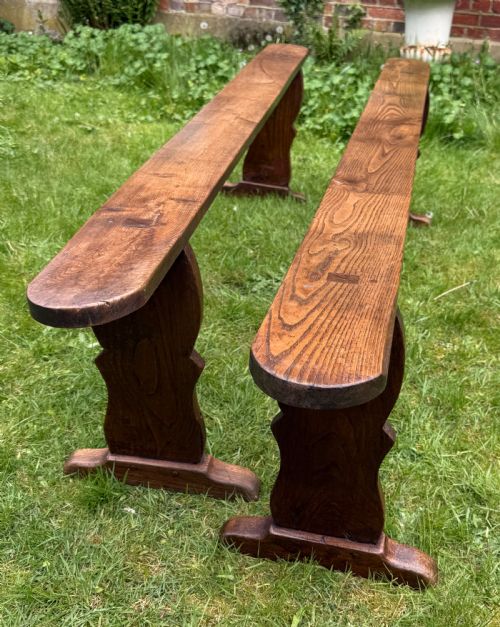
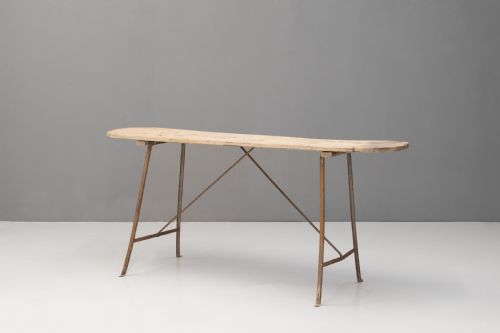
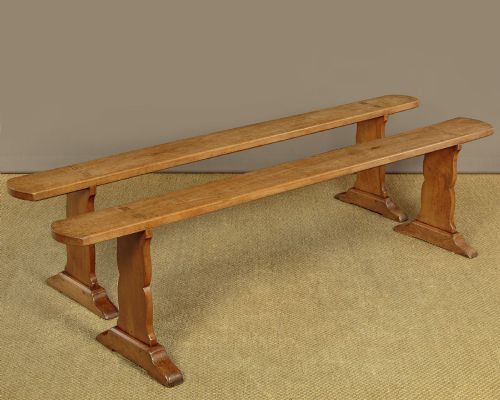
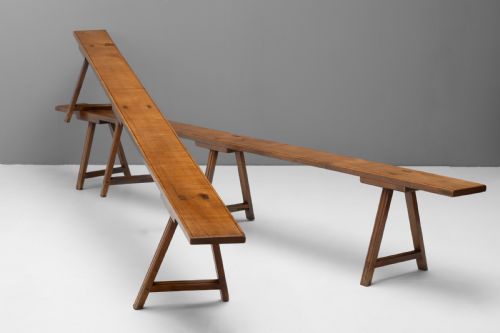
When searching for a french country trestle bench, buyers encounter a selection of long seating alongside trestle tables, console tables, and stools originating from the nineteenth and early twentieth centuries. The inventory comprises numerous pairs of benches in various lengths, suited for placement along dining tables or in hallways.
The aesthetic falls broadly under rustic farmhouse, French provincial, and rustic country styles. These forms reflect the everyday utility of rural French homes and gardens, featuring unpretentious construction designed for hard daily use.
Most examples hail from the 19th century and the early decades of the 20th century, particularly around 1880, 1900, and 1910. Buyers are most likely to meet pairs of long wooden benches rather than single items, often preserved in their natural timber finishes.
Materials and Construction
Makers relied on regional hardwoods including elm, sycamore, oak, cherrywood, and pine. These timbers provided the structural strength required for heavy trestle tables and long seating.
Surfaces frequently show the marks of scrubbing and bleaching, revealing the natural grain of the sycamore, oak, and elm. Joinery is straightforward and robust, prioritising function over ornament.
French Country Trestle Bench Retail Price Guide 2026
Typical asking prices for french country trestle bench among the pieces listed under this phrase on Sellingantiques today, from the lower quarter to the upper quarter. They describe what is for sale here now, not the wider market.
The available inventory includes numerous pairs of benches alongside associated trestle tables, console tables, and garden dining seating.
Judging Quality and Character
The distinction between ordinary and superior pieces rests in the choice of timber and the depth of natural patina acquired over decades of use. Dense hardwoods like cherrywood and oak hold their structural integrity better than softer pine alternatives.
Proportion and the balance of the trestle supports separate utilitarian items from finer examples of provincial cabinetmaking. Original surface treatments, such as scrubbed finishes that highlight the grain without masking its history, elevate the piece.
The French Country Trestle Bench Glossary
- Trestle table
- A table comprising two or more support frames connected by a horizontal beam. This design provides sturdy legroom underneath long surfaces.
- Scrubbed finish
- A surface repeatedly washed and scrubbed to clean the timber. This process removes old dirt while leaving a pale, raw wood appearance.
- Provincial
- Pertaining to the regions outside the capital. In furniture, it denotes simpler, locally made styles rather than formal court designs.
- Hardwood
- Timber derived from broad-leaved deciduous trees such as oak, elm, and cherry. These woods offer greater density and wear resistance than softwoods.
French Country Trestle Bench: Frequently Asked Questions
What are french country trestle benches?
These are utilitarian wooden seats and tables originating from rural France during the nineteenth and early twentieth centuries. They were built for everyday domestic life in farmhouses and provincial settings.
Today, buyers seek them out for their honest construction and versatile proportions. They fit easily into modern kitchens, hallways, and dining spaces.
How do I date a french country bench?
Dating relies on examining the timber species, tool marks, and overall wear patterns visible on the surface. Nineteenth-century examples often display hand-sawn boards and dense hardwoods like cherry or oak.
Later pieces from the early twentieth century may show slightly different fastening methods or lighter framing. Comparing the joinery style to documented periods helps narrow the timeframe.
Can I use these benches outdoors?
Many surviving examples include garden dining benches specifically designed for exterior use in milder weather. However, historic timber requires careful monitoring when exposed to persistent moisture and frost.
Protecting the wood with appropriate shelter preserves the original dry finish and prevents structural warping. Indoor placement remains the safest option for antique cherrywood and scrubbed elm.
What woods were used for these pieces?
Makers utilised whatever strong local timbers were readily available in the French countryside. Elm, sycamore, oak, cherrywood, and pine appear frequently across these listings.
Each wood ages differently, with cherry developing a rich warmth and oak retaining a strong, visible grain. Scrubbed finishes often highlight these natural characteristics.