



French Country Shelves
French country shelves bring rustic character and practical storage to a room, offering timeless utility through solid oak, pine, and wrought iron forms.
French Country Shelves
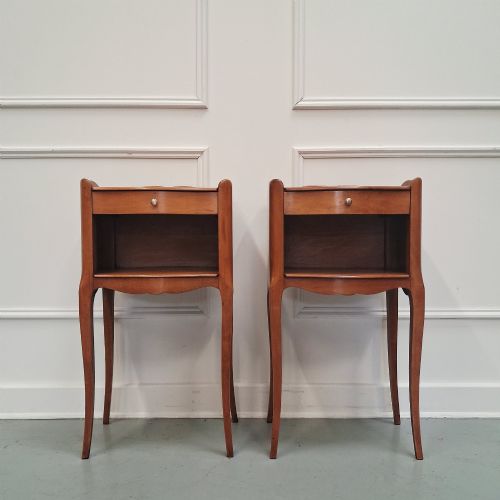
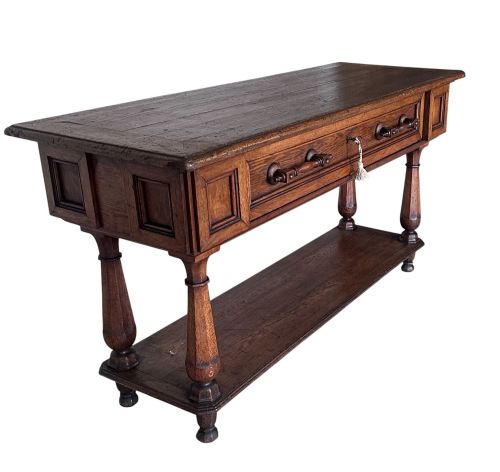
When you search for french country shelves, you encounter a practical mix of provincial storage ranging from wall-mounted units and open bookcases to baker's racks and alcove cupboards. The pieces span the eighteenth, nineteenth, and early twentieth centuries, reflecting regional workshops and domestic utility.
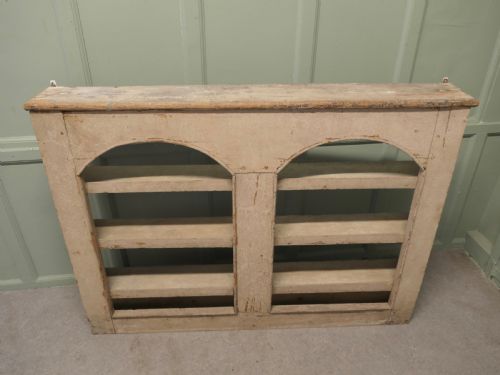
You are most likely to meet nineteenth-century pine, oak, and painted wood items, including hanging shelves, display units, and patisserie racks. These functional pieces carry the distinct regional styles of French provincial and chateau life, designed for everyday storage rather than formal display.
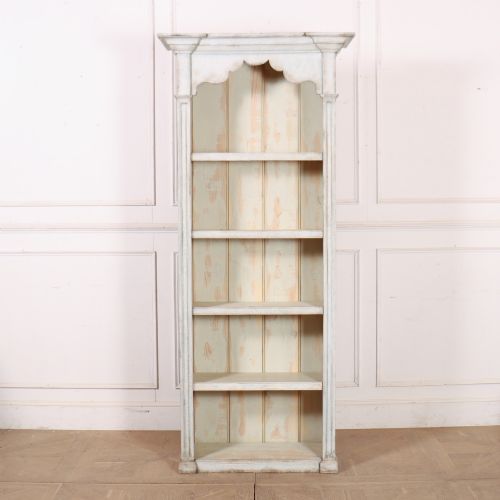
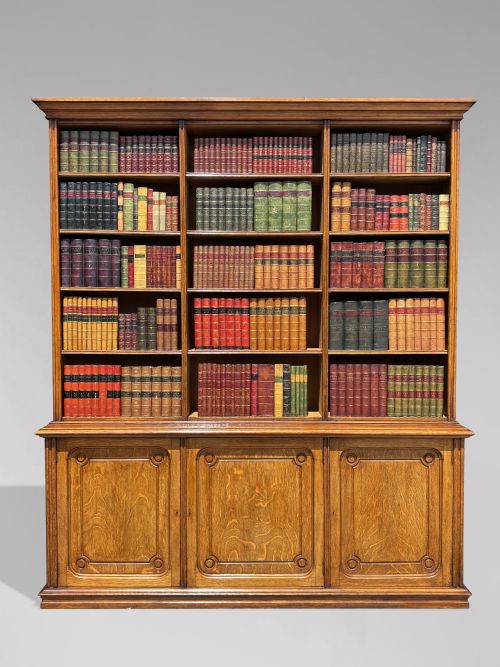
The category encompasses varied forms like narrow dwarf bookcases, corner cupboards with shaped shelves, and large Parisian baker's racks. Each object serves a domestic or commercial purpose, shaped by the materials available to local makers across France.
Materials and construction
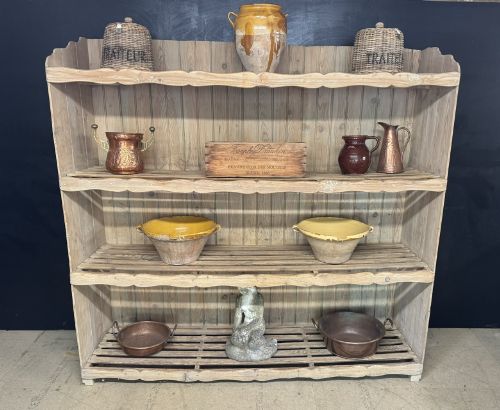
The construction relies heavily on solid timbers such as oak, pine, cherry wood, and fruitwood, often shaped by hand or carved with simple provincial details. Workshops utilised local woods, finishing them with traditional paint layers or leaving the grain exposed through bleaching and waxing.
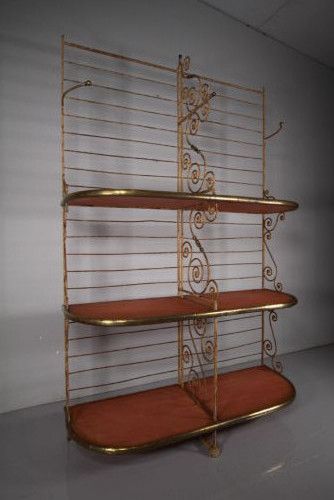
Metal components appear frequently in the form of wrought iron and brass, particularly on baker's racks, patisserie units, and etageres. These structural metal elements combine with wooden shelving to provide durable support for heavy storage.
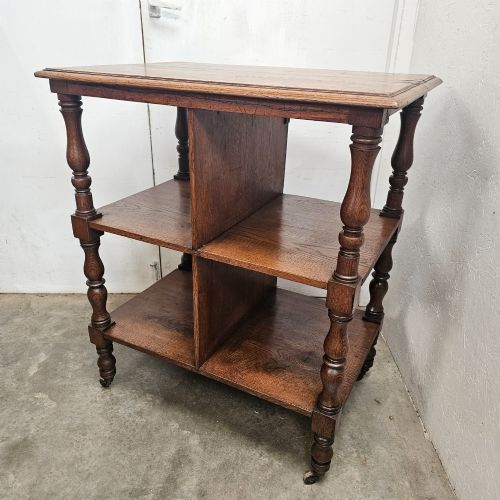
Joining techniques reflect traditional cabinet-making methods suited to regional furniture production, ensuring sturdy frames for wall-mounted consoles, bookcases, and standing shelving units.
A solitary carved spaniel dog peers out from the bookends, keeping watch over an otherwise timber-heavy assembly of French shelves.
Distinctions in quality
The standard of a piece rests upon the choice of timber and the integrity of its construction, with solid hardwoods like oak and cherry offering greater durability than simpler pine variants. Hand-carved details and stamped metalwork indicate a higher degree of workshop attention.
Original painted surfaces and patination elevate an item, showing honest age through surface wear rather than later refinishing. The balance of proportions and the quality of the joinery distinguish bespoke provincial pieces from more utilitarian workshop output.
The French Country Shelves Glossary
- Baker's Rack
- A tall metal and wood shelving unit originally used in French commercial kitchens for cooling bread and pastries. These structures now serve as robust display storage in domestic settings.
- Alcove Cupboard
- A fitted or freestanding storage unit designed to fit neatly into a structural wall recess. They often feature shaped shelves for displaying ceramics or books.
- Vaisselier Dresser
- A traditional French storage piece combining lower cupboards with upper open shelving for kitchenware. These units anchor a rustic interior with substantial proportions.
- Etagere
- An open tiered shelving unit designed for displaying decorative objects. They frequently incorporate marble tops and delicate brass or wooden supports.
- Bobbin Shelves
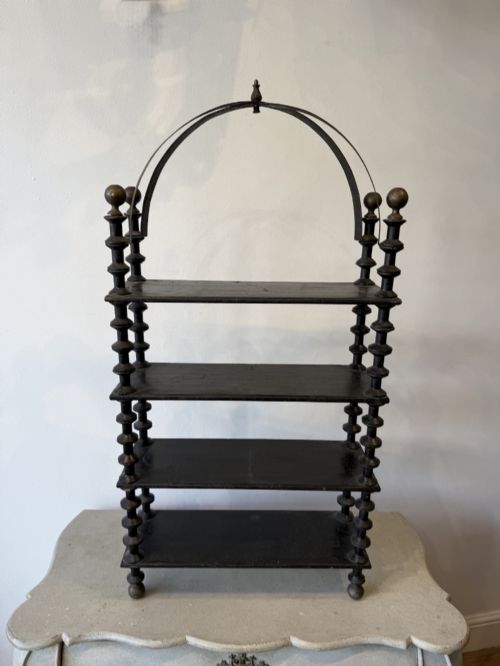
- Wall-mounted shelving featuring turned wooden spindles resembling spools or bobbins. This decorative turning style adds textural interest to the upright supports.
French Country Shelves: Frequently Asked Questions
How do I style french country shelves?
Integrate these open shelves into a kitchen, living area, or hallway to display everyday ceramics, books, and glassware. Their rustic timber and iron construction anchors a casual interior scheme.
Pair wall-mounted consoles or taller bookcases with neutral walls to let the natural grain and painted finishes stand out. Balance heavier stacked items with simpler decorative objects to maintain a natural look.
What is a baker's rack used for?
Originally utilised in French bakeries for cooling bread, these wrought iron and wood structures provide sturdy multi-tiered storage. Their open framework makes them ideal for kitchens and pantries.
In modern homes, they function well for storing cookware, herbs, and everyday utensils. The combination of metal framing and wooden shelves brings industrial utility to domestic spaces.
How do I identify eighteenth-century pieces?
Eighteenth-century examples typically display hand-cut joinery, pegged joints, and heavy provincial oak construction. Surfaces often show deep patination from centuries of domestic use.
Examine the backboards and interior fixings for signs of hand-planing and early hardware. These older pieces carry simpler, robust lines distinct from later decorative revivals.
Are painted wood shelves original?
Many provincial pieces received coats of paint during their working life, sometimes featuring layered or distressed finishes. Original paint surfaces show natural wear consistent with the age of the wood beneath.
Distinguishing original or early painted finishes from later decoration involves looking for craquelure and integration with the underlying timber. A harmonious surface indicates a finish that has aged alongside the structure.