




French Country Landscape Painting
A french country landscape painting brings the quiet riverbanks, sunlit farmhouses and open fields of rural France directly into a room.
French Country Landscape Painting
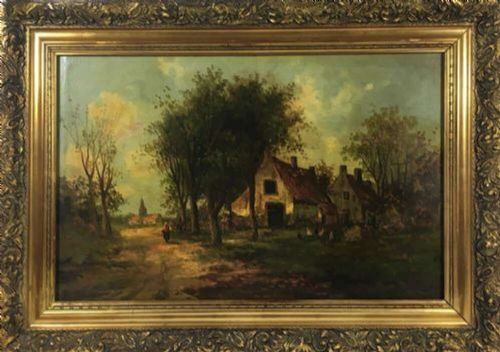
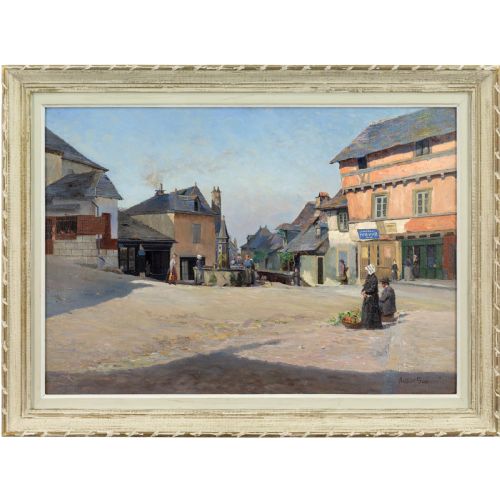
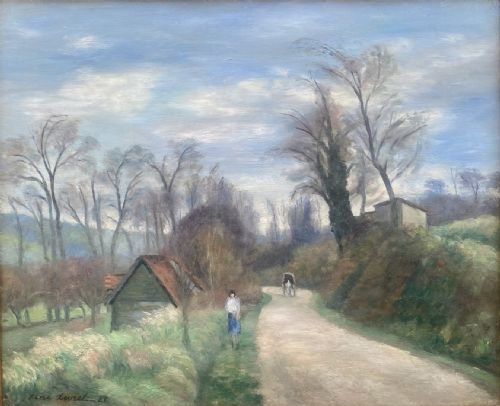
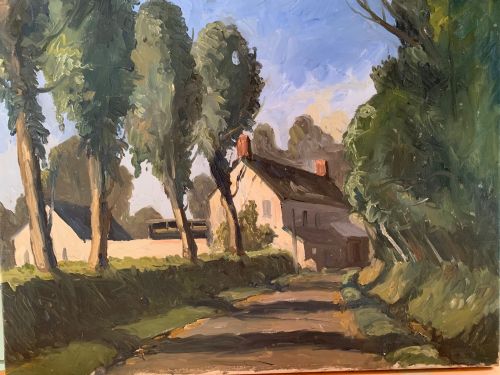
When you search for a french country landscape painting, you encounter canvases capturing the rural charm of provinces from Normandy to Provence. These pieces document pastoral life through the eyes of regional painters, working from the nineteenth century into the mid-twentieth century.
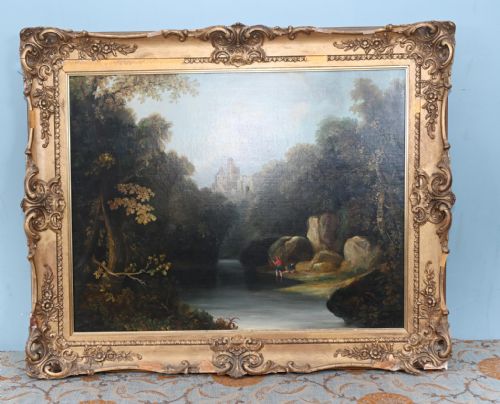
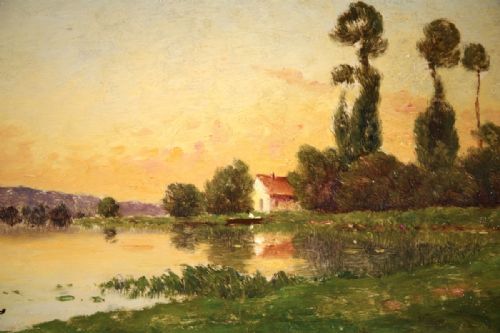
The selections available lean heavily toward oil on canvas works executed in the Barbizon style, post-impressionist handling, or classical academic traditions. You will find farmyards, river scenes, and quiet village lanes recorded with varied brushwork.
Subjects range from solitary figures resting by haystacks to wide views of olive trees and country houses. Each composition preserves a specific corner of the French countryside as seen by artists recording the light of day.
Materials and methods
The physical foundation of these pieces relies predominantly on oil paint applied to woven canvas or wood panels, occasionally supported by gesso grounds. Artists built texture with loaded brushes and palette knives, creating depth in foliage and fields.
Frames accompanying these works frequently utilise carved giltwood or wood mouldings that complement the palette of the canvas. Watercolour on paper and oil on paper laid down on canvas also appear among the techniques used to capture natural light.
Distinctions in execution
The distinction between standard works and masterworks rests upon the confidence of the brushwork and the management of natural light across the canvas. Superior examples display a deliberate handling of shadow and atmosphere that draws the viewer into the depth of the field.
Compositional balance and the specificity of the regional setting elevate certain pieces above anonymous decorative works. An artist who captures the particular humidity of a riverbank or the harsh glare of a southern sun achieves a resonance lacking in formulaic views.
Arthur Gué·Rene Levrel·Paul Désiré Trouillebert·Henri Jaques Delpy·Jean-baptiste Joseph Pater·Henri Joseph Harpinies·Alphonse Robert·Pierre Emmanuel Eugene Damoye·Guillaume Urban Régamey·ROBERT MCGREGOR·ANTOINE BOUVARD·Charles Edmond Rene His·Martin Pierre - Denis·Rene Durey
The French Country Landscape Painting Glossary
- Barbizon School
- A nineteenth-century French art movement dedicated to naturalistic landscape painting, working directly from nature in the forests and fields. These painters emphasised tonal subtlety and atmospheric effects.
- Post-Impressionism
- A diverse artistic movement following impressionism that explored structural brushwork and expressive colour. Painters pushed beyond optical realism to emphasise geometric forms or emotional response.
- Trumeau
- A decorative architectural panel or mirror frame often incorporating an oil painting above the glass. These items originated in eighteenth and nineteenth-century French interiors.
- Gesso
- A plaster-like mixture used as a smooth base on wood panels or frames before applying paint or gilding. It provides a stable and reflective surface for the subsequent layers.
- Plein air
- The practice of painting outdoors to capture the direct effects of light and weather on the landscape. This method became central to nineteenth-century French landscape traditions.
French Country Landscape Painting: Frequently Asked Questions
How do I identify a Barbizon style landscape?
Barbizon style landscapes typically focus on earthy tones, subdued skies, and rural scenes featuring peasants, farmyards, or woodland paths. The brushwork is deliberate and grounded, prioritizing atmospheric truth over bright optical effects.
These works grew out of artists working directly in the French countryside during the nineteenth century. Look for deep greens, browns, and soft light rather than the vibrant primary colours found in later impressionist canvases.
Where should I hang a large oil painting?
A large canvas demands a substantial wall where it can serve as a primary focal point, away from direct sunlight that might degrade oil pigments over time. Dining rooms and drawing rooms with stable room temperatures suit these works best.
Ensure the hanging wall can support the weight of both the canvas and its heavy wooden frame. Keeping the centre of the painting at eye level allows the perspective of the landscape to draw the viewer into the scene naturally.
What defines art deco period landscapes?
Art deco period landscapes from the interwar years often feature simplified forms, stylized trees, and a brighter, more decorative palette than their nineteenth-century predecessors. Artists balanced traditional rural subjects with modern design sensitivities.
These pieces capture the French countryside through a lens influenced by modernism and post-impressionism. The handling of paint becomes flatter and the composition emphasises rhythm and geometric harmony across the canvas.