

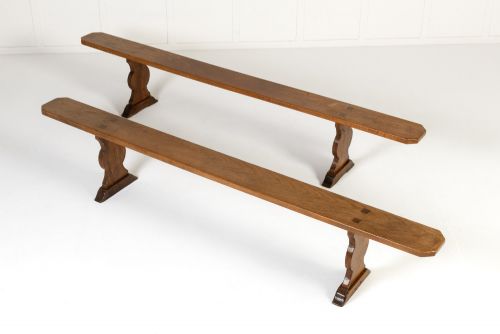


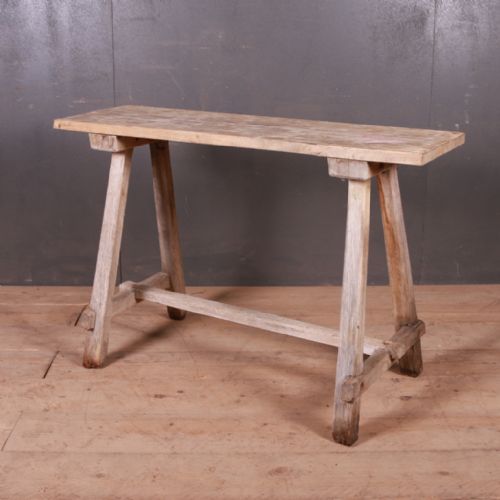


French Country Hall Bench
A French country hall bench offers rustic seating rooted in provincial tradition, bringing warmth and straightforward utility to an entryway.
French Country Hall Bench
A french country hall bench combines functional seating with provincial character, appearing across the eighteenth, nineteenth, and early twentieth centuries in forms such as settles, banquette sofas, and window seats. These pieces range from simple rush-seated benches to box-seated settles designed for practical storage in domestic farmhouses and country houses.
The versions most commonly encountered on this page date from the nineteenth century, utilising regional timbers like cherrywood, oak, and elm. Many reflect stylistic touches spanning French provincial and rustic farmhouse traditions, prioritising honest construction over ornate decoration.
Materials and Construction
Construction relies heavily on regional hardwoods such as oak, cherrywood, elm, and fruitwood, selected for structural strength and durability. Timber frames frequently feature pegged joints and sturdy trestle or cabriole supports.
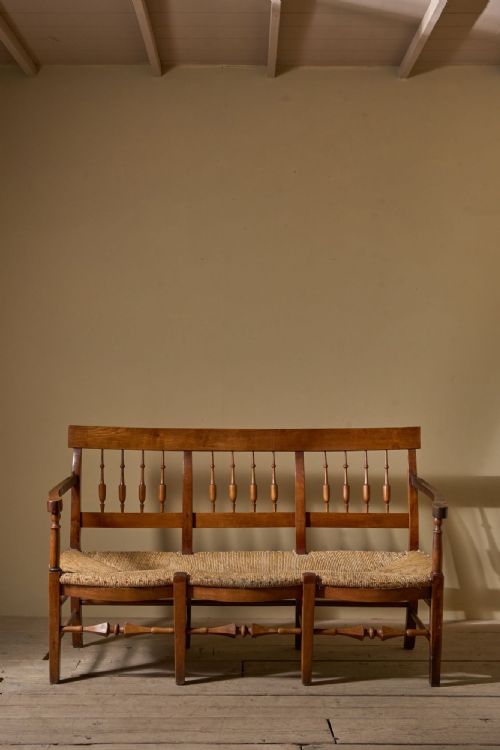
Seating surfaces often incorporate woven rush or upholstered elements like leather and velvet trim, depending on whether the piece originates from a working farmhouse or a more refined country house setting.
French Country Hall Bench Retail Price Guide 2026
Typical asking prices for french country hall bench among the pieces listed under this phrase on Sellingantiques today, from the lower quarter to the upper quarter. They describe what is for sale here now, not the wider market.
Some nineteenth-century box-seated settles doubled as indoor woodstores, keeping dry fuel close to the hearth on chilly provincial nights.
Proportion and Material Honesty
Quality rests upon the selection and integrity of the timber, where dense cherrywood, oak, or sycamore show depth of grain and patination built through decades of use. The handling of structural joints and the balance of proportions distinguish standard joinery from finer provincial work.
The integrity of secondary materials, such as original woven rush seats or period leather and velvet trims, influences the overall character. Pieces retaining their scrubbed surfaces and unpainted timber demonstrate a more desirable state of preservation.
The French Country Hall Bench Glossary
- Rush
- A marsh plant material traditionally twisted and woven to create resilient, flexible seating surfaces. It provides a distinct textural contrast to the solid timber frames of provincial furniture.
- Settle
- A wooden bench featuring a high back to block draughts and often incorporating a box seat for storage. This form served a central function in traditional farmhouse kitchens and halls.
- Banquette
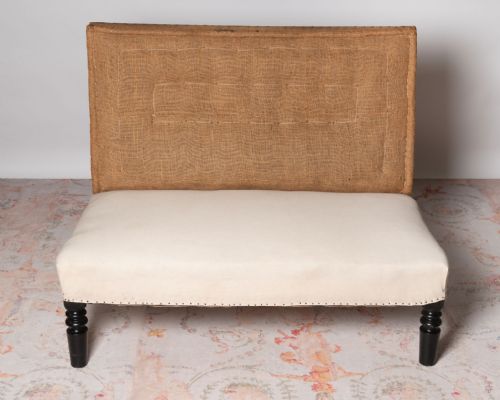
- An upholstered bench or long seat, frequently seen in nineteenth-century French interiors. It combines padded comfort with formal or provincial design elements.
- Patina
- The surface sheen and colour developed on timber through age, handling, and regular use. This quality marks genuine antique pieces and indicates long-term care.
- Provincial
- Descriptive of furniture made in the regions outside major metropolitan centres, often characterised by sturdy local materials and practical designs.
French Country Hall Bench: Frequently Asked Questions
Where did these benches stand originally?
These benches were placed in entrance halls, farmhouses, and country residences where practical seating was required near doorways.
They provided a sturdy place to remove boots or wait while offering functional storage within box-seated designs.
How do I care for antique timber?
Protect the wood from direct sunlight and sudden temperature shifts to prevent drying and splitting.
Apply natural beeswax occasionally to nourish the grain and maintain the surface patination without sealing the timber.
What woods were commonly used?
Makers utilised regional hardwoods like oak, cherrywood, elm, sycamore, and fruitwood depending on local availability.
These durable timbers aged well and handled daily domestic wear across generations.
How do I distinguish regional styles?
Regional pieces often show simpler construction and local timbers, reflecting the practical needs of provincial workshops.
Refined examples incorporate decorative legs or upholstery trims reminiscent of broader French design movements.