
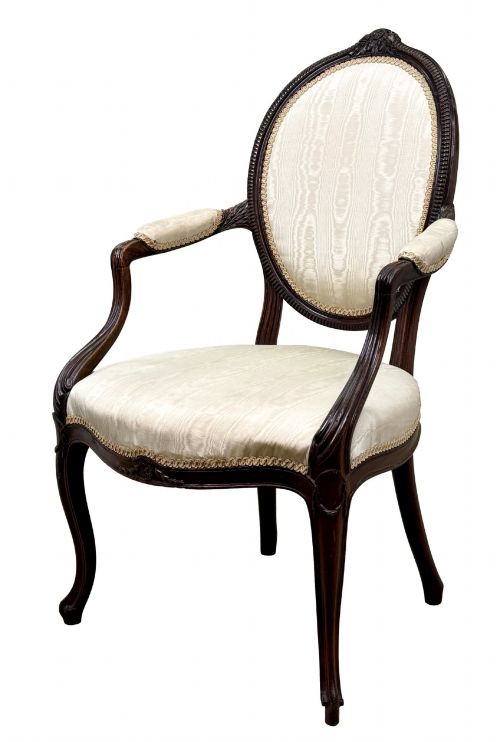


French Country Desk Chair
A french country desk chair brings tactile warmth and carved provincial character to a working space, offering authentic period seating.
French Country Desk Chair
When you search for a french country desk chair, you encounter a selection of seating rooted primarily in eighteenth and nineteenth century vernacular traditions. These examples cross paths with French provincial styles, Louis XV designs, and even Georgian influences as recorded in current listings.
The objects most frequently met on this page take the form of open armchairs, fauteuils, and salon chairs. Walnut, fruitwood, and mahogany form the structural backbone of these pieces, often paired with visible hand carving and traditional upholstery fabric.
Originating predominantly from French workshops across various historical periods, these chairs combine domestic utility with regional aesthetic values. A buyer encounters everything from seventeenth-century inspired fruitwood frames to later nineteenth-century decorative seating suitable for study use.
How they were made
Maker construction relies heavily on native timbers such as walnut and fruitwood, shaped through traditional joinery and hand carving. Carpenters selected these hardwoods for their structural integrity and capacity to hold intricate decorative details along the frame.
Upholstered surfaces utilise period textiles including silk and various upholstery fabrics, secured to the wooden frames by hand. Surface finishing often involves natural polishes that enhance the grain and patina of the underlying wood over decades of handling.
Fruitwood chairs often carry the subtle scent of old wax and wood polish after centuries of close domestic company.
What varies in quality
The sophistication of the frame proportions and the integrity of the original joinery dictate the standing of an individual piece. Finer examples display harmonious lines and balanced decorative motifs that reflect the standards of their original period.
The French Country Desk Chair Glossary
- Fauteuil
- An open armchair with upholstered back and arms, featuring exposed wooden framing. This form is central to traditional French seating design.
- Patination
- The surface sheen and colour acquired by wood through age and use. Good patination indicates authentic historical weathering.
- Fruitwood
- Timber sourced from fruit-bearing trees such as pear or cherry, commonly utilised in provincial furniture making. It offers a warm tone and fine grain.
- Salon chair
- A smaller, decorative seating option designed for reception rooms rather than heavy daily dining. These pieces prioritise refined proportions and aesthetic detail.
French Country Desk Chair: Frequently Asked Questions
Are these chairs comfortable for daily desk work?
Many examples provide supportive upholstered seating and ergonomic arm heights suited for writing or administrative tasks.
Buyers often select them for home studies to combine functional seating with period interior character.
How do I identify an eighteenth century piece?
Dating relies on examining the construction marks, timber choice, and the specific hand-carved stylistic details of the frame.
Earlier pieces typically show characteristic tool marks and specific regional design traits associated with Georgian or French provincial makers.
What woods were commonly used?
Makers utilised local hardwoods including walnut, fruitwood, and mahogany depending on the regional tradition and period.
These materials provided the necessary strength for curved arm structures and detailed relief carving.
Can I use modern fabric for reupholstery?
Reupholstering in contemporary textiles is common practice to match existing interior colour schemes while preserving the antique frame.
Traditional methods and materials can also be specified to maintain historical accuracy for higher-tier pieces.