



French Country Coffee Table
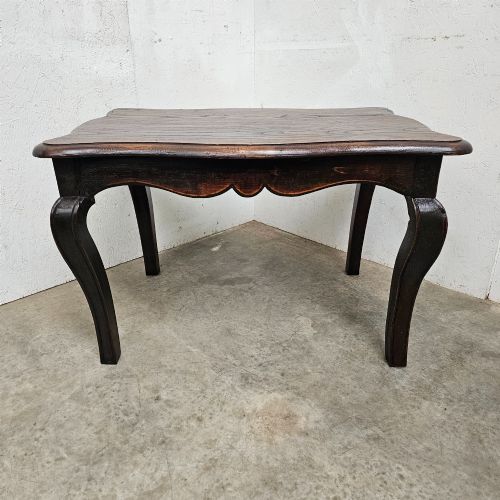
These french country coffee table pieces bring provincial warmth and low-slung utility into a sitting room.
What these pieces are
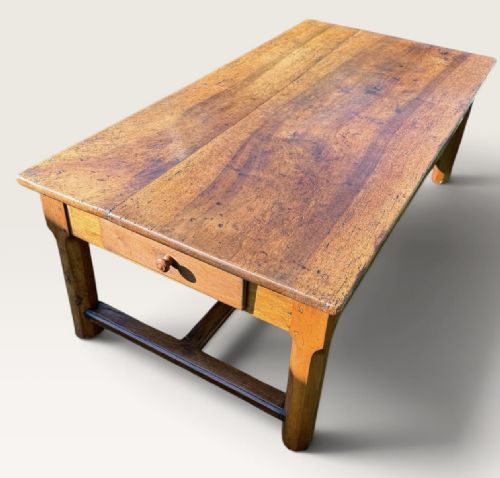
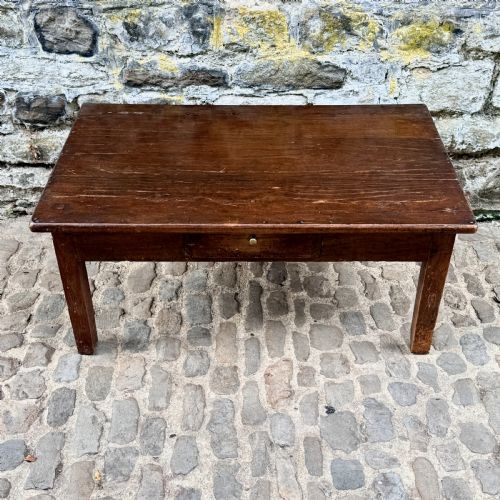
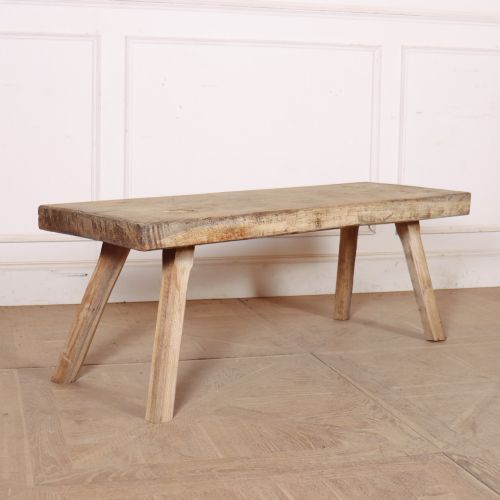
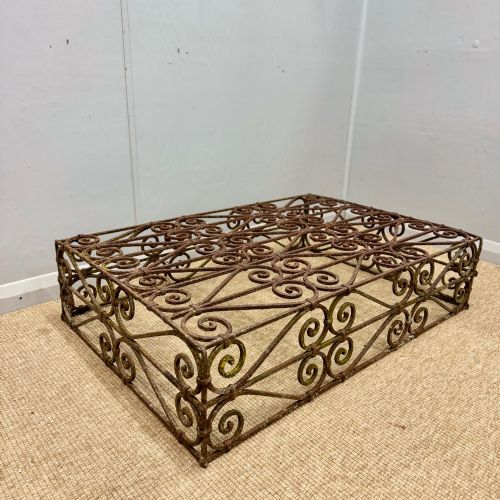
A french country coffee table serves as a low surface for daily use, grounded in provincial and rustic farmhouse traditions. These pieces appear in forms ranging from low tables and side tables to repurposed coffers, dough proving boxes, and work benches.
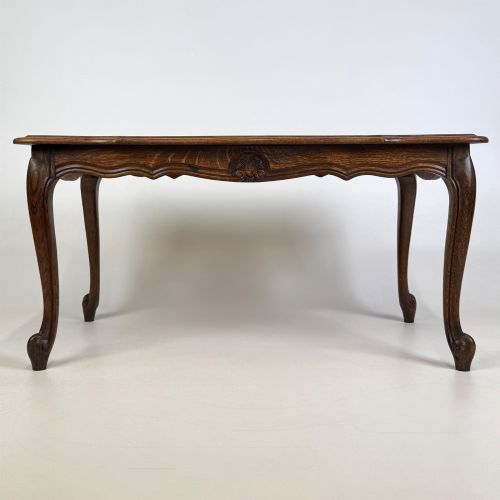
The material palette draws heavily on regional hardwoods, with oak, chestnut, cherrywood, walnut, fruitwood, and sycamore dominating the construction. Pieces span the nineteenth century up to around nineteen hundred, alongside occasional earlier examples from the late eighteenth century.
Buyers meet variations that include single drawer additions, stamped makers marks, hand painted finishes, and bleached surfaces. The overarching aesthetic remains low, robust, and suited to provincial domestic settings.
How they were made
Joiners built these tables from solid regional timbers including oak, chestnut, and cherrywood, selecting woods for local availability and hard-wearing utility. Construction methods relied on traditional joinery suited to heavy provincial furniture.
Surfaces show the natural grain of fruitwood, walnut, and sycamore, occasionally finished with hand painting or a bleached treatment. Structural elements like integrated drawers and dovetailed boxes reflect practical workshop standards of the period.
Retail Price Guide 2026
Typical UK retail prices for french country coffee table, calculated from the Sellingantiques database of over a million retail prices indexed since 2003. This retail price guide relies exclusively on Sellingantiques data; no external sources or auction records are used, so the figures do not describe the wider market.
Listings feature oak, chestnut, cherrywood, walnut, fruitwood, and sycamore across pieces dated from the eighteenth to the early twentieth century.
What varies in quality
The distinction between standard provincial items and finer examples lies in the selection of timber and the subtlety of the timber finishing. Heavier, substantial pieces in oak or cherrywood display a more resolute presence than lighter, utilitarian builds.
The French Country Coffee Table Glossary
- Provincial
- Denoting items originating from the regions outside Paris, characterised by practical regional designs and local timber use. This style defines much of the country furniture found today.
- Dough proving box
- A deep wooden coffer or chest originally used for resting bread dough before baking. Many are adapted into low tables with hinged lids.
- Bleached oak
- Timber treated to lighten its natural dark tone, creating a pale, neutral surface favoured in nineteenth century decorative schemes. This finish highlights the grain while softening the overall appearance.
- Fruitwood
- An umbrella term for timber harvested from fruit-bearing trees such as pear or apple, prized for a warm tone and fine grain. It appears frequently in smaller provincial low tables.
- Work bench
- A heavy utilitarian table designed for manual trades, now repurposed as a coffee table for its robust proportions and weathered surface. These items carry deep working patination from daily use.
Frequently Asked Questions
What is a french country coffee table?
These are low wooden tables originating from provincial regions, often adapted from earlier domestic furniture like work benches or dough boxes.
They rely on solid regional hardwoods and exhibit straightforward, utilitarian construction suited to rustic interiors.
Which woods were used?
Makers utilised local timbers including oak, chestnut, cherrywood, walnut, fruitwood, and sycamore.
The choice of wood usually depended on the specific region of France where the piece was constructed.
How do I date these tables?
Dating relies on construction methods, timber patination, and stylistic markers aligning with the nineteenth century or earlier periods.
Stamped marks and specific hardware can also help narrow down the age of individual pieces.
Are all these tables purpose-built?
Not every piece started life as a coffee table, as many listings include repurposed coffers, work benches, and dough proving boxes.
These items were lowered or adapted over time to serve modern living spaces while retaining their original material character.
How do I care for the surface?
Maintain the wood by avoiding excessive moisture and applying natural waxes suited to antique hardwoods.
Allowing the natural patination to breathe preserves the historic surface texture of the fruitwood or oak.