


French Console Card Table
A french console card table transforms from a slender pier piece into a social surface, pairing Continental elegance with the practicality of an evening's entertainment.
French Console Card Table
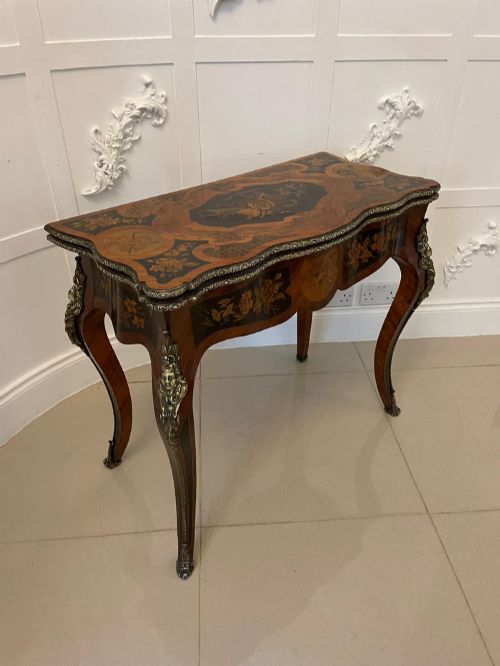
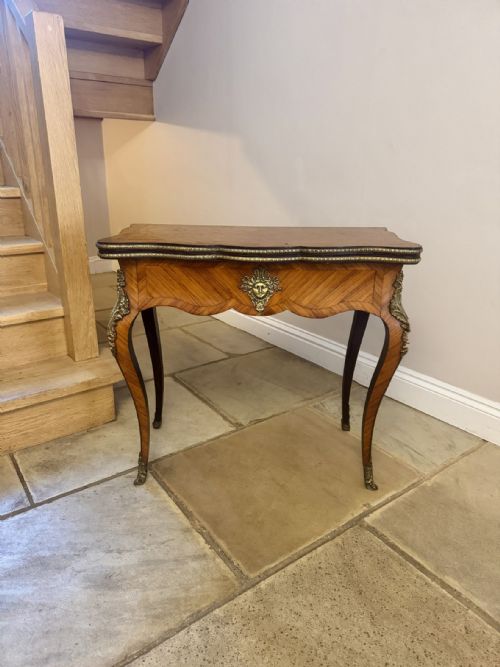
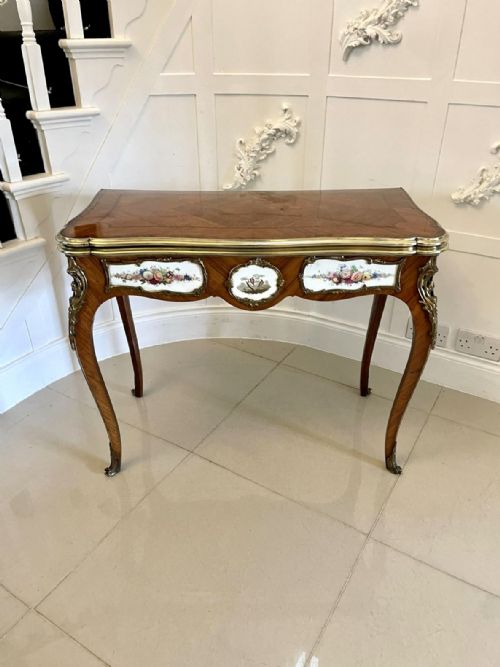
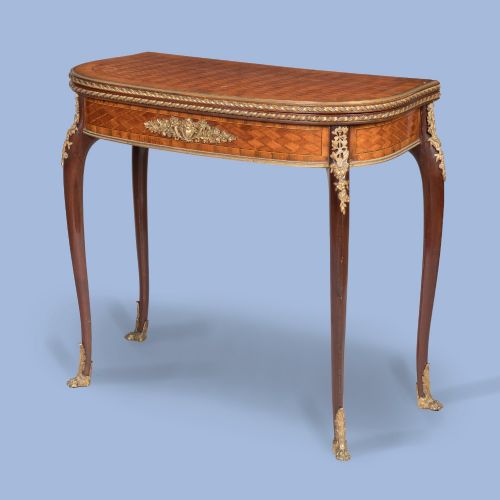
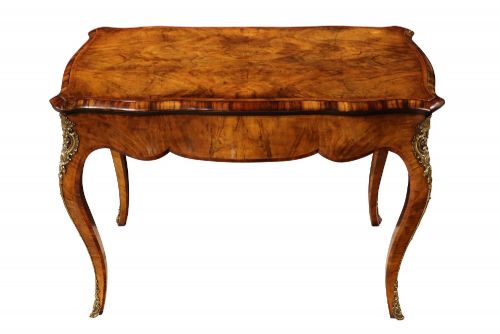
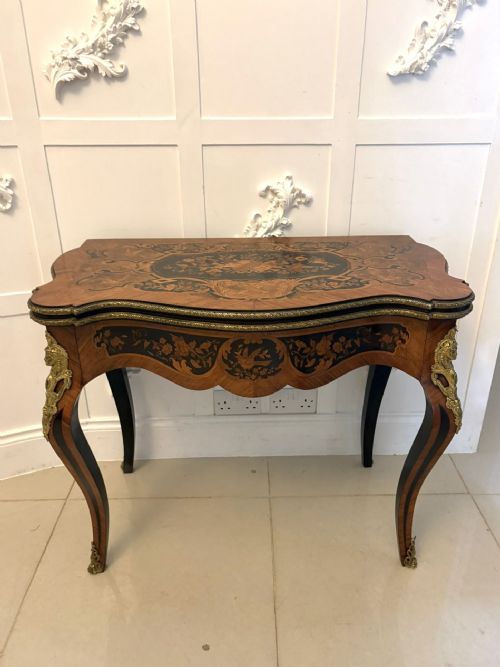
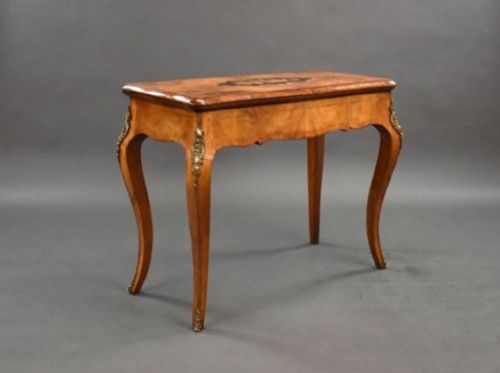
A french console card table functions as a dual-purpose item of furniture, designed to stand flat against a wall as a decorative console before opening its hinged top to reveal a baize-lined surface for cards and games. On this page, the form appears most frequently in nineteenth-century interpretations of Louis XV and Louis XVI revivals, alongside mid-Victorian variations.
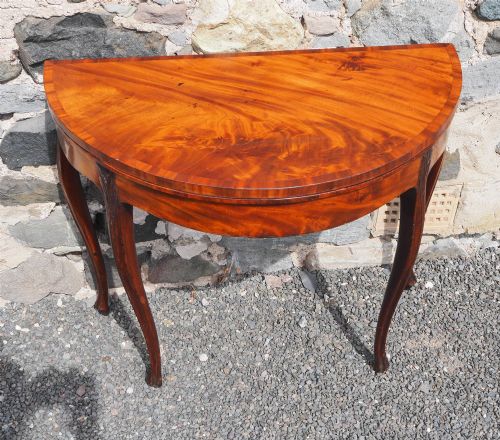
The architectural shape shifts from serpentine and demi-lune silhouettes to straight-edged rectangular forms. Many examples bridge the gap between a side table and a dedicated games table, utilising clever folding or pivoting mechanisms to double their surface area when required.
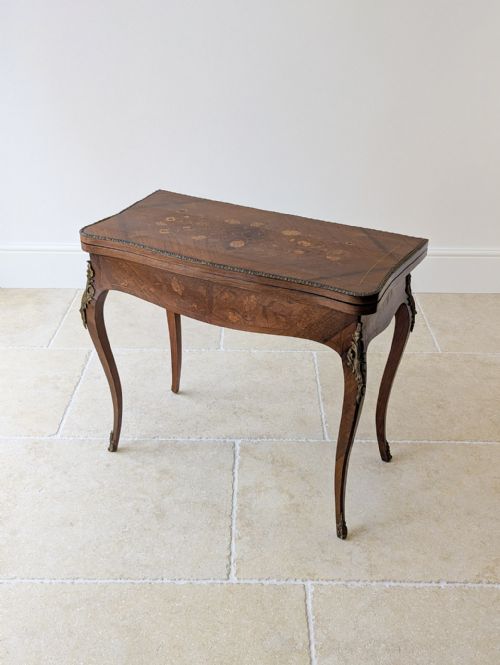
Origins span Parisian workshops and English interpretations built in the French taste, incorporating styles that reference eighteenth-century court furniture. Buyers seeking this phrase encounter pieces that rely heavily on continental proportion, curvilinear aprons, and slender cabriole legs.
How they were made
Cabinetmakers built the structural carcases using native timbers like walnut, mahogany, and rosewood, then overlaid them with decorative veneers including kingwood, burr walnut, and amboyna. Marquetry and parquetry patterns set these surfaces apart, arranging exotic woods and mother-of-pearl in geometric or floral motifs.
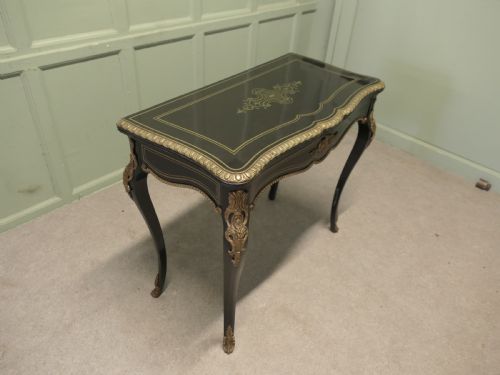
Gilt bronze and ormolu mounts punctuate the corners, aprons, and legs, providing crisp metallic contrast to the warm timber tones. Ebonised finishes often incorporate delicate brass inlay, while select pieces integrate porcelain plaques or boullework into the top surface.
The archive reveals that pairs of console card tables appear alongside individual pieces, spanning the Victorian era and the eighteenth century.
What varies in quality
The calibre of a piece rests primarily in the crispness of its bronze casting and the precision of its wood veneers. Hand-chased ormolu mounts with deep relief and sharp detail sit far above mass-produced, soft-cast alternatives.
Construction fidelity shows in the movement of the fold-over top, where hinges align flush and the pivoting mechanism operates without lateral play. Marquetry execution also dictates value, with intricate floral and geometric patterns requiring patient hand-cutting rather than simplified stamped veneers.
G T Morant·François Linke·Maison Mottheau·Joseph-Emmanuel Zwiener·Maison Millet·Edwards & Roberts·Henry Dasson
The French Console Card Table Glossary
- Ormolu
- Gilded bronze mounts applied to furniture edges and legs. This decorative technique added sculptural weight and metallic sheen to nineteenth-century revival pieces.
- Marquetry
- The art of forming decorative patterns by fitting together small pieces of wood veneer. Artisans utilised contrasting exotic timbers to create floral or geometric table tops.
- Boulle
- A style of marquetry utilising tortoiseshell and brass inlay. Developed in France, this technique created shimmering surface patterns across ebonised wood carcases.
- Demi-lune
- A half-moon shape characteristic of console tables. This profile allowed furniture to sit flush against a wall while conserving floor space.
- Parquetry
- Geometric wood inlay forming repetitive patterns such as cubes or chequers. This technique highlighted the natural grain variations of kingwood and walnut.
French Console Card Table: Frequently Asked Questions
How do I use a console card table?
These tables sit flat against a hallway or drawing room wall as a decorative console when closed. Opening the hinged top reveals a baize-lined playing surface for cards.
When not in use for games, the folded top rests securely on pivoted legs or a swinging rear gate, maintaining a compact footprint in the room.
How do I tell Louis XV from Louis XVI style?
Louis XV style pieces rely on asymmetrical curves, flowing cabriole legs, and elaborate rococo ormolu mounts. The overall silhouette feels organic and undulating.
Louis XVI style shifts toward neoclassical symmetry, featuring straight fluted legs, rectangular proportions, and architectural motifs like Greek keys or urns.
Can I place items on the fold-over top?
The hinged top functions well for lamps, decorative bowls, or small sculptures when the table is closed against the wall. The underlying support structure safely bears everyday decorative loads.
Before opening the table for use, clear the surface entirely to allow the leaf to swing open smoothly on its hinges without strain.
What is boulle work?
Boulle work is an intricate form of marquetry combining cut brass and tortoiseshell inlay across an ebonised wood carcase. It creates a striking contrast of metallic and organic textures.
Named after the French cabinetmaker André-Charles Boulle, this technique enjoyed a major revival during the nineteenth century on side and games tables.