



French Coiffeuse Table
A french coiffeuse table combines intimate personal grooming with exceptional cabinet-making, offering folded mirrors and concealed compartments designed for the dressing room.

French Coiffeuse Table
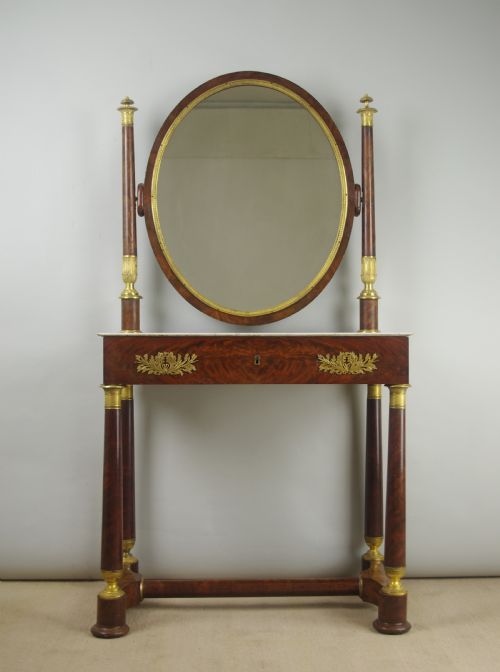
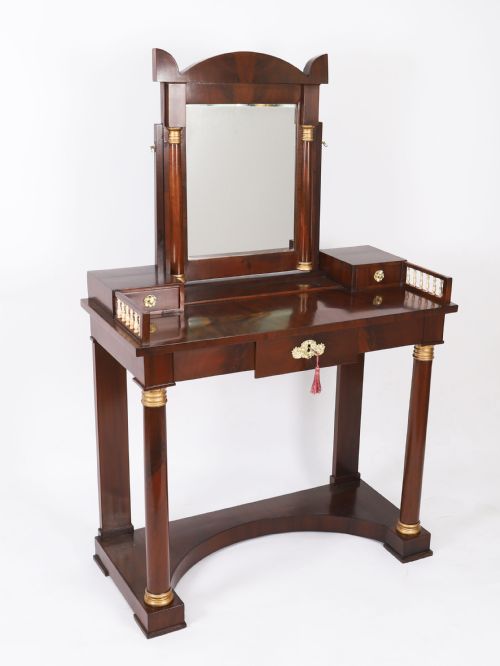
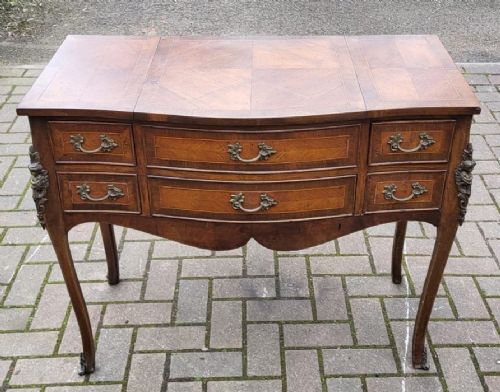
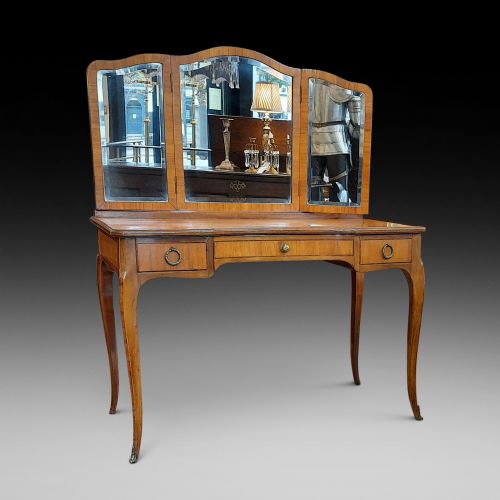
When searching for a french coiffeuse table, a buyer enters the world of Continental dressing furniture created for personal toilette. These pieces typically take the form of dressing tables or side tables designed with integrated mirrors and compartments.
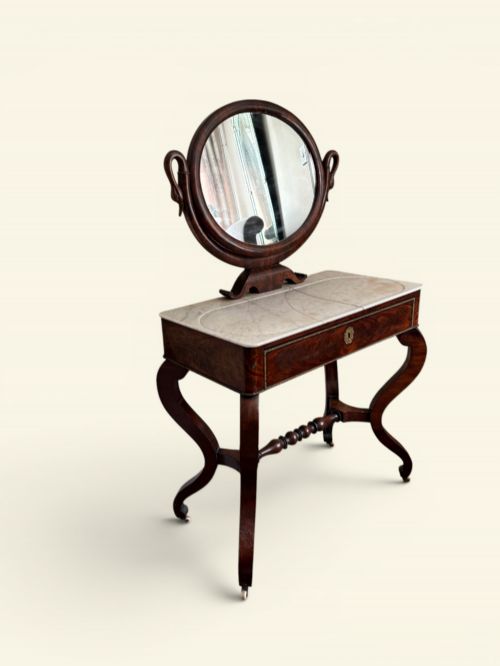
The versions met most frequently on this page span the eighteenth, nineteenth, and early twentieth centuries. They range from formal neoclassical designs to serpentine revival forms.
How they were made
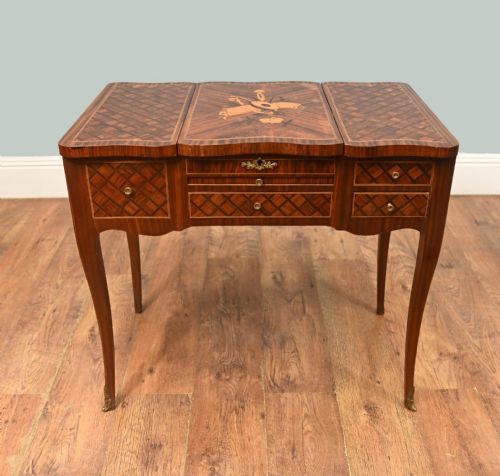
Cabinet-makers utilised dense hardwoods such as mahogany, kingwood, rosewood, walnut, and tulipwood as foundational structures. These woods often received elaborate marquetry inlay or crossbanded veneers to create decorative patterned surfaces.
Metal ornament played a defining role in the construction of these pieces, incorporating brass, ormolu, and gilt bronze mounts. Marble tops frequently provided a durable, cooling surface for the daily routine of the dressing table.
Mirrors formed an integral part of the assembly, sometimes folding down into the body of the furniture or rising on pivoting brass frames above the main surface.
French Coiffeuse Table Retail Price Guide 2026
Typical asking prices for french coiffeuse table among the pieces listed under this phrase on Sellingantiques today, from the lower quarter to the upper quarter. They describe what is for sale here now, not the wider market.
Many of these tables hide their mirrors until you lift the lid, as if playing a polite game of hide-and-seek with your reflection.
What varies in quality
The standard of a coiffeuse rests largely on the fidelity of its stylistic execution and the crispness of its mounts. Hand-chased ormolu and fine gilt bronze show distinct depth compared to simpler cast brass applications.
Timber selection and veneer matching dictate the visual harmony of the piece, particularly where complex marquetry or tulipwood inlay patterns meet. Superior cabinet-making is evident in the seamless integration of folding mirror mechanisms and smooth drawer operation.
Maison Pretot Paris
The French Coiffeuse Table Glossary
- Coiffeuse
- A French dressing table designed for hair styling and cosmetics. It usually incorporates a mirror and lidded compartments.
- Ormolu
- Gilding technique involving the application of finely ground high-carat gold to a bronze object. It provides rich decorative mounts on nineteenth-century furniture.
- Kingwood
- A dense, heavily figured exotic timber utilised in fine cabinet-making. It appears frequently in crossbanded and veneered surfaces.
- Marquetry
- The art of applying pieces of veneer to a structure to form decorative patterns. It creates pictorial or geometric designs across the tabletop.
French Coiffeuse Table: Frequently Asked Questions
What is a french coiffeuse table?
A french coiffeuse table is a specialised dressing table designed for personal grooming and cosmetic storage. These pieces typically feature integrated mirrors and small compartments intended for brushes, powders, and bottles.
Originating in France, they evolved through various decorative periods from the eighteenth century into the early twentieth century. Their forms combine practical tabletop space with intricate cabinetry and ornamental metalwork.
How were these tables used originally?
These tables served as the primary station for morning toilette and personal preparation in wealthy households. Ladies sat at them to arrange hair, apply cosmetics, and store jewellery.
The folding mechanisms and internal compartments kept personal items hidden when the table was not in active use. Side tables and dressing tables provided surfaces for grooming tools and decorative porcelain accessories.
How do I identify a Louis XV style piece?
Louis XV style pieces are characterised by asymmetrical curves and flowing serpentine lines. Cabinet-makers avoided straight edges, favouring organic cabriole legs and floral or scroll motifs.
Revival versions from the nineteenth century adopted these same sweeping contours, often pairing them with kingwood veneers and delicate ormolu mounts.
Where should I place a dressing table?
A dressing table functions well in a bedroom or dressing room where natural light aids personal grooming. Placing the piece near a window highlights the polished mahogany, marble top, and gilt bronze mounts.
They also adapt easily to living spaces as decorative side tables or console surfaces. The enclosed mirrors allow the top to remain clean and uncluttered.