





French Classic Bronze Sculpture
French classic bronze sculpture brings heavy metal figures, animals and mythological subjects into the room, cast in the nineteenth century.
French Classic Bronze Sculpture
When you search for french classic bronze sculpture, you enter a field populated by nineteenth century figures, mythological subjects, putti and animals. The pieces range from table lamps to decorative sculptures and figural groups.
Most examples on this page date from the nineteenth century, including pieces from the eighteen-eighties and eighteen-nineties. You will encounter Neoclassical compositions, animalier studies and academic works.
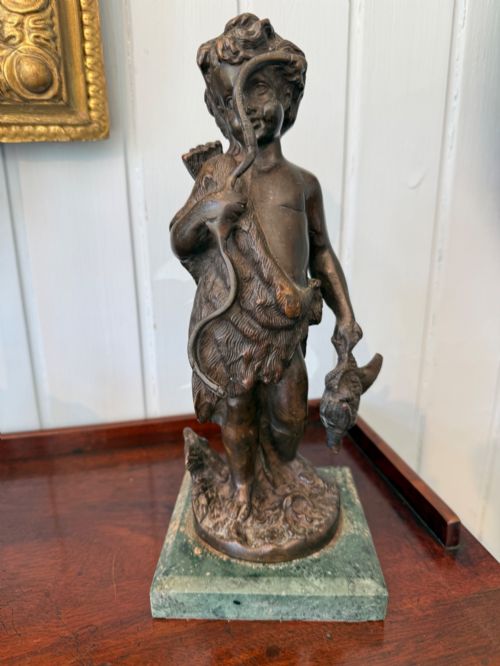
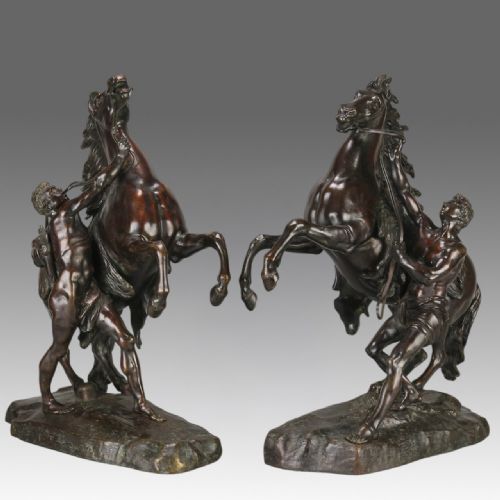
Subjects span from cherubs and nymphs to hunting dogs and lions, often cast after famous models or signed by established makers. The forms vary from single standing figures to pairs of horses and complex groups.
How they were made
Foundries produced these works using bronze, often enhancing the surfaces with a dark patina or gilt bronze finishes. Many figures incorporate marble bases or wooden elements to support the weight of the metal.
Casting methods allowed for fine detail in hair, drapery and musculature, which sculptors then refined by hand. Signatures and foundry marks frequently appear directly in the bronze surface.
Several figures spend their time holding fishing rods, bows or lamps.
What varies in quality
Quality rests upon the crispness of the chase work and the subtlety of the patina, where finer casts retain sharp details in facial expressions and textures. The depth and warmth of the dark patina or gilding separate superior examples from routine production.
The reputation of the sculptor and the standing of the foundry dictate the desirability of a piece. Signed works associated with known makers demonstrate a higher level of artistic ambition in the modelling.
Henri Godet·Auguste Nicholas Cain·Al Barye·Barbedienne·Ferrand·Lavergne·Francisque Joseph Duret
The French Classic Bronze Sculpture Glossary
- Patina
- The surface coloration and finish applied to the bronze, ranging from deep dark tones to gilded highlights. This layer protects the metal and defines the visual texture of the sculpture.
- Animalier
- A nineteenth century style focused on the realistic depiction of animals, particularly hounds, lions and horses. Sculptors in this tradition studied anatomy closely.
- Neoclassical
- An artistic movement drawing inspiration from classical antiquity, reflected in the balanced compositions and mythological themes of these sculptures. Figures often adopt classical postures and drapery.
- Cast
- The process of pouring molten bronze into a mould to form the sculpture. Finer casts show minimal surface flaws and require extensive hand finishing.
- Putto
- A representation of a small winged infant or cherub, frequently seen holding bows, lamps or flowers in nineteenth century decorative bronzes.
French Classic Bronze Sculpture: Frequently Asked Questions
How do I identify the age of a bronze sculpture?
Look to the style of the casting, the signature conventions and the nature of the patina. Nineteenth century pieces often carry foundry marks and specific patination techniques typical of the period.
Examine the base materials as well, since marble and wood mounts frequently match nineteenth century workshop practices.
What is an animalier bronze?
An animalier bronze is a sculpture dedicated to the realistic portrayal of animals. These works capture creatures in motion or repose, reflecting nineteenth century interest in natural history.
Artists such as Barye and Cain specialised in this demanding genre.
Why do some bronzes have a dark patina while others are gilt?
Foundries applied different chemical treatments to achieve specific visual effects. A dark patina highlights muscular definition and shadow, whereas gilt bronze introduces bright decorative contrast.
Both finishes were common in nineteenth century French production depending on the intended interior setting.
How should I care for a bronze sculpture?
Dust the surface gently with a soft dry cloth to prevent grime accumulation. Avoid using chemical cleaners or abrasive polishes that might strip the original patina.
Keep the piece away from direct heat sources and excessive moisture to protect any marble or wooden bases.