




French Chenets Firedogs
These French chenets firedogs are hearth furniture built to support logs and warm a room with classical style.
French Chenets Firedogs
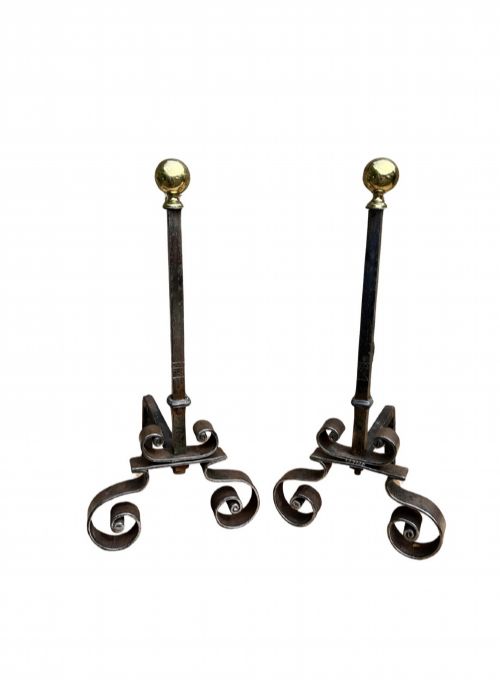
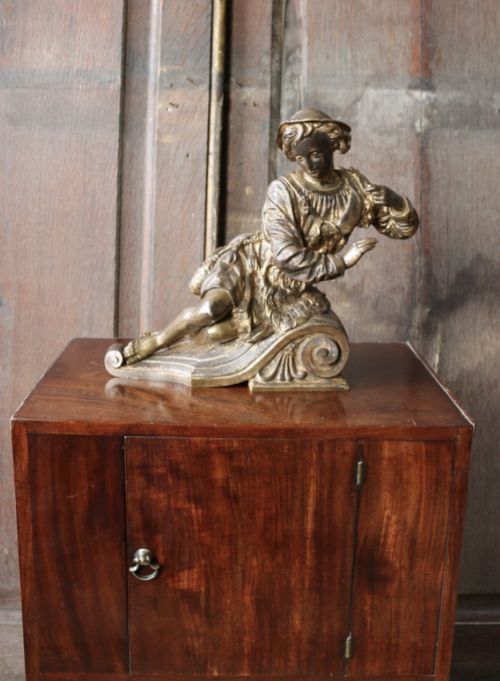
When you search for french chenets firedogs, you are looking at functional hearth furniture designed to hold firewood off the hearth floor and improve the draught. The pieces on this page span the eighteenth and nineteenth centuries, taking forms such as figural andirons, fire dogs, and tool rests.
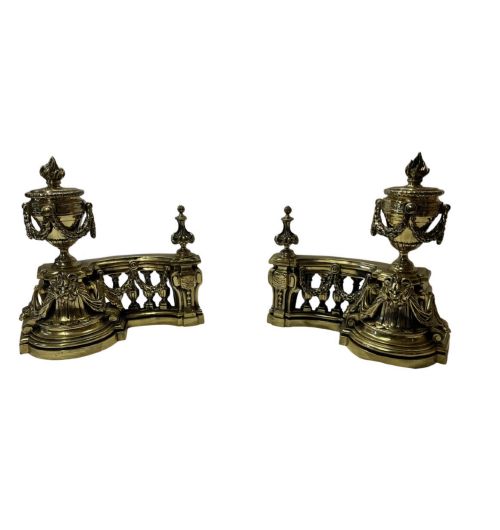
You are most likely to meet nineteenth-century pairs rendered in brass, bronze, and ormolu, often following Louis XV, Louis XVI, or Baroque styles. These sturdy metal supports sit at the front of the hearth, frequently paired with matching chenets or fire iron rests.
Originating primarily from French workshops, these items bring decorative metalwork directly into the domestic interior. Their forms range from simple brass bars to elaborate figural statuettes cast in gilt bronze and patinated bronze.
How they were made
The construction of french chenets firedogs relies heavily on metal casting techniques using brass, bronze, and iron. Artisans poured molten metal into moulds to create the heavy horizontal bars and vertical ornamental standards necessary to bear the weight of burning logs.
Surface decoration often involves fire gilding or ormolu work, applying a fine layer of gold amalgam to bronze components to achieve a lasting metallic lustre. Patinated bronze surfaces appear alongside polished brass, showing the varied methods metalworkers used to contrast dark and bright tones on the same piece.
French Chenets Firedogs Retail Price Guide 2026
Typical asking prices for french chenets firedogs among the pieces listed under this phrase on Sellingantiques today, from the lower quarter to the upper quarter. They describe what is for sale here now, not the wider market.
Periods represented in the inventory include eighteenth-century, nineteenth-century, and Georgian eras, alongside specific dates such as 1750, 1800, 1850, 1860, 1870, 1880, 1890, 1900, and 1920.
What varies in quality
The standard of chasing and finishing on the metal surfaces distinguishes finer examples from simpler production. Crisp detail in figural statuettes and ornamental scrollwork shows the hand of a skilled artisan rather than a generic foundry cast.
Weight and metal gauge also separate sturdier hearth furniture from lighter decorative pieces. Heavier bronze and ormolu components provide both structural stability for holding timber and a deeper sense of presence in the room.
The French Chenets Firedogs Glossary
- Chenet
- An alternative term for an andiron, used widely in France to describe the ornamental metal supports placed on a hearth. They often feature decorative finials or figural mounts facing into the room.
- Ormolu
- Gilded bronze produced by applying a mercury and gold mixture to a bronze base and heating it to leave a rich gold coating. This technique was widely utilised in French decorative arts during the eighteenth and nineteenth centuries.
- Andiron
- A horizontal metal bar raised on legs, with a vertical pillar at the front, used to support logs in an open fireplace. Pairs of these items form the core of traditional hearth furniture.
- Patinated bronze
- Bronze that has been chemically treated to develop a darkened surface colour, providing contrast against bright ormolu mountings. This finish highlights the sculptural details of figural castings.
- Rococo
- An ornate design style characterised by asymmetrical scrollwork, C-curves, and naturalistic shell motifs. It appears frequently on nineteenth-century revivals of earlier French hearth equipment.
French Chenets Firedogs: Frequently Asked Questions
What are french chenets firedogs used for?
These metal supports sit inside an open fireplace to hold logs above the hearth floor. Raising the wood allows air to circulate underneath, helping the fire to burn more efficiently while protecting the masonry.
Beyond their utility, the decorative front standards project into the room to provide visual warmth and style. They function as both structural hearth hardware and sculptural ornaments.
How do I clean and maintain them?
Dust bronze and brass surfaces regularly with a soft, dry cloth to prevent soot and ash buildup. Avoid abrasive polishes that can wear away historic patination or thin ormolu gilding.
If the metal requires attention, use a mild cleaner suitable for the specific material, testing a small area first. Keeping them away from excessive moisture protects iron components from rust.
How can I tell different periods apart?
Earlier eighteenth-century examples often display restrained casting and hand-finished chasing typical of period workshops. Nineteenth-century revival pieces frequently adopt bolder Louis XIV, Louis XV, or Baroque motifs with heavier mechanical finishing.
Examining the underside, fixing bolts, and metal composition helps indicate the age of manufacture. Patination and wear patterns also offer clues to how long a piece has been used.
Do I need a large fireplace for them?
The scale of french chenets firedogs varies considerably, from compact brass pairs suitable for smaller grates to large bronze and ormolu sets designed for substantial chimney breasts. Measuring the depth and width of your hearth ensures the pieces fit comfortably without overcrowding the space.
Consider the clearance needed for fire irons and logs when selecting a pair. Properly proportioned hearth furniture balances the opening of the fireplace.