


French Carved Oak Armoire
A french carved oak armoire brings substantial storage and rustic craftsmanship into a room through heavy timber and deep relief work.
French Carved Oak Armoire
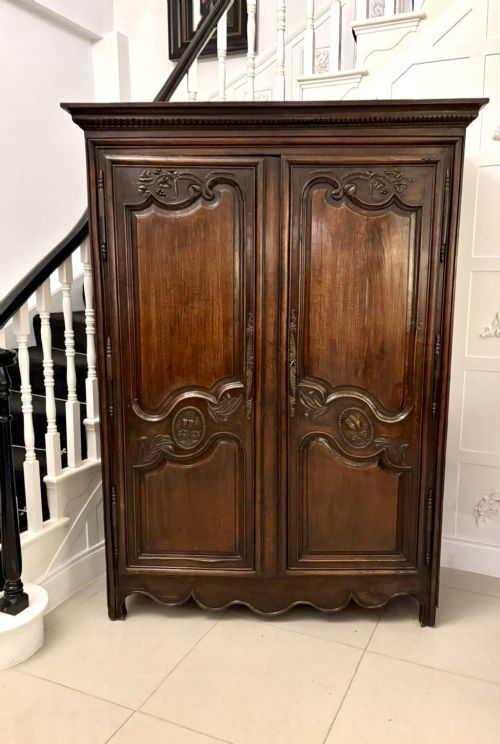
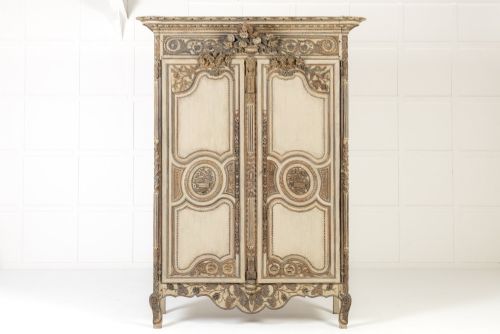
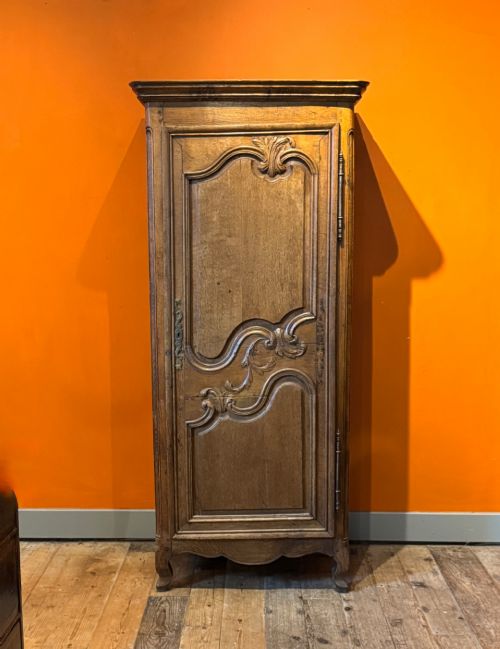
A french carved oak armoire stands as a monumental storage piece originating from various regional workshops across France, spanning centuries of domestic architecture. Buyers pursuing this category encounter robust double and triple door wardrobes alongside smaller single door bonnetieres and regional cupboards.
The pieces appearing most frequently range from provincial 18th century examples to later interpretations from the 19th and early 20th centuries. These large storage items frequently display regional characteristics, from the flowing curves of Louis XV taste to the distinct regional motifs of Brittany and Normandy.
Beyond standard wardrobes, the selection incorporates related forms such as buffets, vitrines, and larder cupboards sharing the same heavy timber construction. Each variation serves the primary function of large-scale containment while exhibiting regional decorative traditions.
Construction and Materials
Makers relied primarily on solid oak, supplemented occasionally by chestnut or walnut for specific elements, building frames with pegged mortise and tenon joints. Panels were set into grooved frames to accommodate seasonal wood movement without splitting the primary structure.
Metalwork played a functional and decorative role, with wrought iron hinges and brass escutcheons securing heavy doors and providing contrast to the dark or bleached timber surfaces. Surfaces were often left natural, painted, or waxed, depending on the period and regional preference.
Listings feature centuries ranging from the 17th to the 20th, constructed primarily in oak with iron and brass hardware.
Assessing Quality
Depth and crispness of the hand carving separate mass-produced or later pieces from superior early examples, where floral or scrollwork flows naturally with the grain. The integration of structural panels into the overall architectural proportion dictates the visual balance of the piece.
Originality of the hardware, including hinges, locks, and handles, contributes significantly to the integrity of the cabinet. Furthermore, the retention of original backboards, internal shelving, and untouched surface patination distinguishes superior survivors from heavily restored examples.
The French Carved Oak Armoire Glossary
- Armoire
- A large wardrobe or cupboard used primarily for hanging clothes or storing household linens. These tall cabinets usually feature one or more full-length doors.
- Bonnetiere
- A single-door cabinet originally designed for storing bonnets and hats. These narrower pieces often share the carving styles of larger wardrobes.
- Mortise and tenon
- A traditional joint where a projecting tongue fits snugly into a matching cavity to lock two pieces of timber together at a right angle. This method provides immense structural strength without relying on modern fasteners.
- Escutcheon
- A protective plate surrounding a keyhole, often fashioned from brass or wrought iron. It guards the surrounding wood from wear and adds a decorative focal point to the door panel.
French Carved Oak Armoire: Frequently Asked Questions
What rooms suit a large armoire?
These imposing cabinets fit well in spacious bedrooms or hallways where their substantial height and depth can be accommodated without overwhelming the floor plan. They provide generous vertical storage for clothing, linens, or household goods while anchoring the room visually.
Placement requires careful measurement of ceiling height and clearance for the heavy doors to swing fully open. Placing them against a primary wall allows the carved details and timber grain to become a central decorative feature.
How do I distinguish 18th-century pieces?
Eighteenth-century examples typically display hand-cut joinery, pegged framing, and deeper patination acquired through generations of waxing and use. The proportions often reflect regional provincial workshops rather than standardised factory production.
Examining the interior backboards and iron hinges reveals the handmade nature of early construction. Tool marks and subtle irregularities in the symmetry confirm the age and authentic period manufacture of the timber.
Can these wardrobes be dismantled?
Many traditional examples were built to be taken apart for transport and reassembly in homes with low doorways or narrow staircases. Pegged frames and knock-down construction allowed historical craftsmen to move heavy furniture between rooms.
Checking the internal corners and cornice reveals whether the top, sides, and base separate independently. Modern buyers should verify the assembly mechanism before attempting to move the cabinet.
How should I care for antique oak?
Maintaining the wood involves applying a quality natural wax periodically to nourish the dry timber and preserve the surface sheen. Avoiding direct sunlight and extreme humidity changes prevents the heavy panels from warping or splitting.
Dusting regularly with a soft cloth keeps the carved recesses clean without abrasive cleaners. Treating the timber gently ensures the historic finish and natural patina endure for decades.