
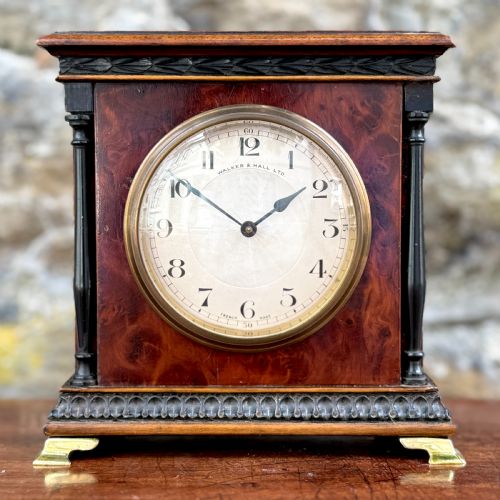
French Carved Hall Table
A french carved hall table brings Continental architectural presence to an entrance, offering a sturdy surface framed by intricate woodwork.
French Carved Hall Table
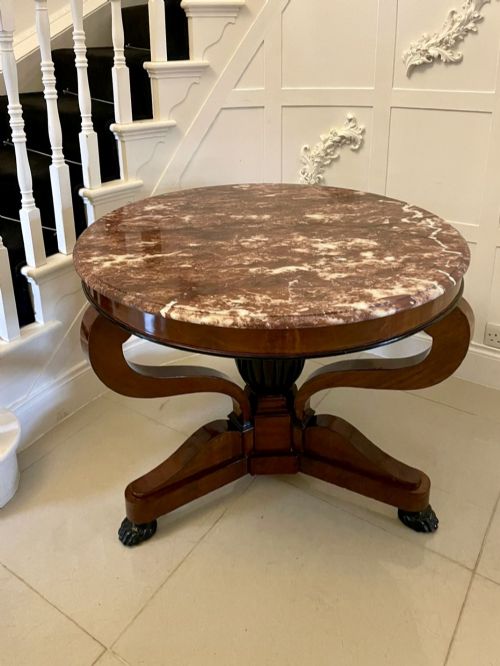
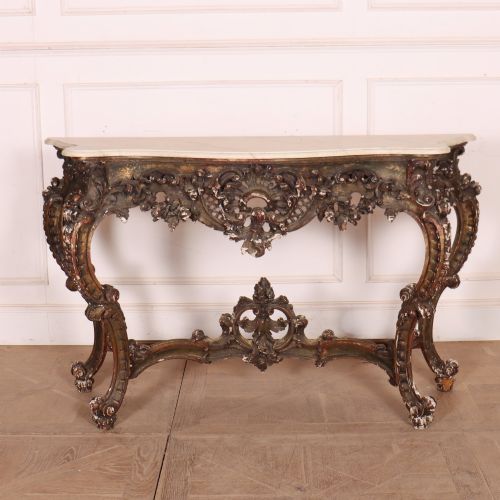
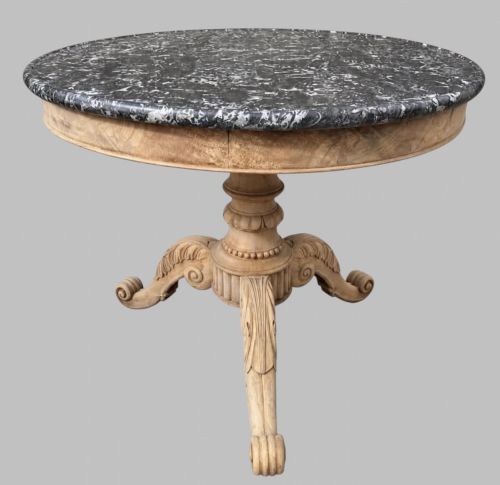
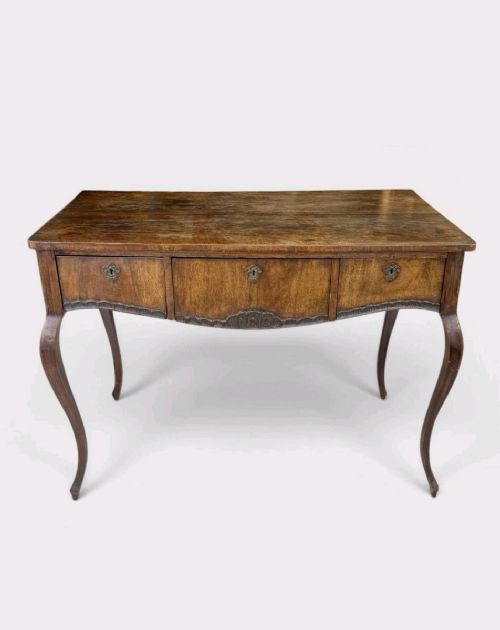
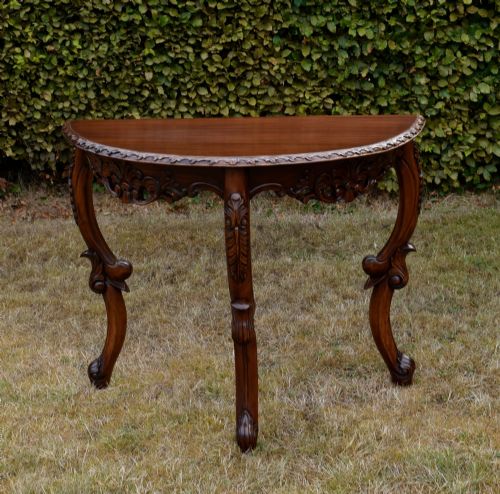
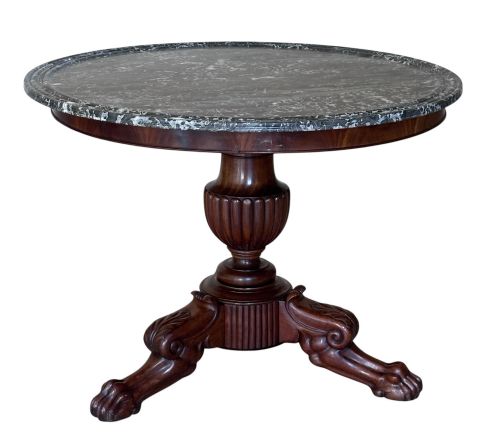
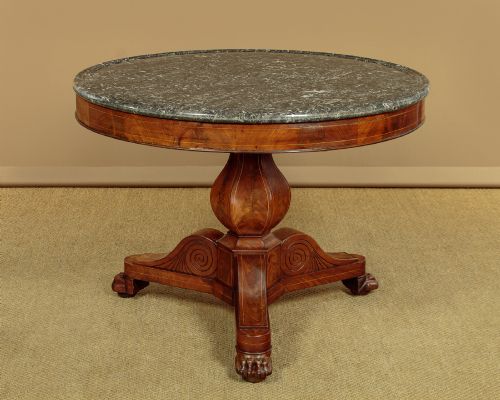
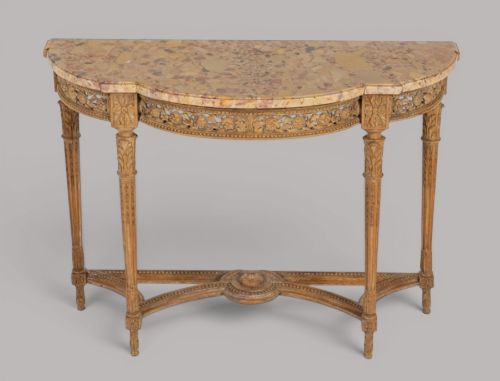
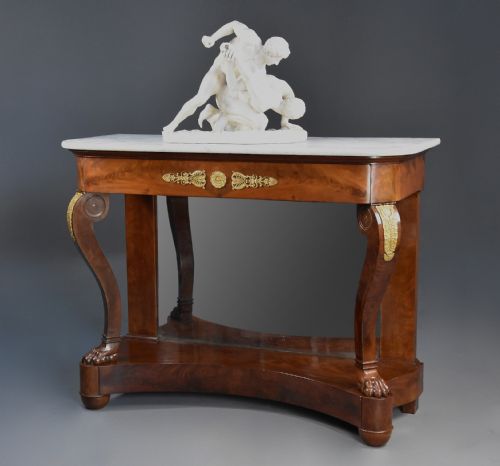
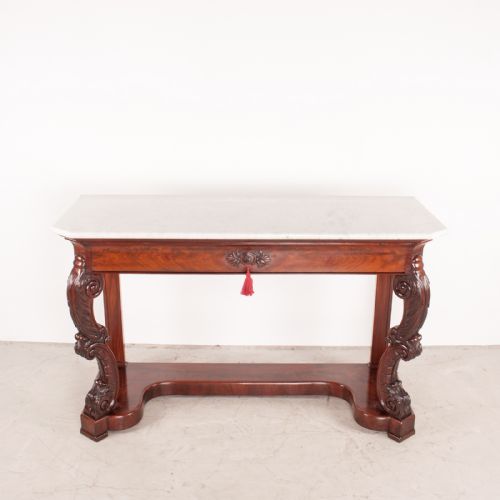
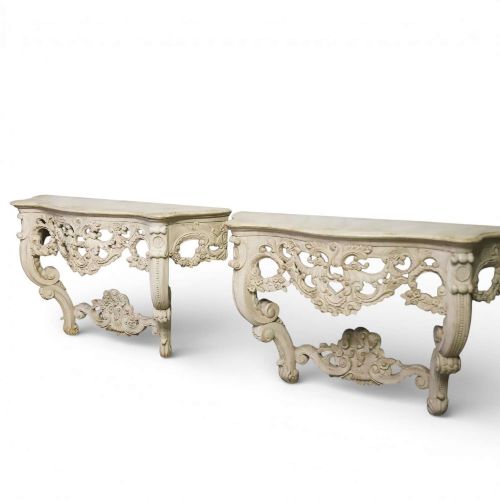
A french carved hall table appears across a span of centuries, with nineteenth-century examples forming the majority of the pieces found here. These tables typically take the form of console tables, side tables, or gueridon centre tables, alongside occasional wall-mounted consoles and matched mirror sets.
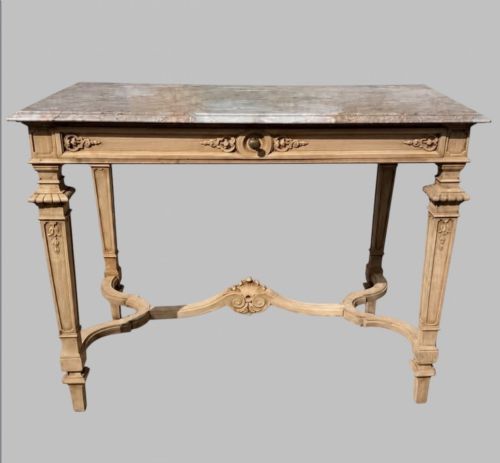
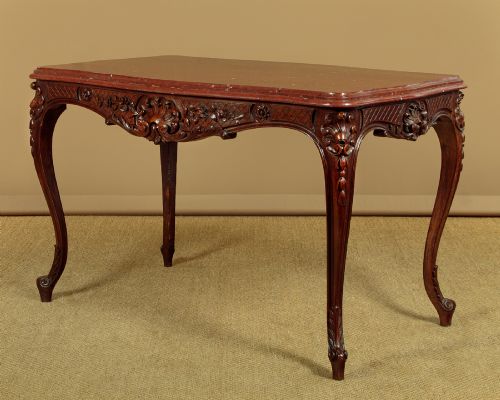
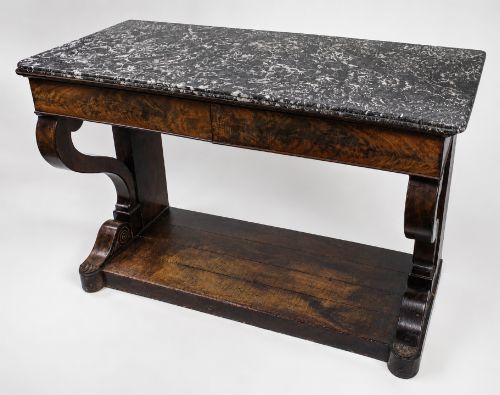
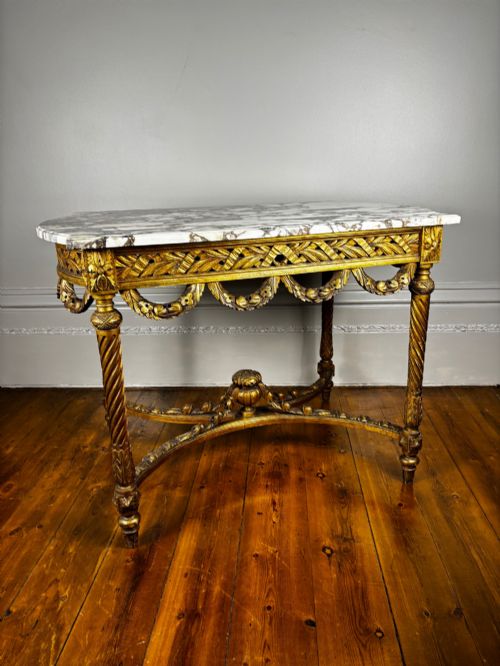
The aesthetic vocabulary draws upon historical revivals and regional traditions, encompassing French Rococo, Louis XVI, Louis Philippe, and French Provincial styles. Makers utilised walnut, mahogany, oak, and giltwood, frequently mounting the timber bases with marble tops in white or rouge varieties.
Materials and Technique
Carpenters constructed the structural frames from dense hardwoods like walnut, mahogany, and oak, applying hand-carving techniques to shape cabriole legs, aprons, and scrollwork. Giltwood examples received layers of gesso and gold leaf over carved wood bases to achieve a brilliant metallic sheen.
Heavy marble slabs, cut to fit serpentine or demi-lune timber profiles, rest directly upon the supporting frameworks. Secondary treatments include bleached finishes, painted surfaces, and polished mahogany veneers secured with traditional joinery.
Several tables arrive with their original matching mirrors, ensuring your hallway gets double the reflection and twice the carved drama.
Judging Quality
The distinction between tiers rests upon the crispness of the hand-carving and the integration of design elements. Superior examples display deeply undercut foliage, balanced proportions, and well-figured timber grains or richly burnished gilding.
The choice and thickness of the marble top also dictate grade, with matched or decorative coloured stone elevating the piece above standard plain slabs. Original fitted components, such as associated mirrors or original brass mounts, further separate distinguished pieces from simpler utilitarian forms.
The French Carved Hall Table Glossary
- Console table
- A table designed to stand against a wall, frequently secured to it by brackets or wall fixtures when the front legs carry the primary weight.
- Gueridon
- A small round table, often supported by a central pillar or three legs, commonly utilised as a centre table in French interiors.
- Demi-lune
- A half-moon shape characteristic of tables built with a flat back to sit flush against a wall.
- Giltwood
- Timber that has been coated with gold leaf or gold paint over a prepared gesso base.
- Serpentine
- A curved line of furniture featuring a convex centre flanked by concave ends, or vice versa.
French Carved Hall Table: Frequently Asked Questions
Where should I place a console table?
These tables suit entrance halls, reception rooms, and narrow corridors where floor space is limited. Their flat backs allow them to sit securely against walls without obstructing pathways.
Pairing a console with a matching mirror creates a balanced focal point for an entryway. Freestanding gueridon tables function effectively in the middle of larger rooms as display surfaces.
How do I care for a marble top?
Marble requires gentle cleaning with a damp cloth and neutral soap, avoiding acidic substances like lemon or vinegar that etch the polished surface. Placing coasters under glasses prevents liquid rings from penetrating the porous stone.
Applying a specialist wax protects the finish and maintains the natural lustre of the marble over years of daily use.
What is the difference between a console and a centre table?
A console table is designed with a flat back to stand against a wall, sometimes requiring wall attachment for stability. They often feature elaborate carving primarily on the front and sides.
Centre tables, or gueridons, are finished on all sides to stand freely in the middle of a room. They provide access from every angle and typically feature central pedestals or four symmetrical legs.
How do I identify a Louis XVI revival piece?
Louis XVI revival furniture draws on neoclassical design principles from the late eighteenth century, prioritising straight lines, symmetry, and architectural geometry over the curving asymmetry of earlier Rococo styles. Look for fluted legs, carved paterae, and restrained decorative motifs.
Revival pieces from the nineteenth and early twentieth centuries combine these classical proportions with the dense hardwoods and construction methods typical of their actual period of manufacture.