
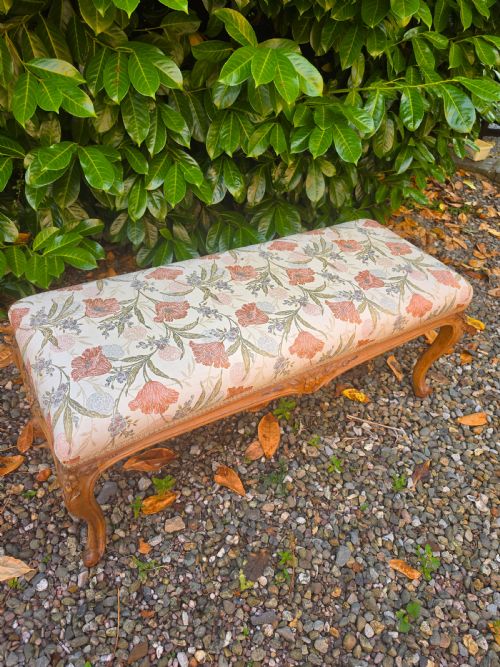
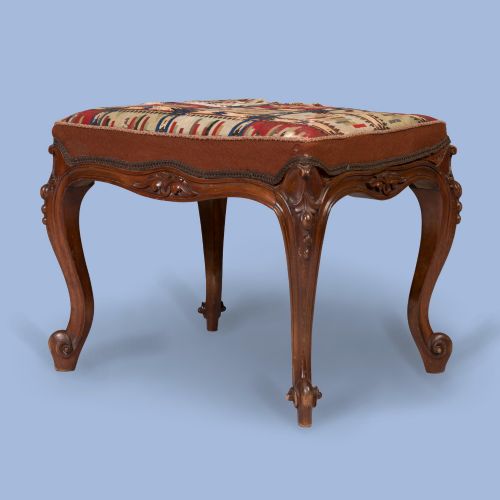


French Carved Footstool
These pieces are french carved footstool options that bring period seating to a room, offering low support and traditional continental styling for daily use.
French Carved Footstool
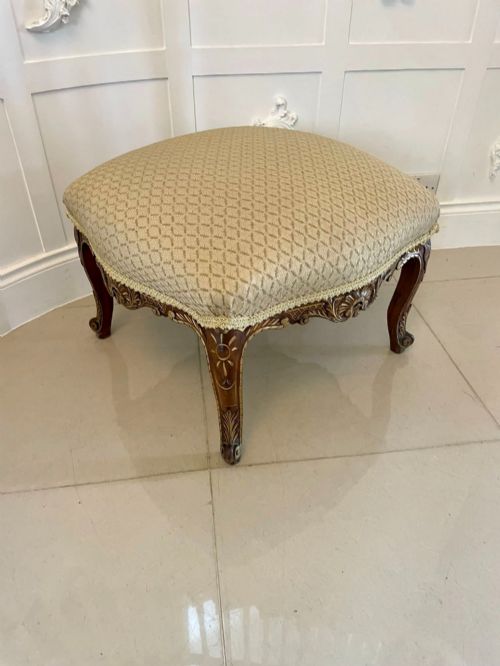
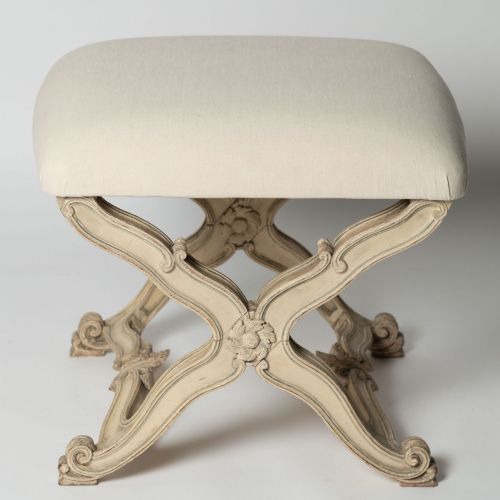
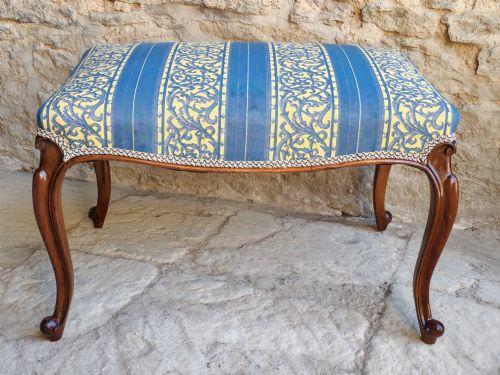
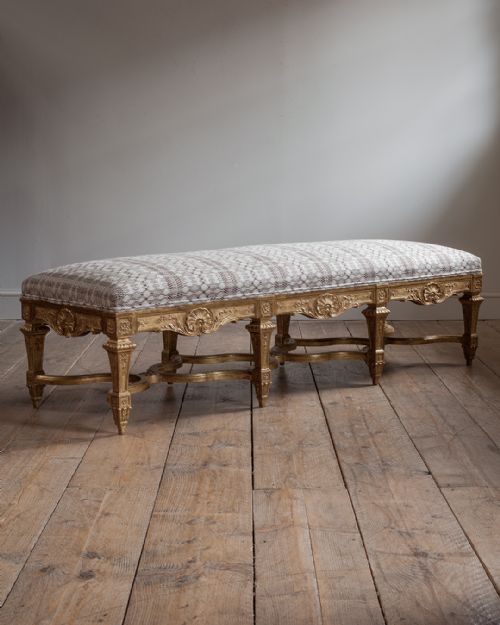
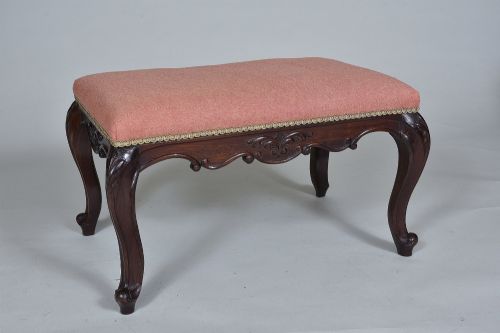
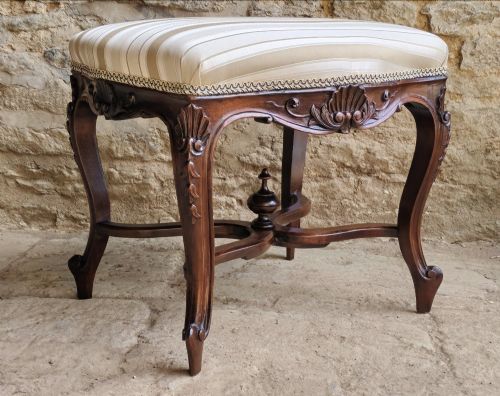
A french carved footstool takes many forms across the nineteenth century, from compact low items to large giltwood centre pieces. You will meet walnut and giltwood frames most often, alongside painted wood and occasional beech or mahogany examples.
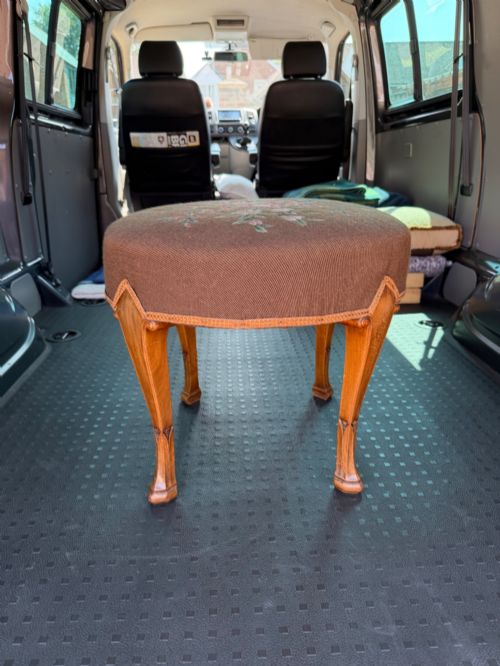
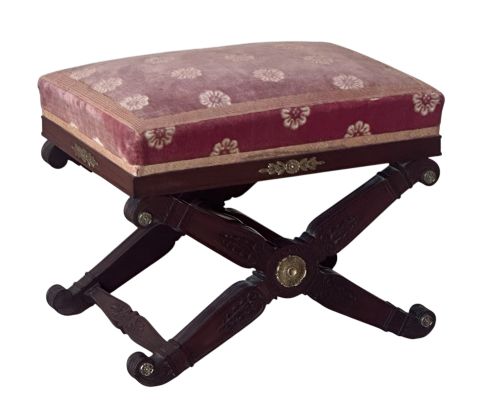
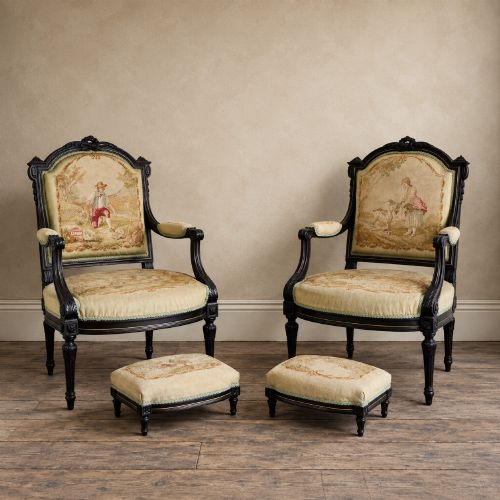
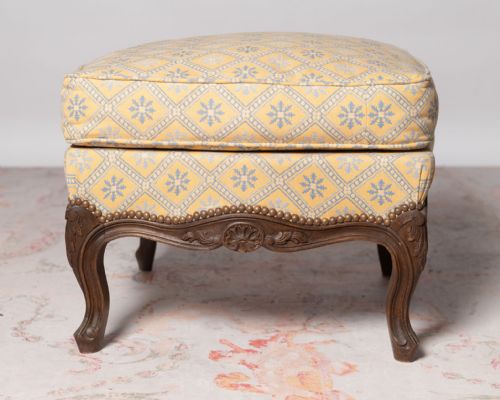
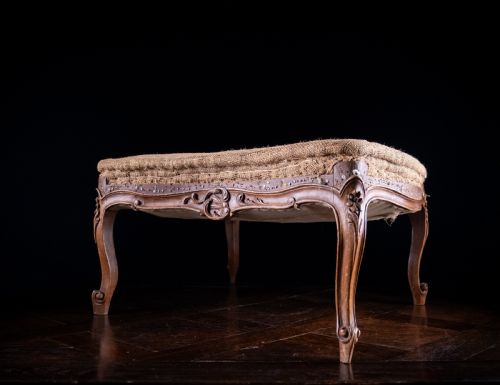
Makers shaped these supports in Louis styles, Rococo revival, and French empire designs. Many retain fabric, velvet, or needlework upholstery, while others arrive ready for re-covering.
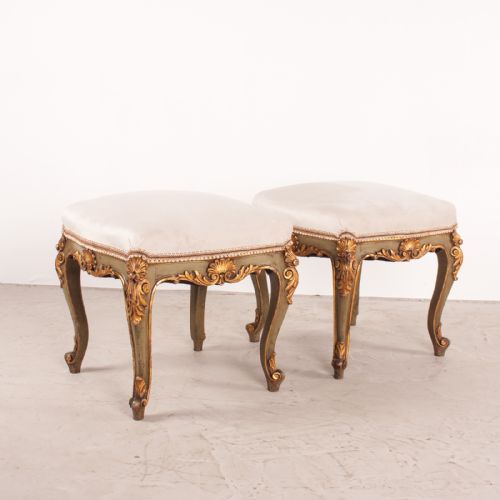
The selection ranges from single small footstools to pairs of matching stools and larger ottomans. Pieces span the Victorian era up to the nineteen thirties, maintaining traditional joinery and carved details.
How they were made
Carpenters shaped structural frames from solid timbers including walnut, mahogany, and beech, applying giltwood or paint finishes to the exterior surfaces. Carvers added ornamentation by hand directly into the wood.
Upholsterers built the padding using textiles, fabric, velvet, and needlework, often securing the edges with brass tacks. Frames frequently employ cabriole legs or X frame construction for stability.
One late nineteenth century rocking gilt gout stool offers soothing movement for tired feet.
What varies in quality
The depth and crispness of the hand carving dictate the refinement of the frame, where deep relief work separates standard items from finer examples. Gilding method and the preservation of original parcel gilt surfaces also alter the character of the piece.
The choice of primary timber and the integrity of the frame construction determine durability. Original fabric and period upholstery methods retain more historical interest than later replacements.
LOIDRAULT FRERES PARIS
The French Carved Footstool Glossary
- Giltwood
- Timber coated with gold leaf or gilt preparation. This finish appears frequently on formal nineteenth century salon seating.
- Cabriole leg
- A furniture leg that curves out and then in, resembling an animal limb. This shape characterises many Louis XV and Rococo revival pieces.
- X frame
- A structural base formed by intersecting diagonal members. It provides robust support for low stools and empire designs.
- Needlework
- Stitched yarn applied to canvas for upholstery. It frequently forms the decorative top surface of period footstools.
- Parcel gilt
- Woodwork where only specific carved elements receive gold leaf. This technique highlights particular decorative motifs against a painted or dark wood ground.
French Carved Footstool: Frequently Asked Questions
How do I date a french carved footstool?
Look at the timber species, the style of the legs, and any carved motifs to establish the period. Victorian and nineteenth century pieces often use walnut with cabriole legs, while later examples show different finishing techniques.
Compare the construction methods and joinery with dated examples from the same era. Maker stamps, where present, offer the most reliable guide to origin.
Can I use an antique footstool daily?
Most sturdy wood frames handle normal resting use without issue. Check that the joints remain tight before placing weight on the piece.
Delicate giltwood finishes require careful placement to avoid knocks. Older fabric may need reinforcement if you plan heavy daily use.
What is the difference between Louis styles on these stools?
Louis XIV designs feature bold proportions and heavier carved ornamentation. Louis XV and XVI styles introduce lighter curves, cabriole legs, and more restrained neoclassical detailing.
Revival pieces from the nineteenth century adapt these earlier motifs. Makers combined traditional shapes with contemporary upholstery fabrics of the period.
How should I care for original giltwood?
Dust the carved surfaces gently with a dry, soft brush to protect the thin gold leaf. Avoid liquid cleaners or harsh chemicals that strip the finish.
Keep wooden frames away from direct sunlight and damp conditions. Stable room temperatures prevent the timber from splitting.